

Nearly 1 in 4 American adults develop chronic upper extremity pain affecting daily life and work in places like Austin. The aching and stiffness in your elbow or shoulder may seem similar, yet the underlying causes and proper treatments can differ greatly. This guide uncovers what sets elbow and shoulder pain apart, helping you understand the right time to pursue expert care for arthritis, tendon injuries, and lingering discomfort.
Table of Contents
- Defining Elbow and Shoulder Pain Differences
- Common Causes and How They Vary
- Distinctive Symptoms and Overlap Issues
- Diagnosis: Methods for Accurate Identification
- Treatment Approaches for Each Condition
- When to Seek Expert Surgical Care
Key Takeaways
| Point | Details |
|---|---|
| Elbow and Shoulder Pain Differentiation | Elbow pain is often localized, while shoulder pain may radiate and involve multiple structures, requiring different diagnostic approaches. |
| Common Causes | Elbow pain typically arises from repetitive strain or direct trauma, whereas shoulder pain may come from complex injuries like rotator cuff tears and cervical spine issues. |
| Treatment Protocols | Elbow treatments generally start with conservative methods; shoulder treatments may require more comprehensive approaches, including surgery for severe cases. |
| Surgical Indications | Surgical intervention is indicated for chronic, unresolved symptoms and significant functional impairment in both joints after conservative treatment fails. |
Defining Elbow and Shoulder Pain Differences
Understanding the nuanced differences between elbow and shoulder pain requires a comprehensive examination of anatomical structures and potential underlying causes. While both regions are part of the upper extremity, they exhibit distinct characteristics in pain presentation, potential injuries, and treatment approaches. Understanding elbow anatomy reveals the complexity of these interconnected musculoskeletal systems.
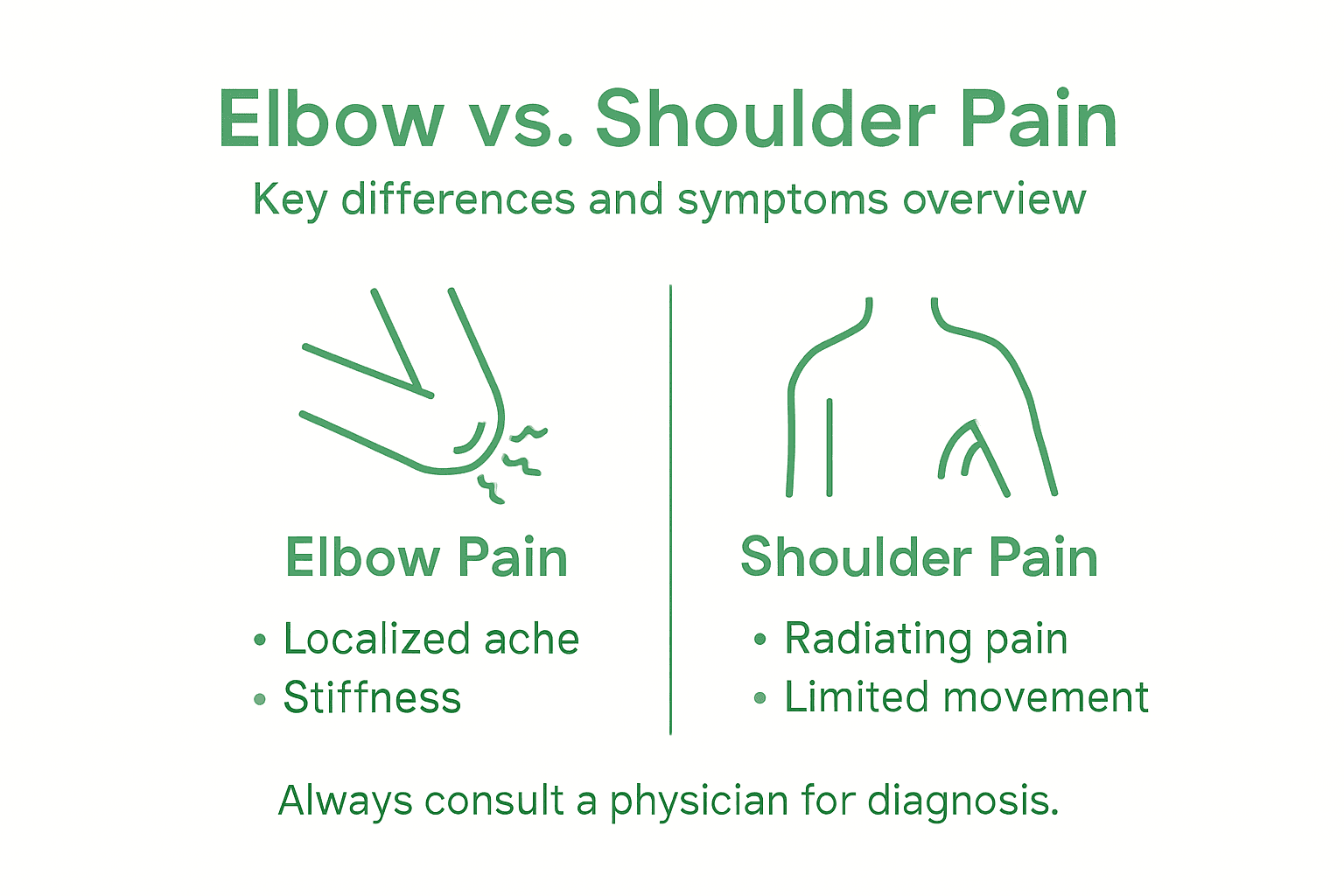
Elbow pain typically manifests as a localized discomfort around the joint, often resulting from repetitive motion injuries, tennis elbow, or direct trauma. The elbow joint connects the upper arm bone (humerus) with the forearm bones (radius and ulna), creating a pivotal point for arm movement. In contrast, shoulder pain tends to be more diffuse, potentially radiating across a larger area and involving multiple muscle groups, tendons, and ligaments that enable a broader range of motion.
The diagnostic approach for these pain types differs significantly. Elbow pain may stem from conditions like golfer’s elbow, cubital tunnel syndrome, or arthritis, which primarily affect the joint’s immediate structure. Shoulder pain, however, can originate from more complex scenarios such as rotator cuff tears, bursitis, frozen shoulder, or referred pain from cervical spine issues. Orthopedic specialists often recommend targeted diagnostic techniques like X rays, MRI scans, and physical examinations to pinpoint the exact source and nature of discomfort.
Pro tip: When experiencing persistent elbow or shoulder pain, document the specific location, intensity, and activities that trigger or alleviate the discomfort to help your healthcare provider make a more accurate diagnosis.
Common Causes and How They Vary
The underlying causes of elbow and shoulder pain demonstrate remarkable differences in their physiological origins, severity, and potential treatment strategies. When is elbow surgery necessary depends on understanding these distinct mechanisms of injury and chronic conditions that impact these critical upper extremity joints.
Elbow pain often originates from repetitive strain injuries, direct trauma, or localized joint conditions. Common causes include lateral epicondylitis (tennis elbow), medial epicondylitis (golfer’s elbow), nerve compression syndromes like cubital tunnel syndrome, and arthritic changes. These conditions typically manifest as sharp or aching pain concentrated around the elbow joint, with specific movements or positions triggering discomfort. The relatively compact anatomy of the elbow means that injuries tend to be more precisely localized and often respond well to targeted interventions such as physical therapy, bracing, or minimally invasive procedures.
Shoulder pain presents a more complex diagnostic landscape, involving a broader range of potential causes. Rotator cuff tears, bursitis, tendinitis, frozen shoulder syndrome, and cervical spine referred pain can all contribute to shoulder discomfort. Unlike elbow pain, shoulder issues frequently involve multiple muscle groups, ligaments, and interconnected structures that enable the joint’s extensive range of motion. This complexity means shoulder pain can be more challenging to diagnose and often requires more comprehensive treatment approaches, including advanced imaging, targeted physical therapy, and potentially surgical intervention.
Pro tip: Consider keeping a detailed pain journal documenting the specific location, intensity, duration, and activities that trigger your shoulder or elbow discomfort to help your healthcare provider develop a more precise treatment plan.
Here’s how common causes of elbow and shoulder pain differ in origin, affected structures, and complexity:
| Factor | Elbow Pain | Shoulder Pain |
|---|---|---|
| Common Origin | Repetitive use or local trauma | Overuse, injury, or degeneration |
| Main Structures Affected | Tendons, ligaments, nerves | Rotator cuff, bursa, labrum, nerves |
| Pain Localization | Localized to joint | Diffuse, radiates to arm or neck |
| Diagnostic Complexity | Often straightforward | Frequently multifaceted |
| Treatment Complexity | Usually direct interventions | Often requires layered approaches |
Distinctive Symptoms and Overlap Issues
Identifying the unique symptomatic profiles of elbow and shoulder pain requires a nuanced understanding of their distinctive characteristics and potential areas of intersection. Why Do My Elbows and Wrists Hurt provides insight into the complex nature of upper extremity pain manifestations that can often blur diagnostic lines.
Elbow symptoms typically present with more localized and precise pain indicators. Patients often experience sharp or burning sensations directly around the joint, with specific movements causing notable discomfort. Characteristic signs include point tenderness, reduced grip strength, and pain that radiates down the forearm or up the upper arm. Conditions like lateral epicondylitis (tennis elbow) create distinct pain patterns where specific wrist or arm movements trigger intense discomfort. The compact anatomical structure of the elbow means symptoms tend to be more focused and easier to pinpoint, with clear trigger points and predictable pain distribution patterns.

Shoulder symptoms, conversely, demonstrate a more complex and diffuse pain presentation. The shoulder’s intricate network of muscles, tendons, and ligaments creates a broader, more challenging symptomatic landscape. Patients might experience deep aching sensations, sharp stabbing pains, or a pervasive sense of discomfort that can radiate across the neck, upper back, and arm. Range of motion limitations become more pronounced, with some individuals experiencing complete immobility in severe cases like frozen shoulder syndrome. The potential for referred pain from cervical spine issues further complicates shoulder pain diagnosis, creating overlap with neurological and musculoskeletal conditions.
Pro tip: Pay close attention to pain patterns, documenting specific movements that increase or decrease discomfort, as this detailed information can significantly help healthcare providers accurately diagnose and treat your shoulder or elbow condition.
Diagnosis: Methods for Accurate Identification
Diagnosing elbow and shoulder pain requires a comprehensive, multi-step approach that combines advanced medical imaging, detailed physical examinations, and thorough patient history analysis. Understanding elbow anatomy provides critical context for developing precise diagnostic strategies that differentiate between complex musculoskeletal conditions.
For elbow pain, diagnostic methods typically begin with a targeted physical examination focusing on range of motion, strength testing, and specific provocation maneuvers. Orthopedic specialists perform specialized tests like the Cozen’s test for lateral epicondylitis or the Mill’s test for medial epicondylitis to assess specific soft tissue injuries. Advanced imaging techniques such as X-rays help identify potential bone abnormalities, while ultrasound and MRI scans provide detailed visualization of soft tissue structures, revealing subtle tendon tears, inflammation, or nerve compression syndromes that might not be apparent through physical examination alone.
Shoulder pain diagnostics present a more complex challenge due to the joint’s intricate anatomical structure. Physicians employ a comprehensive evaluation that includes a detailed patient history, assessing pain characteristics, injury mechanisms, and functional limitations. Specialized physical examination techniques like the Neer impingement test, Hawkins-Kennedy test, and apprehension test help identify specific rotator cuff pathologies, labral tears, and potential instability issues. Diagnostic imaging plays a crucial role, with X-rays screening for bone abnormalities, CT scans providing three-dimensional joint visualization, and MRI scans offering unparalleled soft tissue detail. Advanced diagnostic techniques like electromyography (EMG) can also help identify nerve-related complications that might contribute to shoulder pain.
Pro tip: Prepare a comprehensive pain journal documenting your symptoms, including specific movements that trigger discomfort, pain intensity, and duration, to provide your healthcare provider with valuable diagnostic insights.
Treatment Approaches for Each Condition
Treatment strategies for elbow and shoulder pain require a targeted, personalized approach that addresses the unique underlying mechanisms of each condition. When is elbow surgery necessary represents a critical decision point in managing upper extremity musculoskeletal disorders, highlighting the importance of comprehensive treatment planning.
Elbow pain treatments typically follow a progressive approach, beginning with conservative management techniques. Initial interventions often include rest, ice or heat therapy, and anti-inflammatory medications to reduce pain and inflammation. Physical therapy plays a crucial role, focusing on strengthening exercises, flexibility training, and biomechanical correction. For conditions like lateral epicondylitis, specialized techniques such as Platelet-Rich Plasma (PRP) therapy can stimulate healing by introducing concentrated growth factors directly into the damaged tissue. Bracing and ergonomic modifications help reduce stress on the joint, while targeted manual therapies can improve range of motion and accelerate recovery. Surgical intervention becomes considered when conservative treatments fail, particularly for severe tendon tears or persistent nerve compression syndromes.
Shoulder pain treatment approaches demonstrate even greater complexity, reflecting the joint’s intricate anatomical structure. Conservative management includes comprehensive physical therapy programs designed to restore strength, improve flexibility, and address underlying biomechanical issues. PRP therapy emerges as a promising non-surgical intervention, particularly for rotator cuff injuries and chronic tendinopathies. Advanced treatment protocols may incorporate specialized techniques like dry needling, instrument-assisted soft tissue mobilization, and carefully designed rehabilitation protocols. For more severe conditions such as significant rotator cuff tears or advanced arthritis, surgical reconstruction or joint replacement might become necessary. Orthopedic specialists carefully evaluate each patient’s unique condition, considering factors like age, activity level, overall health, and specific tissue damage when developing individualized treatment strategies.
Pro tip: Actively participate in your treatment by maintaining consistent communication with your healthcare provider and adhering precisely to prescribed rehabilitation protocols to maximize recovery potential.
When to Seek Expert Surgical Care
Determining the appropriate time to pursue surgical intervention for elbow and shoulder pain requires careful consideration of multiple clinical factors and treatment progression. Why choose orthopedic surgery becomes critical when conservative treatments fail to provide meaningful pain relief or restore functional mobility.
For elbow conditions, surgical consultation becomes necessary when patients experience persistent symptoms that significantly impact daily activities, despite comprehensive conservative management. Key indicators include chronic pain lasting more than 6-12 months, substantial loss of grip strength, restricted range of motion, and evidence of progressive tissue damage. Specific scenarios demanding surgical evaluation include severe tendon tears, advanced arthritis, nerve compression syndromes, and traumatic injuries that compromise joint stability. Platelet-Rich Plasma (PRP) therapy may be considered as a potential intermediate intervention before recommending surgical procedures, offering a regenerative approach to tissue healing.
Shoulder pain surgical considerations involve even more nuanced decision-making. Orthopedic specialists typically recommend surgical intervention when patients demonstrate limited response to extended physical therapy, persistent pain that disrupts sleep and work performance, and objective evidence of structural damage confirmed through advanced imaging. Complex conditions like massive rotator cuff tears, advanced shoulder instability, significant joint degeneration, and chronic impingement syndromes often require surgical reconstruction. The goal of surgical intervention shifts from mere pain management to comprehensive functional restoration, allowing patients to regain optimal upper extremity performance and quality of life.
Pro tip: Document your pain progression, treatment responses, and functional limitations meticulously to provide your orthopedic surgeon with comprehensive insights that can guide precise surgical decision-making.
The following table summarizes when surgical care may become necessary for each joint:
| Criterion | Elbow Surgical Indication | Shoulder Surgical Indication |
|---|---|---|
| Duration of Symptoms | Persistent over 6-12 months | Ongoing after months of therapy |
| Impact on Function | Loss of grip or motion | Disrupted sleep or arm mobility |
| Imaging Findings | Tendon tears, nerve compression | Massive tears, severe degeneration |
| Conservative Treatment Response | Ineffective or exhausted | No improvement after full protocol |
| Typical Surgical Goal | Restore stability and function | Regain motion and joint integrity |
Discover Expert Solutions for Elbow and Shoulder Pain Today
If you are struggling with the persistent pain and limited mobility described in this article understanding elbow and shoulder pain differences is your first step toward relief. Whether your discomfort comes from localized tendon issues or more complex shoulder injuries knowing the source is crucial. At our Austin orthopedic practice we specialize in personalized treatment plans that address specific upper extremity conditions such as tennis elbow, rotator cuff tears, and nerve compression syndromes. Explore detailed information and patient-centered care options in our Elbow Pain & Treatment Articles | Austin Orthopedic Care section.

Don’t let pain dictate your daily life any longer. Visit https://handtoshoulderaustin.com to schedule a consultation with Dr. Manish V. Patel, a fellowship-trained, board-certified surgeon dedicated to restoring your function and quality of life. Learn more about comprehensive approaches through our Upper Extremity Pain Management | Austin Orthopedic Blog. Take control of your recovery journey now and experience compassionate expert care focused solely on your upper limb health.
Frequently Asked Questions
What are the primary differences between elbow and shoulder pain?
Elbow pain typically presents as localized discomfort around the joint, often due to repetitive motion injuries or trauma. Shoulder pain, however, tends to be more diffuse, potentially radiating across a larger area involving multiple muscle groups and complex structures.
What are common causes of elbow pain?
Common causes of elbow pain include lateral epicondylitis (tennis elbow), medial epicondylitis (golfer’s elbow), cubital tunnel syndrome, and arthritis, which primarily affect the joint’s immediate structure.
How is shoulder pain diagnosed?
Diagnosing shoulder pain often involves a detailed patient history, physical examinations using specialized tests, and advanced imaging techniques like X-rays, CT scans, and MRIs to identify structural issues and soft tissue damage.
When should I seek surgical intervention for elbow or shoulder pain?
You should consider surgical evaluation if you experience persistent pain lasting over 6-12 months, substantial loss of strength or mobility, and no improvement after extensive conservative treatment, indicating possible severe tissue damage or joint instability.
Recommended
- Understanding Elbow Anatomy Explained: A Comprehensive Overview – Austin Hand To Shoulder
- 7 Key Signs: Elbow Arthritis Symptoms List for Austin Residents – Austin Hand To Shoulder
- Complete Guide to Elbow and Wrist Pain Relief – Austin Hand To Shoulder
- Why Do My Elbows and Wrists Hurt? Complete Guide – Austin Hand To Shoulder


