

Most American adults are surprised to learn that wrist pain affects nearly one in five people at some point in their lives. For Austin residents, ignoring wrist stiffness or discomfort can lead to serious limitations that impact work, sports, and daily tasks. Understanding how wrist mobility really works—along with common misconceptions—can help you find targeted orthopedic solutions to support long-term hand function and recovery.
Table of Contents
- Defining Wrist Mobility And Common Misconceptions
- How Wrist Mobility Impacts Everyday Activities
- Anatomy And Key Movements Of The Wrist Joint
- Common Causes Of Reduced Wrist Mobility
- Risks, Pain, And Long-Term Complications
- Treatment Strategies To Improve Wrist Mobility
Key Takeaways
| Point | Details |
|---|---|
| Wrist Mobility Complexity | The wrist is a network of bones and ligaments, not just a simple hinge, allowing diverse movements. |
| Impact on Daily Activities | Limited wrist mobility affects everyday tasks and professional performance significantly. |
| Causes of Reduced Mobility | Traumatic injuries and chronic conditions like arthritis can severely limit wrist function. |
| Importance of Early Intervention | Prompt treatment and rehabilitation are crucial to restore wrist mobility and prevent complications. |
Defining Wrist Mobility and Common Misconceptions
Understanding wrist mobility requires recognizing its complex anatomical structure. The wrist is not a single joint but a sophisticated network of small bones, ligaments, and tendons that work together to enable precise hand movements. Medical guidelines emphasize the intricate nature of wrist structures and their critical role in daily functional activities.
Many people mistakenly view the wrist as a simple hinge joint, but its actual design is far more nuanced. The carpal bones create a complex arrangement that allows for rotational movements, flexing, and extension. This intricate biomechanical system permits everything from typing on a keyboard to performing delicate surgical procedures. Wrist anatomy involves multiple small joints connecting the hand to the forearm, enabling an extraordinary range of motion that we often take for granted.
Common misconceptions about wrist mobility can lead to overlooked injuries and potential long-term complications. Some individuals believe that wrist pain is normal or that reduced mobility is an inevitable part of aging. However, these beliefs can prevent timely medical intervention and potentially exacerbate underlying conditions. Proper understanding of wrist mechanics is crucial for maintaining joint health and preventing conditions like carpal tunnel syndrome or repetitive strain injuries.
Pro tip: Perform gentle wrist mobility exercises daily to maintain flexibility and prevent stiffness, focusing on circular motions and controlled stretches that move through your full range of motion.
How Wrist Mobility Impacts Everyday Activities
Wrist mobility plays a critical role in performing countless daily activities that most people take for granted. Everyday hand functions depend on the wrist’s ability to move flexibly and precisely, enabling everything from typing on a keyboard to preparing meals, playing sports, and engaging in personal care tasks. The intricate movements required for these activities demand a wide range of motion that healthy wrist joints provide.
Professional activities particularly highlight the importance of wrist mobility. Surgeons, musicians, carpenters, and office workers all rely on precise wrist movements to perform their specialized tasks. A carpenter hammering nails, a pianist playing complex compositions, or a surgeon conducting delicate procedures all require nuanced wrist flexibility. Wrist anatomy basics reveal how structure directly impacts functional capacity, demonstrating that even minor limitations can significantly disrupt professional performance.
Reduced wrist mobility can lead to substantial challenges in personal independence. Simple tasks like opening jars, buttoning shirts, writing, or using electronic devices become increasingly difficult when wrist flexibility is compromised. Conditions such as arthritis, repetitive strain injuries, or previous trauma can dramatically impact an individual’s ability to perform routine activities, potentially affecting their quality of life and sense of personal autonomy.
Pro tip: Incorporate gentle wrist stretching exercises into your daily routine to maintain flexibility, using slow, controlled movements that move through your full range of motion without causing pain.
Anatomy and Key Movements of the Wrist Joint
The complex anatomy of the wrist joint reveals a remarkable design that enables extraordinary functional mobility. Composed of eight small carpal bones arranged in two intricate rows, the wrist connects the forearm bones (radius and ulna) with the hand’s delicate structures. These bones are held together by an intricate network of ligaments and tendons that provide both stability and flexible movement, allowing for precise and nuanced hand interactions.
The wrist joint supports four primary movements that are critical for daily functioning: flexion, extension, radial deviation (abduction), and ulnar deviation (adduction). Flexion allows bending the hand downward toward the inner forearm, while extension enables raising the hand backward. Radial and ulnar deviations permit side-to-side movements, creating a remarkable range of motion that enables everything from writing and typing to complex athletic and professional tasks. Wrist anatomy fundamentally determines these movement capabilities, with each bone and connective tissue playing a crucial role in maintaining joint health and functionality.

Understanding the wrist’s biomechanical structure helps explain why injuries or conditions affecting these interconnected components can dramatically impact mobility. Ligament tears, arthritis, or repetitive stress can compromise the delicate balance of bones and soft tissues, leading to restricted movement and potential long-term functional limitations. The wrist’s design allows for incredible precision, with each of the eight carpal bones working in concert to provide smooth, coordinated motion across multiple planes of movement.
Pro tip: Perform daily range-of-motion exercises that gently move your wrist through all four primary directions, helping maintain joint flexibility and prevent stiffness.
Here’s a summary of the four key wrist movements and their functional importance:
| Movement | Typical Action | Example Use | Main Muscles Involved |
|---|---|---|---|
| Flexion | Bending palm toward forearm | Typing on a keyboard | Flexor carpi radialis/ulnaris |
| Extension | Lifting back of hand upward | Releasing a handshake | Extensor carpi radialis/ulnaris |
| Radial Deviation | Moving hand toward thumb side | Swinging a tennis racket | Flexor/extensor carpi radialis |
| Ulnar Deviation | Moving hand toward little finger | Opening a jar lid | Flexor/extensor carpi ulnaris |
Common Causes of Reduced Wrist Mobility
Medical research highlights several critical factors contributing to reduced wrist mobility, ranging from acute injuries to chronic conditions that progressively limit joint function. Traumatic injuries like fractures, severe sprains, and ligament tears can immediately compromise wrist movement, creating scar tissue and inflammation that restrict natural range of motion. These acute conditions often result from sports accidents, workplace incidents, or unexpected falls that place extreme stress on the delicate wrist structures.
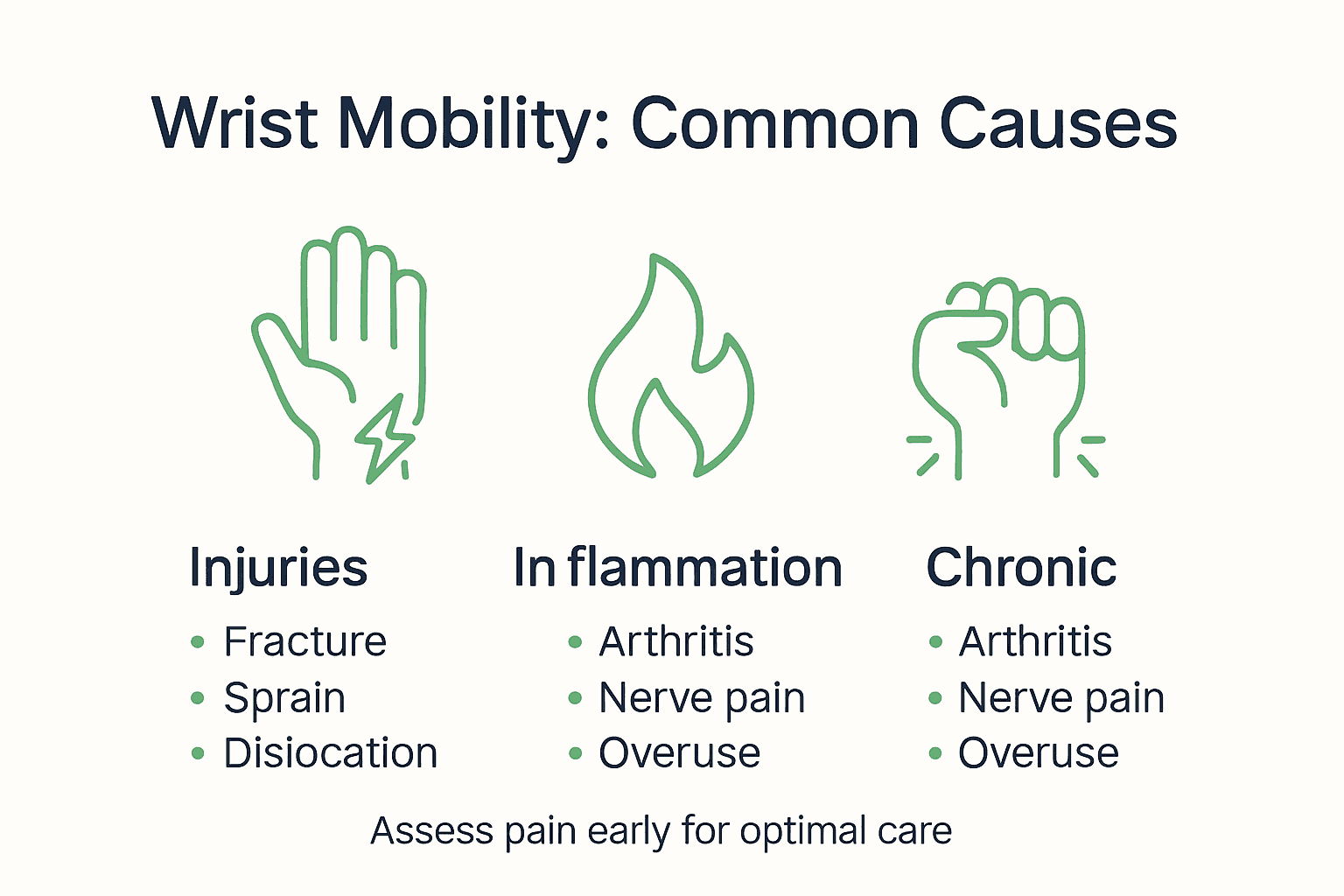
Chronic conditions represent another significant category of mobility limitations. Inflammatory diseases such as rheumatoid arthritis and osteoarthritis systematically break down joint cartilage and cause persistent inflammation, gradually reducing wrist flexibility. Identifying and managing these wrist injury types early becomes crucial for maintaining long-term joint function, as prolonged inflammation can lead to permanent joint damage and increased disability. Professional workers experiencing repetitive strain from typing, assembly line work, or manual labor are particularly vulnerable to developing these mobility-restricting conditions.
Other less recognized factors can also contribute to wrist mobility challenges. Nerve compression syndromes like carpal tunnel, systemic conditions such as diabetes, and even certain medications can impact joint movement and flexibility. Postural issues, muscle imbalances, and previous untreated injuries create compounding effects that gradually reduce wrist range of motion. Understanding these diverse causes helps patients and healthcare providers develop more comprehensive strategies for maintaining and restoring optimal wrist function.
Pro tip: Schedule regular assessments with an orthopedic specialist to monitor your wrist health, especially if you perform repetitive tasks or have a history of joint-related conditions.
Risks, Pain, and Long-Term Complications
Wrist pain and reduced mobility present significant health risks that extend far beyond temporary discomfort. Untreated wrist conditions can trigger a cascade of progressive complications, transforming what might initially seem like a minor issue into a potentially debilitating long-term challenge. Chronic inflammation, nerve compression, and persistent joint damage can dramatically alter an individual’s ability to perform basic daily activities, impacting professional performance and personal independence.
The potential long-term complications of wrist mobility issues are multifaceted and potentially severe. Persistent wrist injuries create complex risks that can compromise overall hand function, including permanent nerve damage, advanced joint degeneration, and increased susceptibility to future injuries. Conditions like carpal tunnel syndrome can progress from occasional numbness to chronic pain and potentially irreversible muscle weakness, potentially requiring surgical intervention. Professionals whose work involves repetitive hand movements face heightened risks of developing these progressive conditions.
Psychological impacts often accompany chronic wrist pain and mobility limitations, creating a holistic health challenge that extends beyond physical symptoms. Reduced hand function can lead to decreased work productivity, limitations in recreational activities, and potential mental health strain associated with chronic pain management. The interconnected nature of wrist health means that seemingly minor mobility restrictions can create a domino effect of functional limitations, underscoring the importance of early intervention and comprehensive treatment strategies.
Pro tip: Consult an orthopedic specialist at the first sign of persistent wrist pain or reduced mobility to develop a proactive treatment plan and minimize potential long-term complications.
Treatment Strategies to Improve Wrist Mobility
Medical guidelines emphasize a comprehensive approach to restoring wrist mobility, recognizing that effective treatment requires a multifaceted strategy tailored to individual patient needs. Rehabilitation protocols typically begin with a thorough diagnostic assessment to identify the underlying cause of mobility restrictions, whether stemming from injury, chronic condition, or repetitive stress. Initial treatment often involves a combination of rest, targeted physical therapy, and strategic pain management techniques designed to reduce inflammation and promote healing.
Physical therapy represents a cornerstone of wrist mobility recovery, with specialized exercises and techniques aimed at restoring strength, flexibility, and range of motion. Comprehensive wrist rehabilitation requires a structured approach to rebuilding joint function, including progressive stretching, strength training, and manual therapy techniques. Orthopedic specialists may recommend custom splinting or bracing to provide support during the healing process, helping to stabilize the joint while gradually reintroducing movement and preventing further injury.
Advanced treatment options expand beyond traditional rehabilitation methods. Innovative approaches like platelet-rich plasma (PRP) therapy can accelerate healing by stimulating the body’s natural repair mechanisms, particularly for chronic or difficult-to-treat wrist conditions. In more severe cases, surgical intervention might become necessary to address structural damage, nerve compression, or persistent mobility limitations. The key to successful treatment lies in early intervention, personalized care plans, and a collaborative approach between patients and healthcare providers.
Pro tip: Work closely with your orthopedic specialist to develop a customized rehabilitation plan that addresses your specific wrist mobility challenges and incorporates progressive, targeted exercises.
Below is a comparison of common wrist mobility treatment strategies:
| Approach | Typical Onset Time | Main Goal | Example Interventions |
|---|---|---|---|
| Rest & Protection | Immediate | Reduce strain & swelling | Splinting, activity modification |
| Physical Therapy | Short to mid-term | Restore movement & strength | Stretching, resistance exercises |
| Advanced Interventions | Mid to long-term | Address chronic issues | PRP therapy, surgery, medications |
Take Control of Your Wrist Health Today
If wrist pain or limited mobility is keeping you from enjoying daily tasks or affecting your professional life it is crucial to seek expert care. The challenges of reduced wrist flexibility and persistent pain described in this article highlight the importance of personalized treatment strategies tailored to your needs. At Hand to Shoulder Austin Dr Manish V. Patel offers specialized orthopedic solutions focused on restoring wrist function and improving quality of life through comprehensive care.

Explore expert guidance and treatment options with our Wrist Injury & Treatment Guides | Austin Orthopedic Blog. Don’t let wrist issues limit your independence or productivity. Scheduling a consultation now connects you with a fellowship-trained surgeon dedicated to individualized recovery plans. Act now to regain your pain-free wrist mobility and get back to the activities you love. Visit Hand to Shoulder Austin and take the first step toward lasting relief and improved wrist function.
Frequently Asked Questions
What is wrist mobility, and why is it important?
Wrist mobility refers to the range of movement in the wrist joint, which is crucial for performing everyday activities. It involves the coordinated movement of the carpal bones and contributes to actions like typing, cooking, and playing sports.
What are the common causes of reduced wrist mobility?
Common causes include traumatic injuries, such as fractures and ligament tears, as well as chronic conditions like arthritis. Repetitive strain from activities like typing can also lead to reduced mobility over time.
How does wrist mobility affect daily activities?
Reduced wrist mobility can significantly hinder basic tasks such as writing, opening jars, and using electronic devices. This can affect personal independence and overall quality of life.
What are effective treatment strategies to improve wrist mobility?
Effective strategies include physical therapy focused on specific exercises to enhance strength and flexibility, as well as rest and protection to allow the joint to heal. Advanced treatments may involve PRP therapy or, in severe cases, surgical intervention.
Recommended
- Wrist Anatomy Basics – How Structure Impacts Function – Austin Hand To Shoulder
- Wrist Anatomy Basics: Key Structures and Functions – Austin Hand To Shoulder
- Wrist Anatomy Explained: Impacts on Mobility and Care – Austin Hand To Shoulder
- Complete Guide to Wrist Anatomy Basics – Austin Hand To Shoulder


