

Nearly one in four adults will experience wrist pain at some point, making it a common setback in everyday life. Whether your discomfort comes from hours at a keyboard, an old injury, or an underlying condition, wrist pain can seriously disrupt your routine. Understanding the key steps in caring for your wrist not only brings relief but also helps prevent problems from getting worse.
Quick Summary
| Key Point | Explanation |
|---|---|
| 1. Identify wrist pain causes | Recognizing sources like carpal tunnel and arthritis aids treatment planning. |
| 2. Create an ergonomic workspace | Set up your area to support wrist health, ensuring proper arm and wrist positions. |
| 3. Use RICE for acute pain | Implement Rest, Ice, Compression, and Elevation techniques immediately to reduce inflammation. |
| 4. Engage in gentle exercises | Start with basic mobility movements to restore flexibility and prevent future injuries. |
| 5. Monitor symptoms and seek help | Keep a pain journal and recognize when symptoms worsen; consult a specialist if needed. |
Table of Contents
- Step 1: Identify Common Causes Of Wrist Pain
- Step 2: Prepare A Safe Environment For Care
- Step 3: Apply Rest, Ice, And Compression Techniques
- Step 4: Perform Gentle Mobility And Strength Exercises
- Step 5: Monitor Progress And Recognize Warning Signs
Step 1: Identify Common Causes of Wrist Pain
Understanding what triggers your wrist pain is crucial for effective self-care and finding the right treatment. In this step, you will learn how to recognize the most common sources of wrist discomfort that could be disrupting your daily activities.
According to our comprehensive wrist pain guide, wrist pain can emerge from multiple sources. Repetitive work activities like prolonged typing, crafting, or sports participation are significant contributors. Medical conditions such as diabetes, pregnancy, obesity, rheumatoid arthritis, and gout can also heighten your risk of developing wrist problems.
Let’s break down the primary culprits behind wrist pain. Carpal tunnel syndrome tops the list, characterized by median nerve compression during repetitive wrist movements. This condition often results from continuous strain on your wrist joints. Another frequent cause involves direct injuries like sprains, strains, and fractures that can happen during sports, accidents, or sudden impacts.
Arthritis plays a substantial role in wrist pain, with several variants affecting joint health. Osteoarthritis, rheumatoid arthritis, and psoriatic arthritis can all contribute to ongoing wrist discomfort. Crystal-related conditions such as gout and pseudogout also trigger inflammation and pain in the wrist area.
Here’s an overview of the most common causes of wrist pain and their typical features:
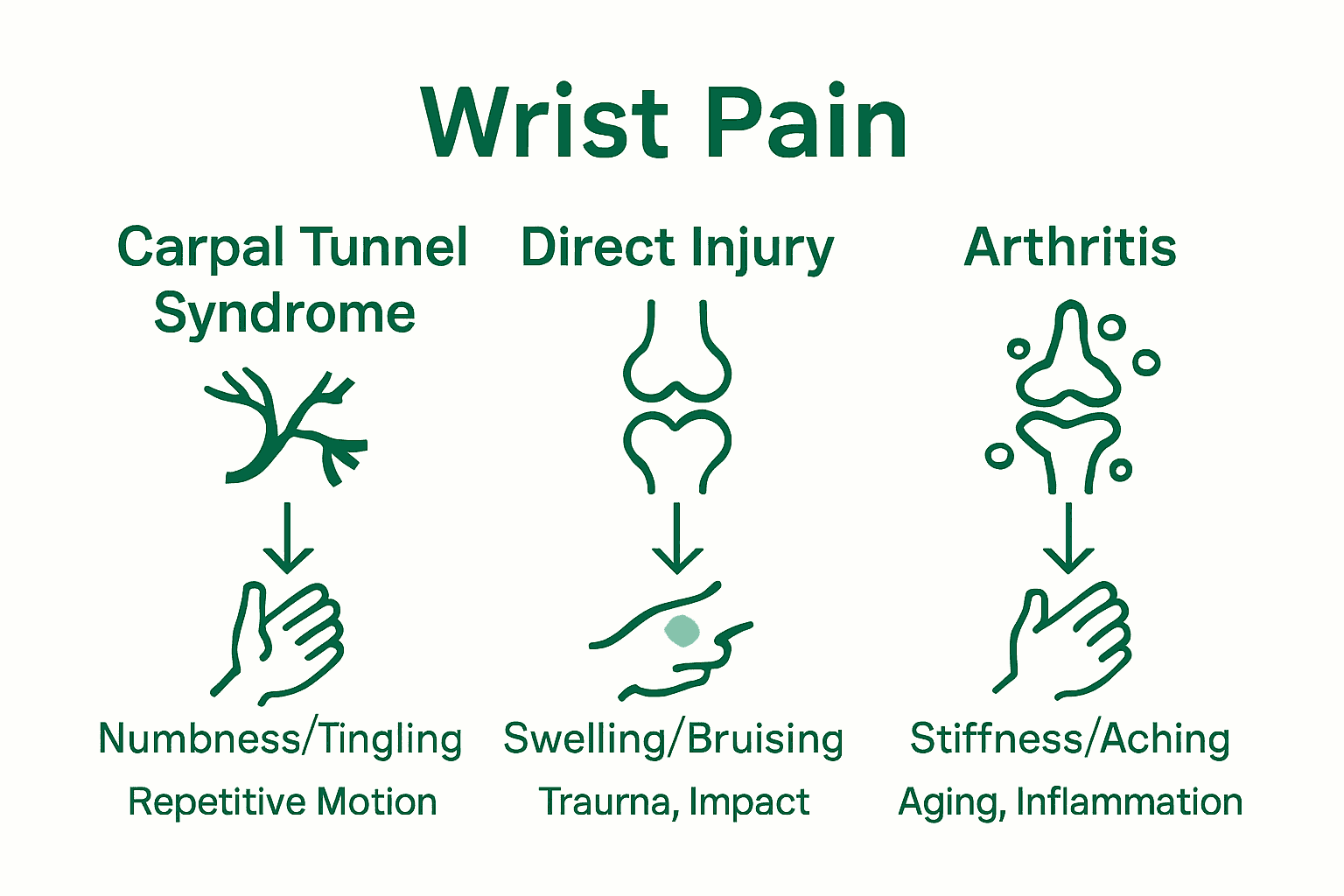
| Cause | Typical Triggers | Key Symptoms |
|---|---|---|
| Carpal Tunnel Syndrome | Repetitive motion Typing |
Numbness Tingling |
| Direct Injury | Sprain Fracture Straint |
Swelling Bruising |
| Osteoarthritis | Joint wear Age-related changes |
Stiffness Aching pain |
| Rheumatoid/Psoriatic Arthritis | Autoimmune disease | Inflammation Redness |
| Gout/Pseudogout | Crystal buildup Diet-related |
Sudden pain Swelling |
| Medical Conditions | Diabetes Obesity Pregnancy |
Ongoing discomfort |
Pro Tip: Pay attention to patterns. Does your wrist hurt more after specific activities? Track when and how the pain occurs to help your healthcare provider diagnose the root cause.
If you are experiencing persistent wrist pain, it might be time to consult an orthopedic specialist who can provide a precise diagnosis and recommend targeted treatments like PRP therapy for non surgical pain management.
Step 2: Prepare a Safe Environment for Care
Creating an ergonomic space is your first line of defense in managing wrist pain and preventing further strain. This step will help you transform your workspace into a wrist-friendly zone that supports healing and reduces potential injury.
According to research from the Cleveland Clinic, proper ergonomics are crucial for protecting your wrists. Start by positioning your arms at a 90 degree angle with wrists maintained in a neutral alignment. This means using an external keyboard and an ergonomic mouse that supports natural hand positioning.
Your workstation setup matters more than you might think. Keep your head and computer screen at eye level to avoid unnecessary neck and shoulder tension that can indirectly impact wrist comfort. As recommended by AARP, sit straight with your mouse and keyboard positioned at elbow level to minimize unnecessary wrist strain.
Movement breaks are not optional they are essential. Incorporate short 5-10 minute breaks every hour where you stretch your wrists and change your posture. These breaks help prevent continuous strain and promote blood circulation. Consider gentle wrist rotations and flexing exercises during these intervals.
Pro Tip: Invest in a wrist support pad or ergonomic mouse that helps maintain a natural hand position and reduces unnecessary stress on your joints.
If you are dealing with persistent wrist pain, our wrist specialists can provide personalized advice on creating an optimal healing environment and recommend advanced treatments like PRP therapy to support your recovery.
Step 3: Apply Rest, Ice, and Compression Techniques
Immediately after experiencing wrist pain, you need a strategic approach to minimize inflammation and support healing. This step will walk you through the proven RICE method that helps manage acute wrist injuries and reduce potential long term damage.
According to research from WebMD, the first 24 to 48 hours are critical for managing wrist pain. Rest is your primary intervention. This means completely avoiding activities that cause additional strain or discomfort. Stop any movements that trigger pain and give your wrist a complete break.
Ice application is your next critical step. As recommended by Rothman Orthopedics, apply ice for no more than 20 minutes at a time. Use a cloth wrapped ice pack to prevent direct skin contact and potential freezing. Repeat this icing process multiple times during the first day to reduce swelling and numb pain sensations.
Compression helps control inflammation and provides gentle support. Wrap your wrist with an elastic bandage snugly but not so tight that it restricts blood circulation. You should be able to slide a finger under the wrap comfortably.
 Elevation is equally important raise your wrist above heart level to minimize fluid buildup and accelerate healing.
Pro Tip: Consider over the counter pain relievers like acetaminophen or ibuprofen to manage pain and reduce inflammation during your recovery period.
If pain persists or worsens, our patient information resources can guide you on when to seek professional medical evaluation. Our specialists are experienced in advanced treatments like PRP therapy that can provide non surgical relief for persistent wrist conditions.
Step 4: Perform Gentle Mobility and Strength Exercises
As your wrist begins to heal, introducing carefully selected mobility and strength exercises becomes crucial for recovery and preventing future injuries. This step will guide you through gentle movements that restore flexibility and build resilience in your wrist joints.
According to Harvard Health, range of motion exercises are fundamental to wrist rehabilitation. Begin with basic movements like wrist flexion and extension. Slowly bend your wrist forward and backward, holding each position for 5 seconds. Next, practice supination and pronation by rotating your palm up and down, which helps restore natural joint movement.
Research from Bone and Joint Specialists recommends incorporating stretches that improve blood circulation and flexibility. Try the prayer stretch by pressing your palms together in front of your chest, then slowly lowering them until you feel a gentle stretch in your wrists. The hand blossom technique involves opening and closing your hand slowly, which helps maintain joint mobility and prevents stiffness.
Ulnar and radial deviation exercises can help rebuild strength. Gently move your wrist from side to side, keeping your forearm stable. Thumb flexion and extension exercises also contribute to overall wrist resilience. These movements are particularly beneficial for individuals recovering from conditions like carpal tunnel syndrome or arthritis.
Pro Tip: Move slowly and stop if you experience sharp pain. Gentle, consistent movement is key to recovery.
If you are dealing with persistent wrist challenges, our wrist specialists can provide personalized guidance and potentially recommend advanced treatments like PRP therapy to support your rehabilitation process.
Step 5: Monitor Progress and Recognize Warning Signs
Tracking your wrist recovery and understanding when professional intervention is necessary can prevent long-term complications. This step will help you become an active participant in your healing journey by recognizing key indicators of progress and potential red flags.
According to Cleveland Clinic, most wrist pain is mild and improves with home care. However, you need to pay close attention to your symptoms. Start by keeping a daily pain journal documenting your pain levels, range of motion, and any changes in discomfort during different activities.
Research from Hancock Health indicates several critical warning signs that require immediate medical attention. If your pain and swelling persist beyond a few days or progressively worsen, it is time to consult a specialist. Specific red flags include inability to move your fingers, persistent tingling sensations, skin discoloration, or noticeable swelling around the wrist joint.
Other signs that demand professional evaluation include sudden deformity in your wrist, inability to perform basic tasks, or pain that interrupts your sleep. Delayed treatment can potentially result in reduced range of motion or even long-term disability. Your body is communicating important information through these symptoms.
Pro Tip: Take periodic photos of your wrist to visually track any changes in swelling or discoloration that might be hard to remember from day to day.
If you are experiencing persistent challenges, our wrist specialists can provide a comprehensive evaluation and potentially recommend advanced treatments like PRP therapy to support your recovery process.
Get Expert Help to Solve Your Wrist Pain at Its Source
If following the steps in our “Wrist Pain Self-Care Guide for Fast Relief at Home” has not brought the lasting relief you need, you are not alone. Persistent wrist pain, recurring discomfort from carpal tunnel or arthritis, and loss of hand function can disrupt your work and quality of life. Simple home care may not be enough if you face symptoms like swelling, tingling, or poor grip strength. Our guide explains why early action and specialized treatment matter for faster healing and long-term comfort. For more in-depth solutions, explore our Hand Archives for expert resources and recovery stories from Austin patients.
You deserve a pain-free, active life. At Austin Hand to Shoulder, Dr. Manish V. Patel and his team offer advanced, personalized care for stubborn or severe wrist issues. Whether you need a precise diagnosis, tailored treatment plans, or surgical solutions, our board-certified specialists are here for you. Do not let ongoing wrist pain hold back your daily routine or delay your recovery. Visit our Hand Archives or schedule an appointment now at https://handtoshoulderaustin.com to take the next step toward lasting relief.
Frequently Asked Questions
What are the common causes of wrist pain?
Wrist pain can arise from various factors including carpal tunnel syndrome, direct injuries (like sprains or fractures), and conditions such as arthritis or gout. To identify the specific cause, monitor when your pain occurs and any activities that trigger discomfort.
How can I create a safe environment for managing wrist pain at home?
To create a wrist-friendly workspace, position your arms at a 90-degree angle and keep your keyboard and mouse at elbow level. Additionally, take 5-10 minute breaks every hour to stretch your wrists and change your posture to minimize strain.
What are the RICE techniques for wrist pain relief?
The RICE method stands for Rest, Ice, Compression, and Elevation. Rest your wrist completely, apply ice for 20 minutes at a time, wrap it snugly with a bandage, and keep it elevated above heart level to reduce swelling and promote healing.
What exercises can help with wrist pain recovery?
Gentle mobility exercises, like wrist flexion and extension or the prayer stretch, are effective for improving flexibility. Start with these movements for 5 seconds each, gradually increasing frequency as your wrist heals, to help restore range of motion and prevent stiffness.
When should I seek professional help for my wrist pain?
Consult a specialist if your wrist pain and swelling persist beyond a few days or if you experience symptoms like tingling, discoloration, or an inability to move your fingers. Seeking timely medical advice can prevent long-term complications and facilitate effective treatment.


