

Over 25 million American adults experience wrist pain every year, highlighting just how crucial this joint is for daily life. Whether you are typing on a keyboard, cooking dinner, or playing sports, wrist anatomy affects everything from fine motor tasks to overall hand strength. By exploring the core components and unique structure of this joint, you gain insight into why wrist injuries are so common and what strategies can keep your hands healthy and pain free.
Table of Contents
- Defining Wrist Anatomy And Core Components
- Key Wrist Bones And Their Functions
- Ligaments, Tendons, And Supporting Structures
- Common Wrist Injuries And Pain Causes
- Wrist Health: Prevention And Treatment Insights
Key Takeaways
| Point | Details |
|---|---|
| Wrist Anatomy Complexity | The wrist consists of eight carpal bones, ligaments, and tendons that work together to enable a wide range of movements and tasks. |
| Injury Risks | Understanding the role of wrist anatomy is vital for identifying potential injury risks from overuse or trauma. |
| Common Injuries | Repetitive motion injuries, like carpal tunnel syndrome and tendinitis, along with traumatic injuries, such as fractures, are prevalent wrist issues. |
| Prevention and Treatment | Ergonomic practices and strength training are key to preventing injuries, while innovative therapies like PRP can aid in rehabilitation. |
Defining Wrist Anatomy and Core Components
The human wrist represents an extraordinary feat of biological engineering, functioning as a complex joint system that enables remarkable mobility and precision. Wrist anatomy basics reveal a sophisticated interconnection of bones, ligaments, muscles, and nerves working harmoniously to facilitate movement.
At its core, the wrist comprises eight small carpal bones arranged in two rows, creating a unique articulation point between the forearm and hand. These intricate bones include the scaphoid, lunate, triquetrum, pisiform, trapezium, trapezoid, capitate, and hamate. Each bone plays a critical role in allowing rotational movements, flexion, extension, and lateral motion. The complex arrangement permits humans to perform intricate tasks requiring fine motor skills.
The wrist’s biomechanical design enables extraordinary range of motion through strategic connections between bones and soft tissues. Ligaments provide critical stability, connecting bones and preventing excessive movement, while tendons enable muscle-driven actions like gripping and rotating. Nerves and blood vessels weave through this compact anatomical space, supporting sensory feedback and circulation. Identifying potential wrist injury risks becomes crucial for understanding how this delicate system can be compromised by overuse, trauma, or degenerative conditions.
Understanding wrist anatomy is more than an academic exercise it represents a gateway to comprehending human movement potential. For patients experiencing persistent wrist discomfort, recognizing the intricate interplay of anatomical components can help guide targeted treatment approaches, including innovative options like PRP therapy that support natural healing mechanisms.
Key Wrist Bones and Their Functions
The wrist contains eight intricate carpal bones that form a complex mechanical system enabling sophisticated hand movements. Wrist dislocation causes often stem from understanding how these delicate bones interact and potentially become destabilized during injury or repetitive stress.
The first row of carpal bones includes the scaphoid, lunate, triquetrum, and pisiform. Each bone serves a unique biomechanical purpose. The scaphoid, the largest bone in this row, plays a crucial role in wrist stability and load transmission. The lunate connects directly with the radius bone in the forearm, acting as a primary pivot point for wrist rotation. The triquetrum and pisiform provide additional structural support and facilitate smooth rotational movements.
The second row of carpal bones consists of the trapezium, trapezoid, capitate, and hamate. These bones create a complex articulation network that allows for nuanced hand positioning and force distribution. The capitate, the largest bone in this group, serves as a central connection point between the two rows, enabling sophisticated multiplanar movements. These bones work synergistically to distribute mechanical forces, absorb shock, and provide the remarkable flexibility that allows humans to perform intricate manual tasks.

Understanding the specific functions of these bones becomes critical for diagnosing potential injuries and developing targeted treatment strategies. Orthopedic specialists recognize that even minor disruptions in carpal bone alignment can significantly impact wrist functionality, potentially requiring interventions like PRP therapy to support natural healing and restore optimal biomechanical performance.
Ligaments, Tendons, and Supporting Structures
The wrist’s remarkable mobility and stability depend on a complex network of ligaments and tendons that work in precise synchronization. Wrist dislocation causes often originate from disruptions in these critical supporting structures, which provide essential biomechanical support and motion control.
Ligaments play a crucial role in wrist mechanics by connecting bones and providing structural integrity. The radiocarpal and ulnocarpal ligaments form primary stabilization points, preventing excessive movement while allowing controlled rotation and flexion. These tough, fibrous bands restrict inappropriate joint movements, protecting the intricate bone structure from potential injury. Specialized ligaments like the scapholunate and lunotriquetral ligaments create critical connections between specific carpal bones, enabling smooth force transmission and maintaining optimal joint alignment.
Tendons represent another vital component of the wrist’s supporting infrastructure. Flexor and extensor tendons enable sophisticated hand movements by connecting muscles to bones, facilitating actions like gripping, rotating, and precise manipulation. The flexor tendons run along the wrist’s palmar surface, allowing finger bending and grasping, while extensor tendons on the dorsal side enable hand opening and upward movements. These dynamic structures work continuously, transmitting muscular forces with remarkable precision and efficiency.
Understanding the intricate relationships between ligaments, tendons, and bones becomes essential for developing targeted treatment strategies. Orthopedic specialists recognize that comprehensive approaches like PRP therapy can support natural healing processes, helping restore functionality when these supporting structures become compromised by injury or repetitive stress.
Common Wrist Injuries and Pain Causes
Wrist injuries represent a complex spectrum of conditions that can dramatically impact daily functionality and quality of life. Signs you need wrist surgery often emerge from underlying conditions that progressively compromise joint integrity and cause persistent discomfort.
Repetitive motion injuries constitute a significant category of wrist problems, with carpal tunnel syndrome emerging as a primary concern for many patients. This condition develops when the median nerve becomes compressed within the carpal tunnel, causing numbness, tingling, and potential weakness in the hand and wrist. Tendinitis represents another common repetitive stress injury, characterized by inflammation of the tendons surrounding the wrist joint, typically resulting from overuse or sudden increases in physical activity.
Traumatic injuries like fractures, sprains, and dislocations pose substantial risks to wrist health. Scaphoid fractures, which often occur during falls where individuals instinctively extend their hands, can be particularly challenging to diagnose and treat. Ligament tears and chronic conditions such as arthritis can also contribute to significant wrist pain and reduced mobility. These injuries frequently require specialized interventions, with orthopedic specialists increasingly turning to innovative treatments like PRP therapy to support natural healing processes.
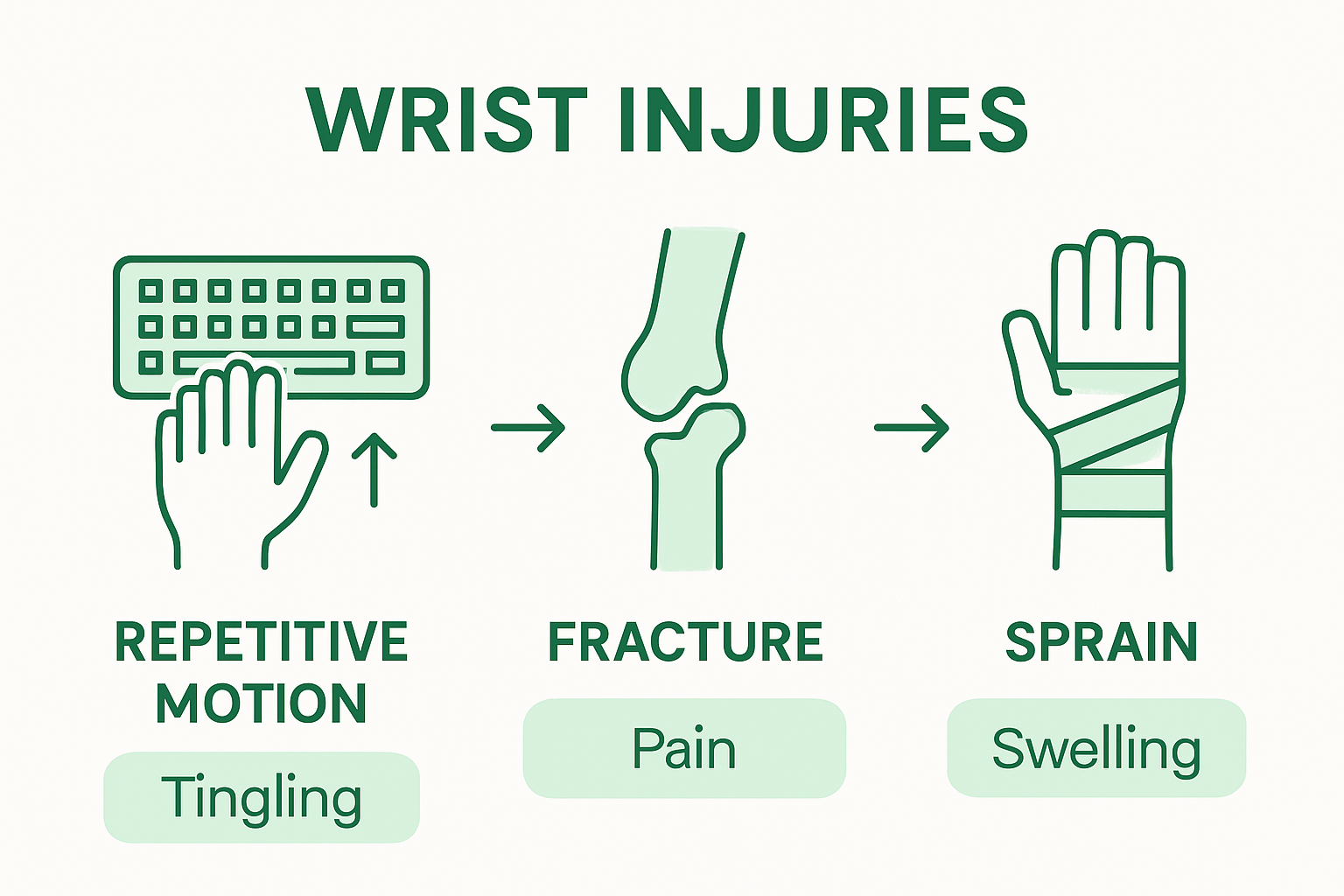
Understanding the nuanced mechanisms behind wrist injuries becomes crucial for developing effective prevention and treatment strategies. By recognizing early warning signs and implementing proactive approaches, patients can mitigate potential long-term complications and maintain optimal upper extremity functionality.
Wrist Health: Prevention and Treatment Insights
Maintaining optimal wrist health requires a proactive approach that combines strategic prevention, early intervention, and targeted rehabilitation strategies. Best practices for wrist rehabilitation provide critical guidance for individuals seeking to protect and restore their upper extremity functionality.
Prevention begins with understanding biomechanical stress and implementing protective techniques. Ergonomic modifications play a crucial role in reducing repetitive strain, such as adjusting workstation configurations, using wrist supports during computer work, and maintaining proper posture. Athletes and manual laborers should focus on strength training exercises that enhance wrist stability, incorporating specific stretching routines that improve flexibility and reduce injury risk. Protective equipment like wrist braces can provide additional support during high-impact activities.
When injuries occur, comprehensive treatment strategies become essential. Physical and occupational therapy offer targeted interventions designed to restore strength, mobility, and functional capacity. Innovative approaches like PRP therapy have emerged as powerful non-surgical options, stimulating the body’s natural healing mechanisms. These treatments can effectively address conditions ranging from chronic tendinitis to acute ligament injuries, offering patients alternatives to traditional surgical interventions.
Ultimately, wrist health is a dynamic process that requires ongoing attention and personalized care. By combining preventive strategies, early detection of potential issues, and advanced treatment technologies, individuals can maintain robust wrist functionality and minimize the risk of long-term complications.
Take Control of Your Wrist Health with Expert Orthopedic Care
Understanding the intricate wrist anatomy and the risks of bone, ligament, and tendon injuries is the first step toward effective treatment. If you are facing persistent wrist pain or mobility challenges caused by injury or overuse, it is crucial to seek specialized care that addresses these complex issues. Our Wrist Injury & Treatment Guides | Austin Orthopedic Blog offers valuable insights into common wrist problems and cutting-edge therapies.

Don’t let wrist pain limit your daily activities or work. At https://handtoshoulderaustin.com, Dr. Manish V. Patel combines deep knowledge of wrist anatomy with personalized treatment plans designed to restore function and relieve discomfort. Whether you need diagnosis, non-surgical options like PRP therapy, or expert surgical intervention, our clinic in Austin TX is ready to help. Take the first step toward a stronger, healthier wrist by scheduling your consultation today.
Frequently Asked Questions
What are the main bones in the wrist?
The wrist is made up of eight carpal bones: scaphoid, lunate, triquetrum, pisiform, trapezium, trapezoid, capitate, and hamate. These bones are arranged in two rows and work together to enable various wrist movements.
How do ligaments and tendons support wrist function?
Ligaments connect the bones in the wrist, providing stability and preventing excessive movement. Tendons connect muscles to the bones, allowing for hand movements like gripping and rotating. Together, they support the wrist’s remarkable mobility and structural integrity.
What are the common causes of wrist injuries?
Common causes of wrist injuries include repetitive motion, such as in carpal tunnel syndrome or tendinitis, as well as traumatic injuries like fractures, sprains, and dislocations. These injuries often result from overuse, abrupt movements, or falls.
How can I prevent wrist injuries?
Preventing wrist injuries can be achieved through ergonomic modifications in your workspace, strength training, and flexibility exercises. Using wrist supports and maintaining proper posture can also help in reducing the risk of injuries.


