

Waking up to a finger stuck in a bent position is more common than you might think. Trigger finger affects up to 2 percent of people, especially those in jobs or hobbies that demand constant hand use. This painful catching or locking can disrupt daily life, making even simple tasks challenging. Understanding why this happens and who is most at risk is key to finding relief. This guide explains what causes trigger finger and how you can address it with the right care.
Table of Contents
- What Is Trigger Finger and Its Causes
- Symptoms and Diagnosis Process in Austin
- Treatment Options for Trigger Finger Relief
- Surgical vs. Nonsurgical Approaches Compared
- Selecting the Right Trigger Finger Specialist
Key Takeaways
| Point | Details |
|---|---|
| Understanding Trigger Finger | Trigger finger is a hand condition characterized by fingers or thumb getting stuck in a bent position due to tendon sheath inflammation. Risk factors include gender, age, diabetes, and repetitive hand movements. |
| Symptoms and Diagnosis | Key symptoms include finger stiffness, popping sensations, and tenderness at the finger base. Diagnosis involves physical exams and may include imaging to confirm the condition. |
| Treatment Options | Treatment ranges from conservative methods like rest and splinting to non-surgical options such as PRP therapy and surgical interventions in persistent cases. Personalized treatment strategies lead to better recovery outcomes. |
| Choosing the Right Specialist | Selecting a board-certified orthopedic specialist with expertise in hand conditions is vital for effective treatment. Look for providers who offer a range of treatment options tailored to patients’ needs. |
What Is Trigger Finger and Its Causes
A trigger finger is a painful hand condition where one of your fingers or thumb becomes stuck in a bent position, often creating an uncomfortable snapping sensation when attempting to straighten it. According to Mayo Clinic, this condition occurs when the tendon controlling your finger cannot glide smoothly through its protective sheath due to inflammation or small lumps developing along the tendon pathway.
The underlying mechanism involves inflammation of the tendon sheath, which creates friction and prevents normal finger movement. NHS research indicates that while the exact reason for this swelling remains not fully understood, certain demographic and health factors significantly increase your risk. These risk factors include:
- Being female
- Age between 40-50 years
- Having diabetes
- Living with rheumatoid arthritis
- Experiencing repetitive hand movements in work or hobbies
The condition typically develops when the flexor tendons in your hand become irritated and swollen, narrowing the space within the tendon sheath. This narrowing makes it difficult for the tendon to slide smoothly, causing the characteristic catching or locking sensation. While anyone can develop trigger finger, some individuals are more susceptible. Occupations involving repeated gripping or activities requiring prolonged hand use can increase your likelihood of experiencing this uncomfortable condition. Early recognition of symptoms and consulting with an orthopedic specialist like Dr. Manish V. Patel can help prevent progression and explore both surgical and non-surgical treatment options.
Symptoms and Diagnosis Process in Austin
Identifying trigger finger early can significantly improve treatment outcomes, especially when consulting an experienced orthopedic specialist in Austin. According to Mayo Clinic, the condition presents several distinctive symptoms that patients should recognize. These typically include persistent finger stiffness (especially noticeable in the morning), a popping or clicking sensation during finger movement, and localized tenderness or a small bump at the base of the affected finger.
Healthline research highlights that the diagnostic process is straightforward but requires a careful physical examination. When you visit Dr. Manish V. Patel’s Austin clinic, the diagnosis will likely involve:
- A comprehensive review of your medical history
- Physical manipulation of the affected hand
- Assessment of finger range of motion
- Listening for characteristic clicking or snapping sounds
- Evaluating pain levels and movement restrictions
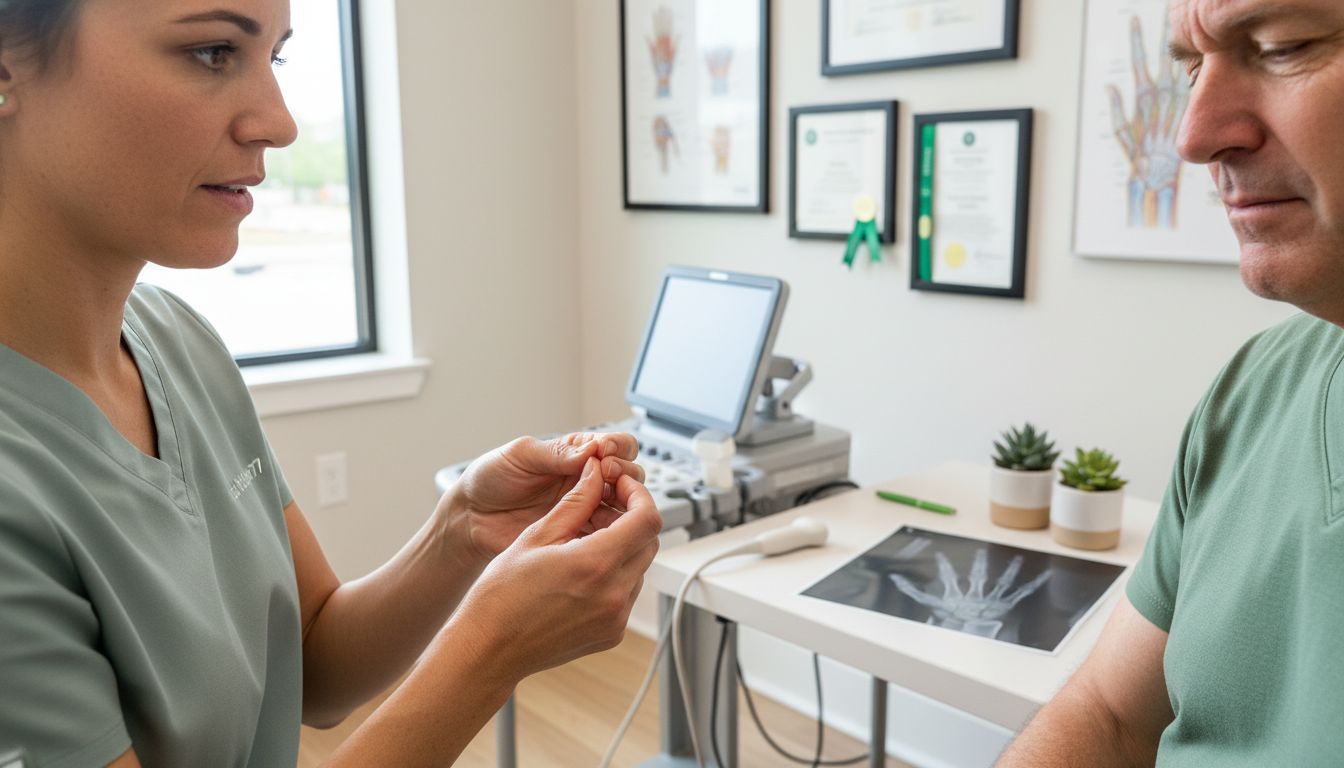
The diagnostic evaluation typically involves observing how your finger moves, checking for any locking or catching sensations, and understanding the progression of your symptoms. In some cases, additional imaging like ultrasound or X-rays might be recommended to rule out other potential conditions. Dr. Patel specializes in non-surgical treatments like PRP therapy, which can often provide relief without invasive procedures. If you’re experiencing persistent hand discomfort or notice your finger getting stuck in a bent position, scheduling a professional assessment can help you understand and address your trigger finger symptoms effectively.
Treatment Options for Trigger Finger Relief
Trigger finger treatment requires a personalized approach, with options ranging from conservative methods to more invasive interventions. According to Mayo Clinic, the treatment strategy depends on the severity and duration of your symptoms. Dr. Manish V. Patel specializes in non-surgical treatments like PRP therapy, which can provide significant relief for many patients experiencing early-stage trigger finger.
NHS research highlights several key treatment approaches that patients can explore:
- Rest and Activity Modification
- Medications like NSAIDs to reduce inflammation
- Splinting to immobilize the affected finger
- Steroid Injections to reduce swelling
- Surgical Intervention for persistent cases
In Austin, Dr. Patel offers a comprehensive approach to trigger finger treatment. Platelet-Rich Plasma (PRP) therapy stands out as an innovative non-surgical option that can accelerate healing and reduce inflammation. This treatment involves using your body’s own healing mechanisms to address the underlying tendon irritation. For more advanced cases, surgical options like tendon release procedures might be recommended. The goal is always to restore full finger mobility and eliminate pain with the least invasive approach possible. Patients can typically expect significant improvement, with many experiencing complete resolution of symptoms through carefully tailored treatment plans.
Surgical vs. Nonsurgical Approaches Compared
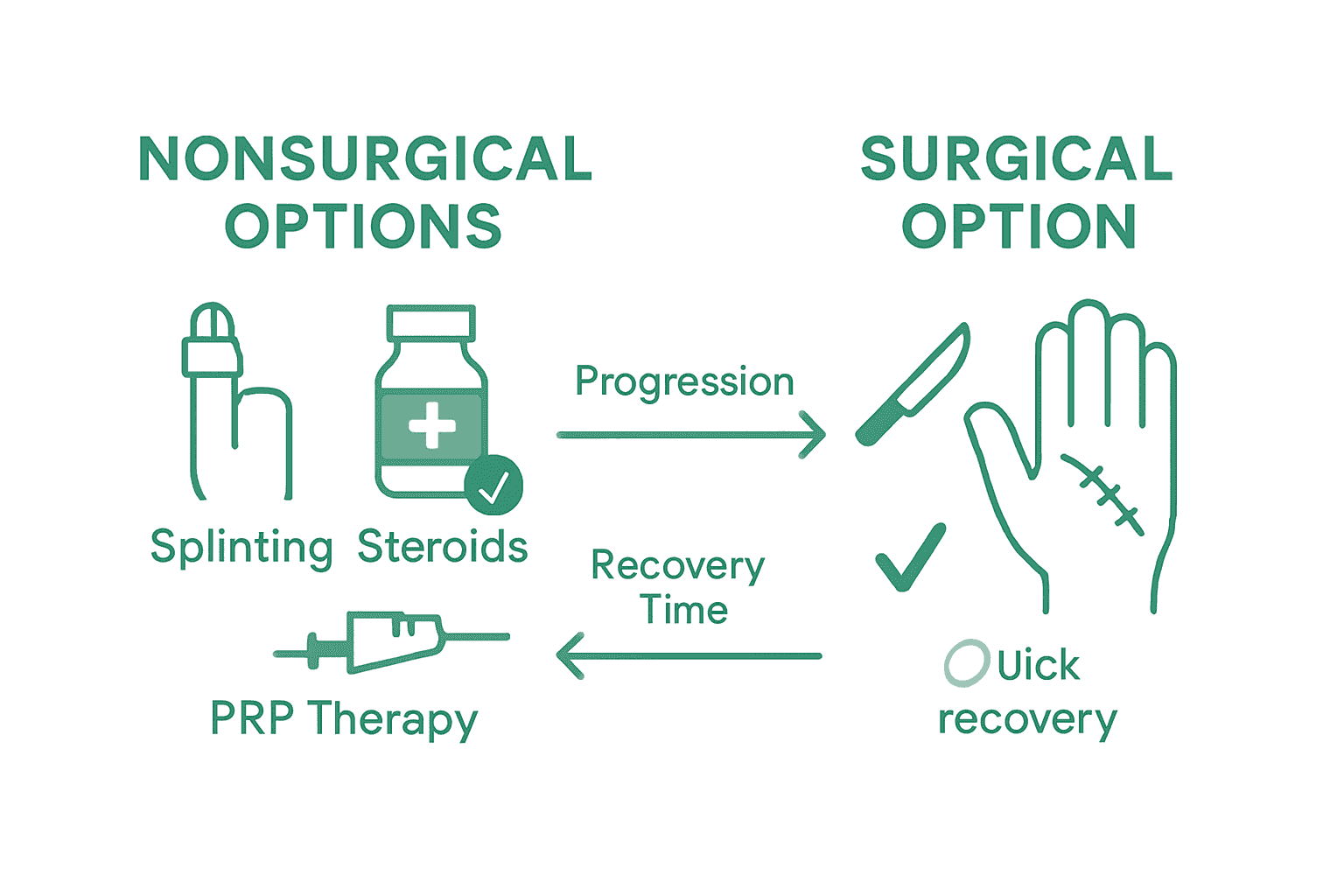
When addressing trigger finger, patients have multiple treatment pathways with varying levels of invasiveness and recovery times. According to Mayo Clinic Health System, nonsurgical treatments represent the first line of intervention, typically involving over-the-counter anti-inflammatory medications, targeted steroid injections, and strategic splinting to reduce finger movement and promote healing.
NHS research provides insights into the comparative effectiveness of different approaches. Here’s a comprehensive breakdown of surgical and nonsurgical strategies:
Nonsurgical Approaches:
- Medication management
- Rest and activity modification
- Splinting
- Steroid injections
- Platelet-Rich Plasma (PRP) therapy
Surgical Approaches:
- Minor outpatient procedure
- Small palm incision
- Tendon release technique
- Quick recovery timeline
- Potential for complete symptom resolution
Dr. Manish V. Patel’s approach in Austin emphasizes personalized treatment, often starting with conservative non-surgical options like PRP therapy. Surgical intervention becomes recommended when nonsurgical treatments prove ineffective, with the procedure typically being a same-day, minimally invasive intervention. Patients can usually expect limited hand use for 10-14 days post-surgery, with most returning to normal activities once stitches are removed. The ultimate goal remains restoring full finger mobility and eliminating pain through the most appropriate and least invasive treatment strategy.
Selecting the Right Trigger Finger Specialist
Navigating the complex landscape of hand healthcare requires careful consideration and informed decision-making. According to Mayo Clinic, choosing a healthcare provider experienced in diagnosing and treating hand conditions is crucial for effective trigger finger management. When seeking a specialist, patients should prioritize professionals with specific expertise in upper extremity conditions and a comprehensive approach to treatment.
NHS research suggests several key criteria for selecting the right specialist. Here are critical factors to consider when choosing your trigger finger expert:
- Board Certification in orthopedic surgery
- Specific experience with hand and upper extremity conditions
- Advanced training in minimally invasive techniques
- Expertise in both surgical and non-surgical treatments
- Strong patient communication and personalized care approach
Dr. Manish V. Patel stands out as an exemplary choice for Austin residents seeking trigger finger treatment. His fellowship-trained background, specialization in upper extremity conditions, and commitment to comprehensive patient care make him an ideal specialist. Patients should look for a provider who offers a range of treatment options, including innovative approaches like Platelet-Rich Plasma (PRP) therapy, and demonstrates a patient-centered philosophy that prioritizes individualized treatment plans. The right specialist will not just treat your condition but will guide you through a holistic recovery process tailored to your specific needs and lifestyle.
Find Lasting Relief with an Austin Trigger Finger Specialist
If you are struggling with finger stiffness, painful snapping, or limited hand movement from trigger finger, you are not alone. This condition can disrupt daily tasks and cause ongoing discomfort. Understanding your options for care is the first step to reclaiming full hand function and reducing pain. At our practice, we specialize in advanced non-surgical and surgical treatments tailored to your specific needs. Explore our comprehensive Hand Pain, Procedures & Treatment Articles | Austin Orthopedics to learn how experts approach this condition with proven solutions.
Don’t wait to address your trigger finger symptoms. Schedule a consultation with Dr. Manish V. Patel today to receive personalized orthopedic care from a fellowship-trained, board-certified surgeon who focuses on restoring your hand’s full mobility. Visit https://handtoshoulderaustin.com to book an appointment or learn more about our wide range of Treatment Archives – Austin Hand To Shoulder options designed to get you back to your best. Take control of your hand health now and stop living with the pain and frustration of trigger finger.
Frequently Asked Questions
What is trigger finger and what causes it?
Trigger finger is a condition where one of your fingers becomes stuck in a bent position. It occurs due to inflammation of the tendon sheath, which prevents the tendon from gliding smoothly. Risk factors include being female, age between 40-50 years, diabetes, rheumatoid arthritis, and repetitive hand movements.
What are the common symptoms of trigger finger?
Common symptoms include persistent finger stiffness, particularly in the morning, a popping or clicking sensation during movement, and tenderness or a small bump at the base of the affected finger.
What treatment options are available for trigger finger?
Treatment options range from conservative methods like rest, splinting, and medications to more invasive procedures like steroid injections and surgery. Platelet-Rich Plasma (PRP) therapy is also an effective non-surgical option available.
How do I choose the right specialist for treating trigger finger?
Look for a specialist who is board-certified in orthopedic surgery and has experience specifically with hand and upper extremity conditions. Additionally, consider their expertise in both surgical and non-surgical treatments, as well as their approach to personalized patient care.


