

Hand pain that lingers or keeps you up at night could signal something more serious than everyday fatigue. For thousands in Austin, carpal tunnel syndrome affects daily life, hindering simple tasks and leading to lasting nerve damage if ignored. Understanding what causes these symptoms and how surgical and non-surgical options work helps you make informed choices about your health and recovery plan.
Table of Contents
- Understanding Carpal Tunnel Syndrome and Surgery
- Types of Carpal Tunnel Surgery Procedures
- What to Expect During Surgical Treatment
- Risks, Benefits, and Recovery Timeline
- Costs, Insurance, and Alternatives in Austin
Key Takeaways
| Point | Details |
|---|---|
| Understanding Carpal Tunnel Syndrome | Carpal tunnel syndrome is caused by median nerve compression, resulting in pain, numbness, and decreased hand strength. Timely medical evaluation is crucial to prevent permanent nerve damage. |
| Surgical Options | Open and endoscopic carpal tunnel release are the two primary surgical techniques to relieve symptoms. The choice of procedure depends on individual factors, such as anatomy and severity of symptoms. |
| Recovery Expectations | Post-surgery recovery includes limited hand use initially, with a timeline of 3-6 months for complete recovery and restoration of hand strength. Personalized care is crucial for optimal recovery. |
| Cost and Alternatives | Treatment costs range from $1,500 to $3,500 for surgery, with varying insurance coverage. Non-surgical alternatives such as splinting and therapy should be considered before opting for surgery. |
Understanding Carpal Tunnel Syndrome and Surgery
Carpal tunnel syndrome represents a complex upper extremity condition affecting thousands of Austin residents, causing significant discomfort and potential long-term nerve damage. According to Johns Hopkins Medicine, this syndrome occurs when the median nerve becomes compressed within the narrow passageway of the wrist, leading to progressive symptoms that can dramatically impact daily functionality.
The condition typically develops through a combination of factors, including repetitive hand movements, underlying medical conditions, and anatomical wrist characteristics. Nerve compression manifests through distinct symptoms: persistent hand and wrist pain, tingling sensations, numbness radiating through fingers, and gradually weakening grip strength. As Massachusetts General Hospital explains, these symptoms progressively worsen without proper intervention, potentially causing permanent nerve damage if left untreated.
Surgical intervention becomes necessary when conservative treatments fail to provide relief. Carpal tunnel release surgery aims to alleviate nerve pressure by carefully cutting the transverse carpal ligament, which creates more space for the median nerve. For Austin residents experiencing chronic symptoms, this procedure offers a strategic solution to restore hand function and eliminate persistent discomfort. Before recommending surgery, our team conducts comprehensive assessments to determine the most appropriate treatment strategy, which might include exploring non-surgical options like PRP therapy to address underlying inflammation and support natural healing processes.
Key symptoms that might indicate carpal tunnel syndrome include:
- Consistent nighttime hand numbness
- Dropping objects frequently
- Weakness in hand and thumb
- Sharp or burning wrist pain
- Difficulty performing fine motor tasks
Understanding these indicators helps patients seek timely medical evaluation, potentially preventing advanced nerve damage and exploring targeted treatment options tailored to individual needs.
Types of Carpal Tunnel Surgery Procedures
Carpal tunnel surgery represents a precise medical intervention designed to alleviate median nerve compression, with two primary surgical approaches available for Austin patients experiencing chronic wrist pain. University of North Carolina School of Medicine highlights two primary techniques: open carpal tunnel release and endoscopic carpal tunnel release, each offering unique benefits and considerations for patients seeking relief.
The open carpal tunnel release procedure involves making a small incision in the palm, allowing direct visualization of the transverse carpal ligament. Surgeons carefully cut this ligament to reduce pressure on the median nerve, creating more space and alleviating compression symptoms. This traditional approach provides surgeons with comprehensive visual access to the surgical site, enabling precise ligament management and reducing potential nerve damage risks.
Endoscopic carpal tunnel release represents a more minimally invasive alternative, utilizing specialized surgical instruments and small camera systems to perform the procedure through tiny incisions. This technique typically results in smaller surgical wounds, potentially faster recovery times, and reduced post-operative scarring. For Austin residents exploring types of hand and wrist conditions, understanding these surgical nuances becomes crucial in making informed treatment decisions.
Key differences between open and endoscopic carpal tunnel release include:
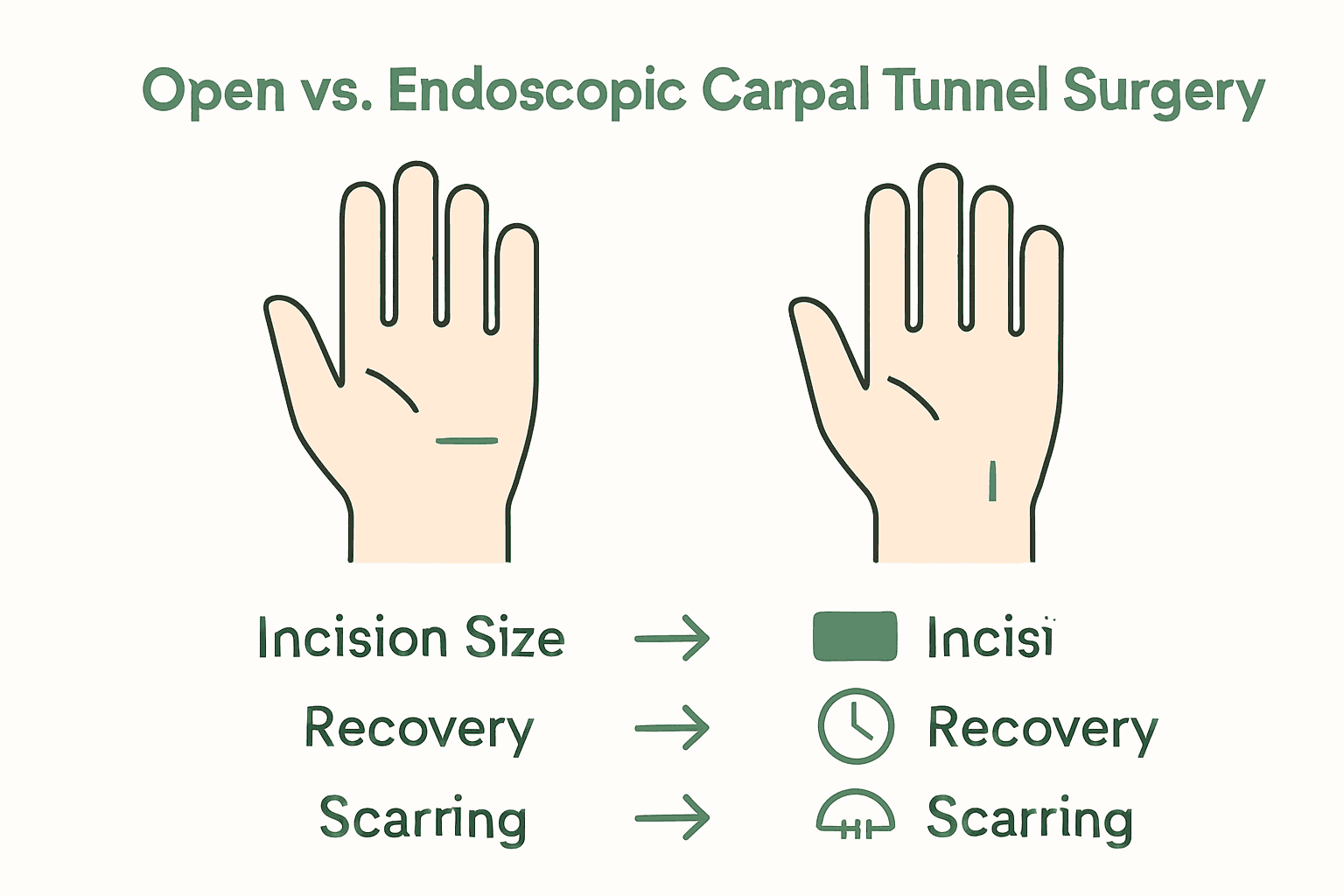
- Incision size
- Recovery duration
- Potential scarring
- Surgical complexity
- Visualization techniques
Ultimately, the most appropriate surgical approach depends on individual patient factors, including anatomical considerations, symptom severity, and overall health status.
 Our team conducts comprehensive evaluations to recommend the most suitable procedure, ensuring optimal outcomes and patient comfort throughout the surgical journey.
What to Expect During Surgical Treatment
Carpal tunnel surgical treatment involves a carefully orchestrated process designed to minimize patient discomfort and maximize successful outcomes. OSF HealthCare outlines a comprehensive approach that begins with thorough preoperative consultations and preparation, ensuring patients understand every stage of their surgical journey.
Anesthesia and Surgical Procedure are critical components of the treatment. Stanford Health Care explains that patients typically receive local or general anesthesia, depending on individual health factors and surgeon recommendations. The procedure itself involves making a precise incision to access and release the compressed median nerve, a process that typically takes less than one hour and allows for immediate hand mobility post-surgery.
Post-surgical recovery requires strategic management and patient compliance. Patients can expect:
- Initial wrist bandaging and potential splint usage
- Gradual return of hand sensation
- Progressive rehabilitation exercises
- Pain management through prescribed medications
- Scheduled follow-up appointments to monitor healing
Individual recovery experiences vary, and our team remains committed to providing personalized care tailored to each patient’s unique physiological response. For Austin residents interested in understanding more about upper extremity surgical workflows, we recommend exploring our recovery workflow after rotator cuff surgery to gain insights into comprehensive surgical rehabilitation approaches.
Risks, Benefits, and Recovery Timeline
Carpal tunnel release surgery offers a complex landscape of potential outcomes that patients must carefully consider. Cedars-Sinai highlights that while the procedure presents significant benefits, patients must also be aware of potential surgical risks that accompany the intervention. The primary goal remains alleviating chronic nerve compression and restoring hand functionality, which often outweighs the potential complications for many individuals suffering from persistent symptoms.
The potential risks associated with carpal tunnel surgery include minor and rare complications such as bleeding, infection, and potential nerve injury. MedlinePlus emphasizes that allergic reactions to anesthesia represent another consideration patients must discuss thoroughly with their surgical team. Despite these potential challenges, the benefits are substantial: significant pain reduction, restored hand strength, improved nerve function, and enhanced quality of daily life activities.
Recovery Timeline Breakdown:
- Immediate Post-Surgery: 1-2 weeks of limited hand usage
- Initial Healing Phase: 4-6 weeks of gradual rehabilitation
- Complete Recovery: 3-6 months for full strength restoration
- Return to Normal Activities: Typically 6-12 weeks
Patients seeking comprehensive understanding of upper extremity surgical processes can explore our types of hand and wrist conditions explained to gain deeper insights into surgical interventions and recovery strategies. Our team remains committed to providing personalized guidance, ensuring each patient understands their unique recovery trajectory and potential outcomes.
Costs, Insurance, and Alternatives in Austin
Carpal tunnel treatment involves a nuanced approach to managing healthcare expenses and exploring multiple intervention strategies. American Academy of Family Physicians emphasizes the importance of understanding both surgical and non-surgical options before committing to an expensive medical procedure. Austin patients have multiple pathways to address their median nerve compression, ranging from conservative treatments to surgical interventions.
Non-surgical alternatives offer cost-effective approaches for managing carpal tunnel syndrome, including:
- Wrist splinting
- Physical therapy
- Ergonomic workplace modifications
- PRP therapy
- Anti-inflammatory medications
- Targeted exercise programs
Insurance coverage for carpal tunnel procedures varies significantly, with most private and medical insurance plans providing partial reimbursement for medically necessary treatments. Patients should anticipate potential out-of-pocket expenses ranging from $1,500 to $3,500 for surgical interventions, depending on specific procedure complexity and individual healthcare plans. For Austin residents seeking comprehensive insights into treatment options, we recommend exploring our guide to arthritis treatment options, which provides additional context for understanding musculoskeletal condition management.
Our practice remains committed to transparent pricing and personalized treatment strategies, ensuring Austin patients receive comprehensive care tailored to their unique physiological needs and financial considerations. By offering multiple treatment pathways and working closely with insurance providers, we strive to make advanced medical interventions accessible and affordable for individuals experiencing upper extremity nerve compression conditions.
Regain Your Hand Function and Comfort with Expert Carpal Tunnel Care in Austin
Carpal tunnel syndrome can steal your ability to perform simple daily tasks with ease. If you are struggling with persistent pain, numbness, or weakness in your hand, it is time to explore effective treatment options. Understanding the importance of the right surgical approach, from open to endoscopic carpal tunnel release, is crucial to achieving lasting relief. At our practice, we focus on personalized care tailored to your unique needs and anatomy. Learn more about advanced surgical options and recovery strategies by visiting our Upper Extremity Surgery Articles | Austin Orthopedic Blog.

Take control of your hand health today. Discover how Dr. Manish V. Patel and our dedicated team provide comprehensive solutions that restore strength and reduce pain. Don’t let carpal tunnel syndrome limit your lifestyle any longer. Schedule a consultation now through our main site at https://handtoshoulderaustin.com and prepare for a tailored treatment plan. For helpful tips on recovery, check out our Surgery Recovery & Rehab Guides | Austin Orthopedic Care and start your journey toward healing with confidence.
Frequently Asked Questions
What are the main symptoms of carpal tunnel syndrome?
Key symptoms include consistent nighttime hand numbness, frequent dropping of objects, weakness in the hand and thumb, sharp or burning wrist pain, and difficulty performing fine motor tasks.
What types of carpal tunnel surgery are available?
The two primary surgical approaches for carpal tunnel release are the open carpal tunnel release, which involves a larger incision, and the endoscopic carpal tunnel release, a minimally invasive procedure using small incisions.
What can I expect during my recovery after carpal tunnel surgery?
Post-surgical recovery typically includes 1-2 weeks of limited hand usage, followed by an initial healing phase of 4-6 weeks for gradual rehabilitation, with a complete recovery period ranging from 3-6 months for full strength restoration.
What are the potential risks and benefits of carpal tunnel surgery?
While the surgery can significantly reduce pain, restore hand strength, and improve nerve function, potential risks may include bleeding, infection, allergic reactions, and rare nerve injury. The benefits usually outweigh the risks for those with persistent symptoms.
Recommended
- Surgery for Arthritis in Finger Joints: Step-by-Step Recovery – Austin Hand To Shoulder
- What Is Hand Surgery? Complete Overview for Austin Locals – Austin Hand To Shoulder
- 7 Key Hand Surgery Benefits for Austin Residents – Austin Hand To Shoulder
- Why Surgery May Be Needed: Complete Guide – Austin Hand To Shoulder


