

Nearly 70 percent of people will experience shoulder pain at some point in their lives, yet many ignore the early warnings until the problems become severe. Shoulder discomfort can disrupt sleep, limit movement, and affect everything from daily chores to athletic performance. Spotting the first signs of trouble helps you act quickly and prevent bigger issues, making a real difference in how fast and fully you recover.
Key Takeaways
| Point | Details |
|---|---|
| Early Signs of Shoulder Problems | Recognize symptoms like sharp pain, reduced range of motion, and discomfort during overhead movements to prevent long-term damage. |
| Common Symptoms to Monitor | Symptoms such as persistent stiffness, weakness, and pain during certain activities may warrant professional evaluation. |
| Types of Shoulder Conditions | Conditions like tendon inflammation and frozen shoulder can arise from various factors, including overuse and underlying health issues. |
| Urgency of Medical Attention | Seek immediate medical evaluation for red flags such as severe pain, inability to raise the arm, or persistent weakness to avoid complications. |
Table of Contents
- Defining Early Signs Of Shoulder Problems
- Common Symptoms And Warning Signals
- Types Of Shoulder Problems And Causes
- Risk Factors And Contributing Conditions
- When To Seek Medical Attention
Defining Early Signs of Shoulder Problems
Recognizing early signs of shoulder problems is crucial for preventing long-term damage and maintaining optimal upper extremity function. Shoulder pain can stem from various conditions, ranging from minor strains to more serious underlying issues that require professional medical intervention.
According to research from Harvard Health, early shoulder discomfort often originates from conditions like tendonitis, muscle strains, or sprains related to recent physical activities. These initial signs might include:
- Sharp or persistent aching in the shoulder region
- Reduced range of motion
- Discomfort when performing overhead movements
- Stiffness or weakness in the shoulder joint
- Pain that increases with specific activities

If you’re experiencing these symptoms, a consultation with an orthopedic specialist can help determine the root cause. Our guide to shoulder injury care options provides deeper insights into potential treatments, including non-surgical approaches like PRP therapy that can address early-stage shoulder conditions effectively. Don’t ignore persistent shoulder discomfort – early diagnosis and intervention can prevent more serious complications and support faster recovery.
Common Symptoms and Warning Signals
Understanding the warning signals of shoulder problems is critical for early intervention and preventing potential long-term damage. Not all shoulder discomfort indicates a serious condition, but certain symptoms warrant closer medical attention and professional evaluation.
According to Cleveland Clinic, shoulder impingement syndrome presents distinctive symptoms that patients should recognize. These warning signs typically include:
- Sharp pain in the front of the shoulder
- Tenderness spreading along the side of the arm
- Increased pain during nighttime
- Discomfort when lifting the arm overhead
- Challenges reaching behind the back
- Weakness during arm movements
- Persistent stiffness in the shoulder joint
For Austin residents experiencing these symptoms, PRP therapy offers a promising non-surgical treatment option. Our guide to shoulder injury care options provides comprehensive insights into managing these conditions. Remember, early professional assessment can prevent minor issues from developing into more complex shoulder problems requiring extensive intervention.
Types of Shoulder Problems and Causes
Understanding the diverse landscape of shoulder problems is crucial for proper diagnosis and targeted treatment. Shoulder conditions can emerge from various physiological and lifestyle factors, each presenting unique challenges for patients seeking relief.
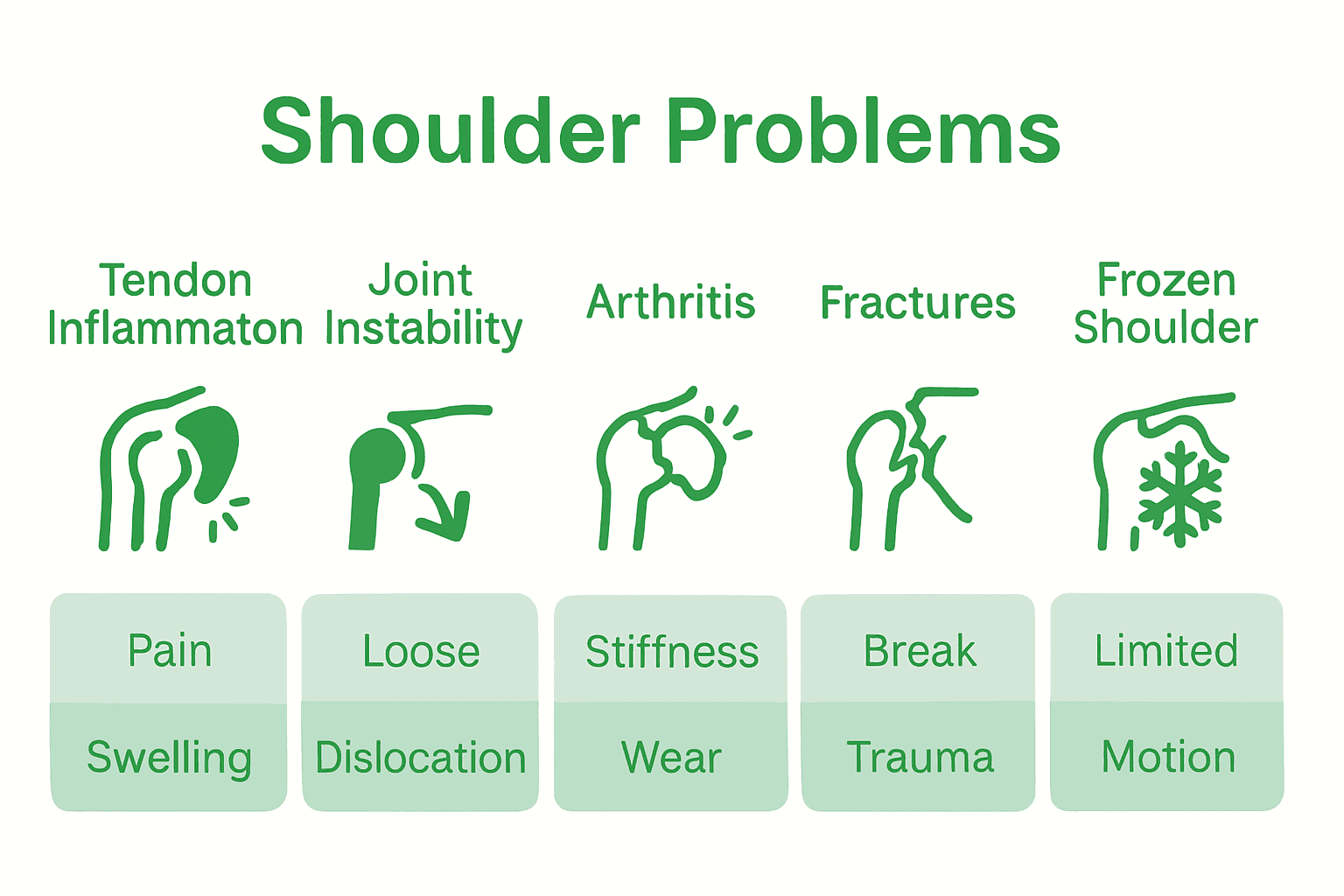
According to the American Academy of Orthopaedic Surgeons, shoulder problems typically fall into several key categories:
Here’s a summary comparing common types of shoulder problems and their causes:
| Condition | Key Features | Typical Causes |
|---|---|---|
| Tendon Inflammation | Pain Swelling |
Overuse Repetitive motion |
| Joint Instability | Weakness Loose feeling |
Injuries Genetics |
| Arthritis | Stiffness Chronic pain |
Aging Degeneration |
| Fractures | Severe pain Swelling |
Trauma Falls |
| Frozen Shoulder | Stiffness Restricted motion |
Diabetes Prolonged immobility |
- Tendon Inflammation: Conditions like bursitis or tendinitis
- Joint Instability: Involving shoulder joint looseness or weakness
- Arthritis: Degenerative joint changes
- Fractures: Structural bone damage
One particularly complex condition is frozen shoulder (adhesive capsulitis), which predominantly affects individuals between 40-60 years old. Research from our athlete injury guide highlights that these problems can originate from overuse, acute injuries, or underlying health conditions like diabetes. For Austin residents experiencing persistent shoulder discomfort, non-surgical treatments such as PRP therapy offer promising alternatives to invasive interventions.
Risk Factors and Contributing Conditions
Shoulder health involves understanding multiple complex factors that can increase vulnerability to injuries and chronic conditions. Identifying these risk factors is crucial for prevention and early intervention, helping patients make informed decisions about their musculoskeletal well-being.
According to research on subacromial bursitis, several key contributing conditions can significantly impact shoulder function:
- Repetitive overhead work
- Sports and intense athletic activities
- Intrinsic tendon disorders
- Autoimmune conditions
- Crystal deposition diseases
- Structural anatomical variations
Professional athletes and individuals with jobs requiring frequent overhead movements are particularly susceptible to developing shoulder complications. Our guide to athlete shoulder injuries provides deeper insights into these risk profiles. For Austin residents experiencing persistent shoulder challenges, non-surgical treatments like PRP therapy offer promising alternatives to manage and potentially mitigate these complex conditions, emphasizing proactive approach to shoulder health.
When to Seek Medical Attention
Shoulder injuries can range from minor strains to serious conditions requiring immediate professional intervention. Recognizing the critical moments when medical attention becomes necessary can prevent long-term damage and ensure optimal recovery for patients experiencing shoulder discomfort.
According to Duke Health, several red flags signal the need for urgent medical evaluation:
- Experiencing a popping sensation after a fall or strain
- Sudden and persistent arm weakness
- Pain that continues for months without improvement
- Inability to raise your arm above shoulder height
- Significant swelling or visible deformity
- Intense pain that interrupts sleep or daily activities
For Austin residents navigating shoulder health challenges, our shoulder surgery guide offers comprehensive insights into treatment options. Our practice specializes in non-surgical approaches like PRP therapy, providing tailored solutions that address individual patient needs while minimizing invasive interventions. Remember, early professional assessment can prevent minor issues from developing into complex shoulder problems requiring extensive medical treatment.
Take Control of Early Shoulder Problems With Expert Austin Care
Are you noticing sharp pain, stiffness, or weakness in your shoulder that just doesn’t seem to improve? If the early warning signs described above feel familiar, you are not alone. Many people delay getting help and risk turning minor conditions like tendonitis or joint instability into long-term problems. At Austin Hand To Shoulder, we understand the anxiety and disruption these symptoms bring to daily life. Our team is dedicated to identifying issues early and building personalized care plans for sustainable recovery.
Explore our Shoulder Resource Center for in-depth guidance, recovery stories, and the latest treatment options in Austin.

Do not let minor shoulder discomfort develop into a bigger concern. Book your appointment with Dr. Manish V. Patel and experience thoughtful orthopedic care that truly puts your needs first. Visit Austin Hand To Shoulder to take the first step toward lasting relief. Our team is ready to help you move without pain again. Now is the time for professional evaluation and solutions designed just for you.
Frequently Asked Questions
What are the early signs of shoulder problems?
Common early signs of shoulder problems include sharp or persistent aching in the shoulder region, reduced range of motion, discomfort during overhead movements, stiffness or weakness in the shoulder joint, and pain that increases with specific activities.
When should I seek medical attention for shoulder pain?
You should seek medical attention for shoulder pain if you experience a popping sensation after a fall or strain, sudden and persistent arm weakness, pain that lasts for months without improvement, inability to raise your arm above shoulder height, significant swelling or visible deformity, or intense pain that disrupts your sleep or daily activities.
What types of shoulder problems are there?
Shoulder problems can include tendon inflammation (like bursitis or tendinitis), joint instability, arthritis, fractures, and frozen shoulder. Each condition has unique symptoms and causes that require careful assessment.
How can PRP therapy help with shoulder problems?
PRP (Platelet-Rich Plasma) therapy is a non-surgical treatment that can help manage early-stage shoulder conditions by promoting healing and reducing inflammation, making it a promising alternative to invasive interventions.


