

More than one million American adults undergo wrist surgery each year, yet many overlook the crucial steps needed for safe recovery at home. The first weeks post-surgery bring restrictions that can turn everyday routines into unexpected challenges. With the right preparation and care, you can create a safe space, manage pain, and promote healing so your recovery feels less overwhelming and more in your control.
Table of Contents
- Step 1: Prepare Your Home And Recovery Space
- Step 2: Manage Pain And Swelling Effectively
- Step 3: Follow Wound Care And Hygiene Instructions
- Step 4: Begin Gentle Mobility And Approved Exercises
- Step 5: Monitor Recovery Progress And Report Concerns
Quick Summary
| Main Insight | Explanation |
|---|---|
| 1. Create a Safe Recovery Space | Choose a recovery area on the main floor, clear pathways, and remove tripping hazards to minimize accidents during healing. |
| 2. Elevate Your Arm and Control Pain | Keep your arm elevated above heart level using pillows and apply ice packs to reduce pain and swelling after surgery. |
| 3. Maintain Proper Wound Care | Keep your surgical dressing clean and dry, monitor for signs of infection, and wash hands before touching the wound to ensure healing. |
| 4. Start Gentle Mobility Exercises | Gradually introduce movement to your wrist and fingers following your doctor’s instructions to avoid stiffness and promote flexibility. |
| 5. Track Your Recovery Progress | Document pain levels and mobility in a journal to identify issues early and maintain open communication with your healthcare team. |
Step 1: Prepare Your Home and Recovery Space
Preparing your home for wrist surgery recovery is critical to ensuring a smooth healing process. Your living space becomes your primary recovery zone, and strategic organization can significantly reduce stress and potential complications. The Canadian Orthopaedic Foundation recommends creating a comfortable recovery environment that minimizes unnecessary movement and potential risks.
Start by selecting a primary recovery area on your home’s main floor to reduce stair climbing during initial healing. Clear pathways throughout this space and remove potential tripping hazards like throw rugs, electrical cords, and loose floor mats. Cleveland Clinic suggests creating wide, clear paths between essential areas like your bedroom, bathroom, and kitchen. Arrange furniture to provide ample space for moving with mobility aids if needed.
Before surgery, organize all necessary recovery items within easy arm’s reach. This includes medications, water, phone chargers, entertainment like books or tablets, and any recommended post surgical care materials. Having a small side table or rolling cart can help keep everything accessible without requiring excessive movement. Your goal is creating a safe, comfortable recovery zone that supports healing and minimizes unnecessary strain on your healing wrist.
Step 2: Manage Pain and Swelling Effectively
Managing pain and swelling after wrist surgery requires a strategic approach that combines medical guidance and smart home care techniques. The American Society for Surgery of the Hand recommends several critical methods to control post surgical discomfort and inflammation that can significantly impact your recovery process.
Kaiser Permanente advises keeping your arm elevated above heart level during the first few days after surgery to help reduce swelling. This means using multiple pillows to prop up your arm while resting or sleeping. When sitting or lying down, create a supportive setup that allows your wrist to remain higher than your heart. Applying ice packs wrapped in a thin towel for 15 to 20 minutes at a time can also help decrease inflammation and numb pain signals.
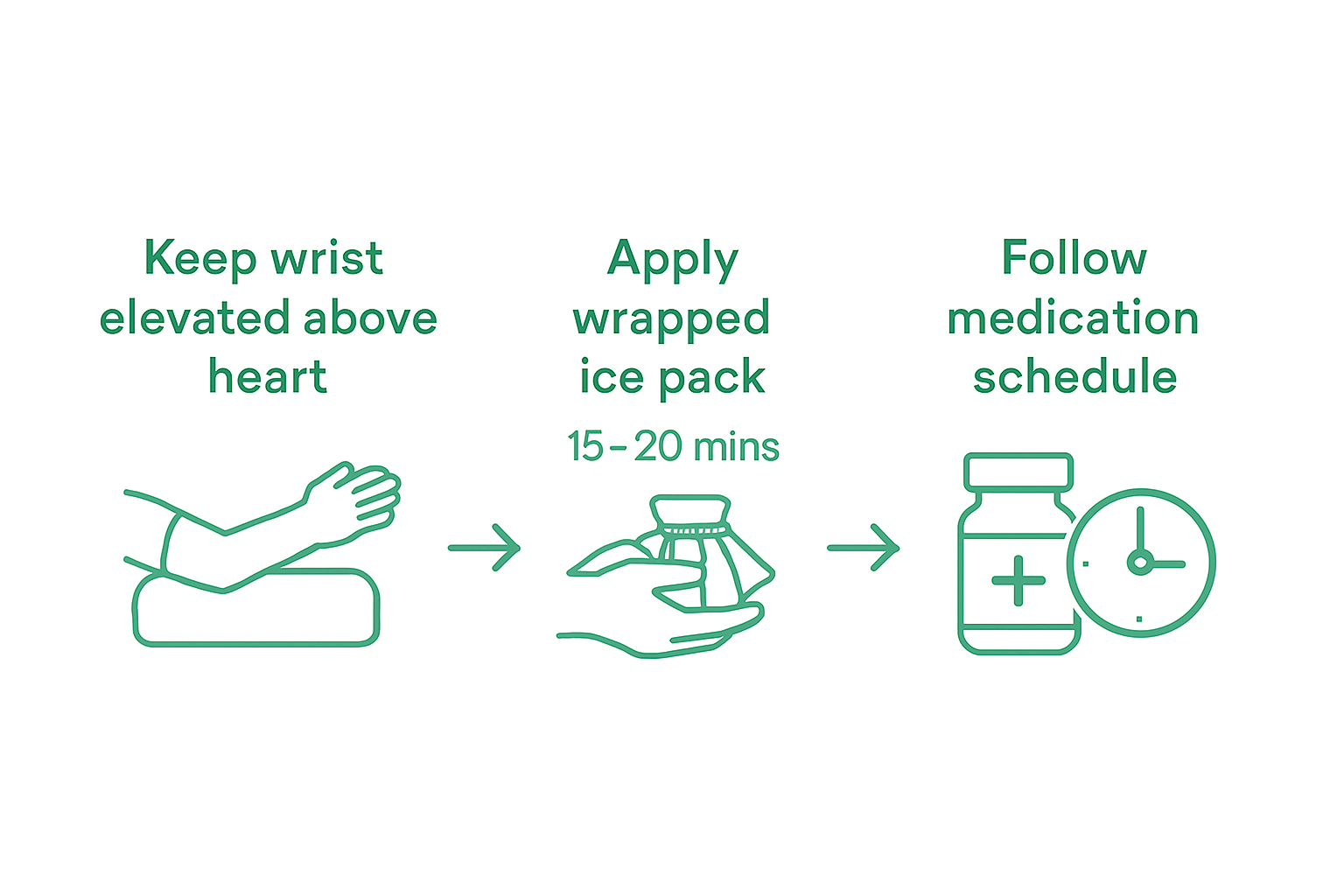
Plan your pain management carefully by following your doctors prescribed medication schedule and alternating between rest and gentle movement. Keeping your hand and wrist moving slightly can improve blood circulation and prevent stiffness while managing potential swelling. Always communicate with your healthcare provider about your pain levels and any concerns during recovery. Tracking your pain and noting any significant changes will help your medical team provide the most effective personalized care.
Step 3: Follow Wound Care and Hygiene Instructions
Proper wound care is crucial for preventing infection and ensuring a smooth recovery after wrist surgery. Dr. James Verheyden emphasizes the importance of maintaining a clean and dry surgical dressing, which serves as your first line of defense against potential complications during the healing process.
Kaiser Permanente provides clear guidelines for protecting your surgical site. Keep your dressing completely dry and avoid activities like swimming or soaking the wound until at least 24 hours after suture removal. When showering, use a waterproof cover or plastic bag to shield your dressing from moisture. Pay close attention to any changes in your wound site such as increased pain, redness, swelling, or unusual discharge these could signal potential infection.
Establish a routine for monitoring your wound and tracking your healing progress. Wear loose clothing that allows easy access to your dressing without causing unnecessary friction. Always wash your hands thoroughly before touching the wound area or changing dressings to minimize infection risk. If you notice any concerning symptoms like elevated temperature, severe pain, or signs of infection, contact your healthcare provider immediately. Your careful attention to wound care will play a significant role in ensuring a successful and complication free recovery.
Step 4: Begin Gentle Mobility and Approved Exercises
Dr. James Verheyden advises encouraging early finger range of motion exercises to help minimize swelling and discomfort after wrist surgery. Gentle mobility is crucial for maintaining joint flexibility and preventing stiffness during your recovery process. The key is to start slow and follow your surgeon’s precise recommendations for movement.

Kaiser Permanente emphasizes following your doctor’s specific instructions regarding how often and extensively you should move your wrist and arm. Begin with passive exercises where you use your uninjured hand to help move your surgical wrist through light range of motion. These might include carefully opening and closing your fingers, gently rotating your wrist, and performing subtle stretching movements. Always stay within the comfort zone your surgeon has defined to prevent potential complications.
Pay close attention to your body’s signals during these exercises. If you experience sharp pain, stop immediately and consult your healthcare provider. Your shoulder mobility exercises can complement your wrist rehabilitation by maintaining overall upper limb flexibility. Remember that consistent but gentle movement is the cornerstone of effective post surgical recovery. Track your progress, communicate openly with your medical team, and be patient with your body’s healing process.
Step 5: Monitor Recovery Progress and Report Concerns
Tracking your wrist surgery recovery requires careful attention and proactive communication with your healthcare team. Kaiser Permanente provides clear guidance on recognizing critical signs that warrant immediate medical attention during your healing process. Understanding what constitutes normal versus abnormal recovery can help you respond quickly to potential complications.
The Cleveland Clinic recommends watching for specific infection indicators that could compromise your surgical outcome. Be vigilant for symptoms such as persistent fever, unexpected chills, increasing pain that medications cannot control, unusual discharge from the incision, or changes in skin color around the surgical site. Keep a recovery journal to document your daily progress, tracking pain levels, mobility improvements, and any unusual sensations. This record will provide valuable insights for your medical team and help you identify potential issues early.
Maintain open communication channels with your surgeon and medical team. Dont hesitate to reach out if something feels unusual or your recovery seems to deviate from expected progress. Your shoulder mobility exercises can serve as a benchmark for overall upper limb recovery, helping you gauge your healing trajectory. Remember that every patient heals differently, and professional guidance is crucial in navigating your unique recovery journey.
Take Charge of Your Wrist Surgery Recovery with Expert Care
Recovery from wrist surgery can be challenging with managing pain, preventing stiffness, and ensuring proper wound care as critical goals. If you are seeking trusted guidance to support these recovery steps and personalized treatment plans tailored to your unique needs, expert help is available. This important journey is about restoring function, reducing discomfort, and regaining independence in daily activities.

Explore our comprehensive resources in the Surgery Recovery & Rehab Guides | Austin Orthopedic Care to learn more about each phase of healing. For a deeper understanding of wrist injuries and treatments, visit our Wrist Injury & Treatment Guides | Austin Orthopedic Blog. When you are ready to move forward with care from a fellowship-trained, board-certified specialist, schedule an appointment through https://handtoshoulderaustin.com. Act now to ensure your recovery is on the right path with personalized orthopedic expertise in Austin, Texas.
Frequently Asked Questions
How can I prepare my home for recovery after wrist surgery?
Create a comfortable recovery space on the main floor of your home to minimize stair usage. Clear pathways of tripping hazards, and organize necessary items like medications and entertainment within easy reach.
What steps should I take to manage pain and swelling after wrist surgery?
Keep your arm elevated above heart level and apply ice packs wrapped in a towel for 15 to 20 minutes. Follow your doctor’s medication schedule and gently move your wrist to improve circulation and reduce swelling.
How do I care for my surgical wound after wrist surgery?
Keep the surgical dressing clean and dry, avoiding water until the proper time. Monitor for signs of infection, such as increased redness or discharge, and wash your hands before touching the area.
When should I start gentle mobility exercises after wrist surgery?
Begin gentle mobility exercises as soon as your doctor approves, focusing on light range of motion. Start by using your uninjured hand to assist with movements like opening and closing your fingers, once every few hours.
What signs should I look for to track my recovery progress?
Monitor for symptoms like fever, increased pain, or unusual discharge from the incision. Keeping a recovery journal to track pain levels and mobility improvements can help identify concerns early.
How do I communicate effectively with my healthcare team during recovery?
Maintain open communication by discussing any unusual symptoms or concerns promptly. Document your daily progress, including pain levels and movements, to provide useful information during your follow-up visits.
Recommended
- How to Strengthen Wrist After Surgery: Step-by-Step Recovery Guide – Austin Hand To Shoulder
- Best Practices for Wrist Rehabilitation After Injury – Austin Hand To Shoulder
- Signs You Need Wrist Surgery: Complete Guide – Austin Hand To Shoulder
- Complete Guide to Wrist Anatomy Basics – Austin Hand To Shoulder


