
More than thirty thousand American adults undergo rotator cuff surgery each year, facing major questions about how to prepare and recover. For Austin residents considering this procedure, every step matters, from organizing medical paperwork to planning household support. Whether you are worried about anesthesia risks or adapting your home for easier healing, this guide covers practical solutions and expert recommendations tailored to the realities of American life in Central Texas.
Table of Contents
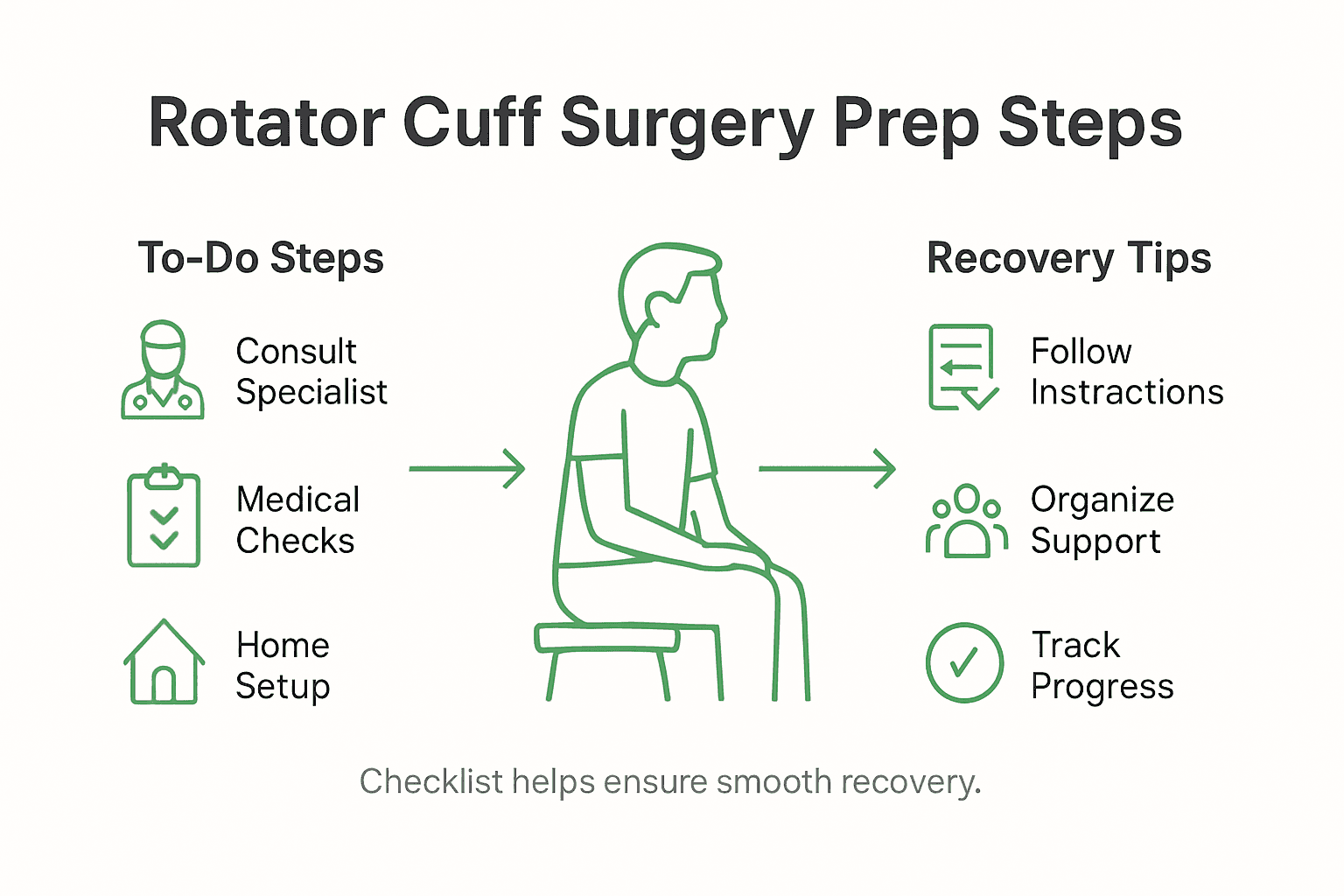
- Step 1: Consult with Your Orthopedic Specialist
- Step 2: Organize Pre-Surgery Medical Assessments
- Step 3: Prepare Your Home for Post-Surgery Needs
- Step 4: Follow Medical Instructions and Restrictions
- Step 5: Verify Surgery Logistics and Support
Quick Summary
| Key Point | Explanation |
|---|---|
| 1. Consult Your Orthopedic Specialist | Understand your shoulder condition with a tailored treatment plan from an orthopedic specialist. |
| 2. Organize Pre-Surgery Medical Assessments | Complete necessary evaluations and gather medical documentation to minimize risks before surgery. |
| 3. Prepare Your Home for Recovery | Set up a supportive environment with easy access to essentials to aid in your healing process. |
| 4. Follow Medical Instructions Diligently | Adhere strictly to post-surgery guidelines to ensure proper healing and prevent complications. |
| 5. Verify Surgery Logistics and Support | Confirm all surgical details and arrange a reliable support network to assist during recovery. |
Step 1: Consult with Your Orthopedic Specialist
Your journey toward rotator cuff surgery begins with a comprehensive consultation from an experienced orthopedic specialist who understands the nuances of shoulder injuries. During this critical first meeting, your doctor will assess your specific condition and develop a personalized treatment strategy tailored to your unique needs.
A thorough consultation involves multiple key components. Your orthopedic surgeon will conduct a detailed physical examination, review your medical history, and analyze imaging studies to understand the extent of your rotator cuff damage. Specialized orthopedic teams use advanced diagnostic tools to evaluate the severity of your injury and determine the most appropriate treatment approach. This might include non surgical options like PRP therapy or surgical repair depending on the specific characteristics of your shoulder condition.
During your consultation, prepare to discuss your symptoms, functional goals, and any limitations you are experiencing. Your surgeon will want to understand how the injury impacts your daily activities and work requirements. Be prepared to provide a comprehensive overview of your pain levels, range of motion restrictions, and any previous treatments you have attempted. This information helps your orthopedic specialist develop the most effective treatment plan for your specific situation.
Pro Tip: Bring a list of all current medications and prior medical records to your initial consultation to help your surgeon develop the most accurate treatment strategy.
Step 2: Organize Pre-Surgery Medical Assessments
Preparing for rotator cuff surgery requires a comprehensive medical assessment that ensures your body is ready for the procedure and potential anesthesia. This step involves gathering all necessary medical documentation and completing a series of critical evaluations to minimize surgical risks and optimize your recovery potential.
Pre-operative medical assessments are crucial for identifying any potential health complications that might impact your surgery. Your healthcare team will conduct a thorough review of your medical history, performing standard tests such as bloodwork, chest X-ray, and EKG. Additionally, they will schedule consultations with specialists to address any existing conditions like heart disease, diabetes, or sleep apnea that could affect your surgical outcome. These assessments help your surgical team develop a customized approach that considers your unique health profile.
During this preparation phase, you will need to compile a comprehensive medical portfolio. This includes gathering all current medical records, medication lists, imaging studies, and test results. Patients should be prepared to discuss their complete health history, including any previous surgeries, current medications, supplements, and allergies. The goal is to provide your orthopedic surgeon and anesthesia team with a complete understanding of your health status to ensure the safest possible surgical experience.
Here’s how common pre-surgery tests contribute to surgical safety:
| Test Type | Purpose | Potential Findings |
|---|---|---|
| Bloodwork | Evaluate organ function and risks | Anemia, infection, diabetes markers |
| Chest X-ray | Assess lung and heart health | Pneumonia, cardiac enlargement |
| EKG | Check heart rhythm and stability | Arrhythmia, heart disease risks |
| Specialist Consult | Address related medical issues | Sleep apnea, diabetes control |
Pro Tip: Create a detailed medical folder with copies of all relevant medical documents and test results to streamline your pre surgery assessment process and demonstrate proactive preparation.
Step 3: Prepare Your Home for Post-Surgery Needs
Recovering from rotator cuff surgery requires careful planning and strategic home preparation to ensure a comfortable and safe healing environment. Your primary goal is to create a supportive space that minimizes strain on your surgical shoulder and allows for a smooth rehabilitation process.
Home recovery arrangements involve several critical considerations to support your healing. First, set up a recovery zone with easy access to essential items within arm’s reach of your unaffected side. This might include medications, water, phone chargers, remote controls, and reading materials. Arrange your sleeping area with multiple supportive pillows to help maintain proper shoulder positioning and elevation, which reduces swelling and promotes comfortable rest.

Prepare for limited mobility by reorganizing your living space to accommodate your temporary physical restrictions. Move frequently used items to lower shelves or counters, ensuring you can access them without stretching or reaching. Consider assistive devices like a long reaching tool, slip on shoes, and button hooks to help with daily tasks. If possible, arrange for assistance from family or friends during the initial weeks of recovery, as you will need support with cooking, cleaning, and personal care activities that might be challenging with a restricted shoulder.
This table summarizes solutions for common home recovery challenges after rotator cuff surgery:
| Recovery Challenge | Recommended Solution | Benefit for Patient |
|---|---|---|
| Limited arm mobility | Use assistive devices | Easier daily living |
| Difficulty sleeping | Arrange supportive pillows | Improved comfort and healing |
| Risk of strain | Centralize essentials | Reduces accidental strain |
| Need for help with tasks | Schedule caregiver support | Faster, safer recovery |
Pro Tip: Create a recovery station with all necessary items within a single room to minimize unnecessary movement and reduce the risk of accidental shoulder strain.
Step 4: Follow Medical Instructions and Restrictions
Successful rotator cuff surgery recovery depends entirely on your commitment to following precise medical instructions and activity restrictions. Your surgeon will provide a detailed roadmap for healing that requires strict adherence to protect your surgical repair and prevent potential complications.
Comprehensive post surgical protocols are designed to optimize your shoulder’s healing process. This means wearing your prescribed sling consistently, managing pain medications exactly as directed, and understanding specific movement limitations. Your arm will have restricted motion to prevent stress on the surgical site, which typically involves keeping your shoulder immobilized and avoiding lifting, pushing, or pulling with the affected arm. Pay close attention to wound care instructions, watching for signs of infection and maintaining proper hygiene around the surgical area.
Medication management and rehabilitation compliance are critical components of your recovery strategy. Stop taking certain medications as advised by your surgical team, attend all scheduled physical therapy sessions, and gradually progress through rehabilitation milestones. Your orthopedic specialist will design a personalized recovery plan that slowly introduces movement and strengthening exercises, tailored to your specific surgical repair and individual healing progression. PRP therapy might also be recommended to support tissue regeneration and accelerate your recovery timeline.
Pro Tip: Create a detailed recovery journal to track your progress, medication intake, and therapy appointments to maintain accountability and communicate effectively with your medical team.
Step 5: Verify Surgery Logistics and Support
Preparing for rotator cuff surgery requires meticulous planning and coordination to ensure a smooth surgical experience and seamless transition into recovery. This step focuses on aligning all essential logistical elements that will support your surgical journey and post operative care.
Comprehensive surgical coordination involves confirming multiple critical details with your surgical team. This includes verifying your exact surgery date and time, understanding the specific facility protocols for admission and discharge, and arranging reliable transportation and home support. Identify a responsible adult who can accompany you to the surgical center, help you return home safely, and provide initial assistance during the first 24 to 48 hours after your procedure.
Beyond transportation and immediate care, you will need to establish a comprehensive support network for your recovery period. This means coordinating with family members or professional caregivers who can assist with daily activities, meal preparation, medication management, and potential physical therapy transportation. Discuss your specific recovery needs with your orthopedic team, ensuring you understand the expected timeline for mobility restrictions and potential PRP therapy interventions. By proactively addressing these logistics, you create a supportive environment that minimizes stress and promotes optimal healing.
Pro Tip: Create a detailed support roster with contact information for your primary caregiver, backup support person, and emergency contacts to ensure seamless communication during your recovery.
Prepare for Rotator Cuff Surgery with Expert Care and Support
Facing rotator cuff surgery can feel overwhelming with so many steps involved—from consulting your orthopedic specialist to organizing your home for recovery. This article breaks down crucial preparation stages to help you achieve the best possible healing outcome. If you are looking to move forward with confidence, having a trusted team by your side makes all the difference.
At Austin Hand To Shoulder, Dr. Manish V. Patel offers personalized treatment plans tailored to your specific needs and recovery goals. Whether you want to learn more about surgical options or need guidance through post-surgery care, our dedicated team is here to support your journey every step of the way. Browse our Rotator Cuff Archives – Austin Hand To Shoulder and Surgery Recovery & Rehab Guides | Austin Orthopedic Care for in-depth insights and practical tips.
Take control of your shoulder health today by connecting with experts who prioritize your well-being and successful recovery. Visit https://handtoshoulderaustin.com to schedule a consultation and start preparing with confidence.
Frequently Asked Questions
How do I prepare for my consultation with the orthopedic specialist for rotator cuff surgery?
Start by listing your symptoms, current medications, and any previous treatments you’ve tried. Bring relevant medical records, including imaging studies, to help your orthopedic specialist assess your condition effectively.
What pre-surgery medical assessments should I expect before rotator cuff surgery?
You will undergo several assessments, including bloodwork, a chest X-ray, and an EKG. Discuss any existing medical conditions with your healthcare team to ensure all potential risks are addressed prior to your surgery.
How can I set up my home for a smoother recovery after rotator cuff surgery?
Create a recovery zone near your main living area that has easy access to essentials like medications and a phone charger. Move frequently used items to lower shelves to minimize reaching and ensure comfort during your recovery.
What medical instructions should I follow after rotator cuff surgery to ensure the best recovery?
Adhere strictly to your surgeon’s instructions regarding sling use, pain management, and activity restrictions. Keep a detailed recovery journal to monitor your progress and medication schedule, which can help improve healing outcomes.
How can I coordinate support for my recovery after rotator cuff surgery?
Identify a reliable person who can accompany you to the surgery and assist with daily tasks during the initial days of recovery. Establish a support network that can help with meal preparation, medication management, and transportation to physical therapy appointments.
Recommended
- Recovery Workflow After Rotator Cuff Surgery: Step-by-Step Guide – Austin Hand To Shoulder
- Step by Step Rotator Cuff Rehab for Shoulder Recovery – Austin Hand To Shoulder
- Partial Rotator Cuff Tear: Symptoms, Types, and Recovery – Austin Hand To Shoulder
- Rotator Cuff Injuries: Complete Guide for Austin Residents – Austin Hand To Shoulder


