

Every year, over 250,000 americans face wrist surgery, yet the road to full recovery can feel uncertain without clear guidance. A personalized rehabilitation plan makes a critical difference in regaining comfort, strength, and mobility after surgery. Whether you are coping with daily activities or aiming for a complete return to sport, knowing the right steps will help you avoid setbacks and support real progress as you move forward.
Table of Contents
- Step 1: Consult Your Surgeon for Personalized Guidelines
- Step 2: Prepare a Safe and Comfortable Exercise Space
- Step 3: Begin Gentle Wrist Mobility and Stretching Exercises
- Step 4: Progress to Strengthening and Resistance Activities
- Step 5: Monitor Pain and Track Your Progress Safely
Quick Summary
| Key Point | Explanation |
|---|---|
| 1. Follow Your Surgeon’s Guidelines | Consult your orthopedic surgeon to receive a personalized rehabilitation plan tailored to your specific surgery and recovery needs. |
| 2. Create a Safe Exercise Space | Design a dedicated area for rehabilitation, ensuring it is clean, well-lit, and free of obstacles for safe movement during exercises. |
| 3. Start with Gentle Mobility Exercises | Initiate wrist rehabilitation with basic mobility exercises focusing on controlled movements to restore range of motion without pain. |
| 4. Gradually Incorporate Strengthening Exercises | Transition into resistance training gradually, using light weights and ensuring movements remain in a pain-free range to rebuild wrist strength. |
| 5. Track Progress and Monitor Pain Levels | Maintain a recovery journal to document exercises, pain levels, and progress, and consult your surgeon if pain increases consistently. |
Step 1: Consult Your Surgeon for Personalized Guidelines
Navigating wrist recovery requires a personalized approach tailored specifically to your surgical procedure and individual healing process. Your orthopedic surgeon understands the intricate details of your specific surgery and can provide the most accurate roadmap for strengthening your wrist safely and effectively. Recovery Workflow After Rotator Cuff Surgery offers insights into professional medical rehabilitation strategies that can complement your surgeon consultation.
During your consultation, be prepared to discuss key aspects of your recovery. Ask specific questions about recommended movement ranges, potential restrictions, and progressive rehabilitation techniques. Your surgeon will likely create a customized rehabilitation plan that might include specific exercises, recommended timelines for different activities, and guidance on managing pain and inflammation. Some patients might benefit from additional treatments like PRP therapy to accelerate healing and reduce recovery time.
Always follow your surgeon’s recommendations precisely. Attempting to rush your recovery or performing exercises without professional guidance could potentially compromise your surgical outcome. Each wrist surgery is unique, and what works for one patient might not be appropriate for another. Your surgeon will monitor your progress and adjust your rehabilitation plan as needed to ensure optimal healing and restoration of strength and mobility.
Step 2: Prepare a Safe and Comfortable Exercise Space
Creating a dedicated recovery area is essential for successful wrist rehabilitation after surgery. Baylor College of Medicine recommends focusing on setting up an environment that supports gradual healing and allows you to comfortably perform prescribed exercises. Your exercise space should be clean, well-lit, and free from potential obstacles that might compromise your safety during movement.
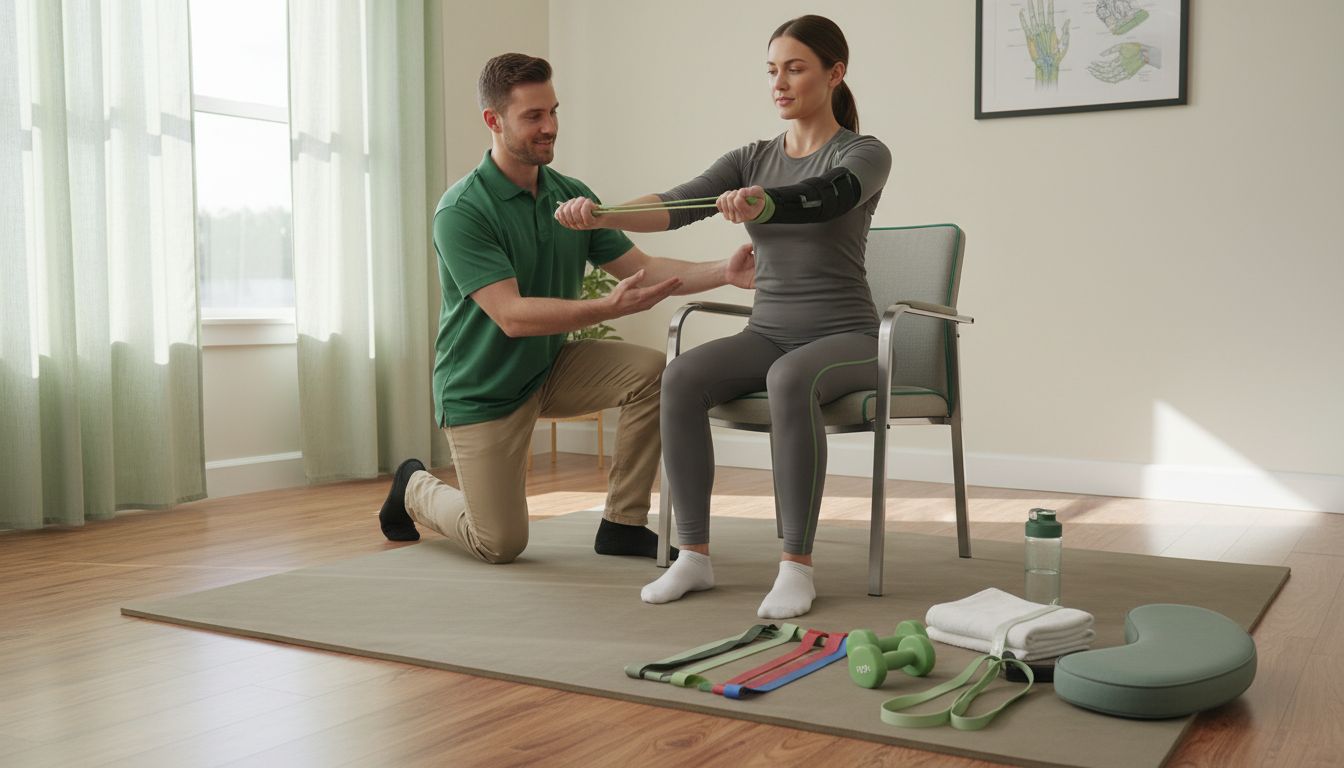
Designing your rehabilitation area requires thoughtful preparation. Choose a location with sturdy surfaces like a firm chair or padded exercise mat where you can perform your recommended exercises. Ensure you have adequate space to move without bumping into furniture or risking additional injury. American Shoulder and Elbow Surgeons emphasizes the importance of having all necessary rehabilitation tools within easy reach, such as prescribed exercise bands, small weights, or supportive cushions.
Plan your exercise space with comfort and practicality in mind. Keep water, a towel, and any prescribed pain management tools nearby. Position yourself close to a wall or stable surface for support during balance or strength exercises. Remember that your primary goal is creating an environment that promotes safe, controlled movement while allowing you to follow your surgeon’s specific rehabilitation guidelines precisely.
Step 3: Begin Gentle Wrist Mobility and Stretching Exercises
Best Practices for Wrist Rehabilitation can help guide your initial recovery process as you start gentle mobility exercises. Kaiser Permanente recommends initiating careful wrist mobility exercises designed to restore range of motion without causing additional strain. These initial exercises are crucial for preventing stiffness and promoting healing after surgical intervention.
According to the American Shoulder and Elbow Surgeons, gentle stretching should focus on controlled movements that do not cause pain. Start with basic exercises like wrist flexion and extension while seated comfortably. Gently bend your wrist forward and backward within a pain free range of motion, holding each position for 5 to 10 seconds. Remember to move slowly and stop immediately if you experience sharp or increasing pain.
Pay close attention to your body during these exercises.
Some mild discomfort is normal, but pain is a signal to stop and consult your surgeon. PRP therapy might be recommended to support your healing process if traditional rehabilitation techniques are not progressing as expected. Your surgeon will provide specific guidance on the frequency and intensity of these mobility exercises based on your unique surgical procedure and individual healing response.
Step 4: Progress to Strengthening and Resistance Activities
Wrist Pain Self-Care Guide provides valuable insights into advancing your rehabilitation process. Kaiser Permanente recommends carefully transitioning into strengthening exercises that gradually increase your wrist’s muscle capacity and resilience. This stage is critical for rebuilding the strength and functionality of your wrist after surgical intervention.
According to the American Shoulder and Elbow Surgeons, effective strengthening activities include gentle resistance exercises like gripping activities and forearm rotations. Begin with lightweight resistance bands or small hand weights weighing no more than one to two pounds. Perform slow controlled movements such as wrist curls and extensions, focusing on maintaining proper form and avoiding sudden or jerky motions. Always maintain a pain free range of motion and stop immediately if you experience sharp or increasing discomfort.
Remember that PRP therapy might complement your rehabilitation process if traditional strengthening techniques are not producing the desired results. Your surgeon will provide personalized guidance on the appropriate resistance levels and exercise frequency based on your specific surgical procedure and individual healing progression. Patience and consistent gentle progress are key to successful wrist rehabilitation.
Step 5: Monitor Pain and Track Your Progress Safely
Wrist Fracture Management Recovery Guide offers insights into successful rehabilitation tracking. Baylor College of Medicine emphasizes the critical importance of carefully monitoring your recovery journey, starting with gentle movements and progressively increasing activity as healing occurs. Developing a systematic approach to tracking your rehabilitation helps ensure you are healing effectively without risking further injury.
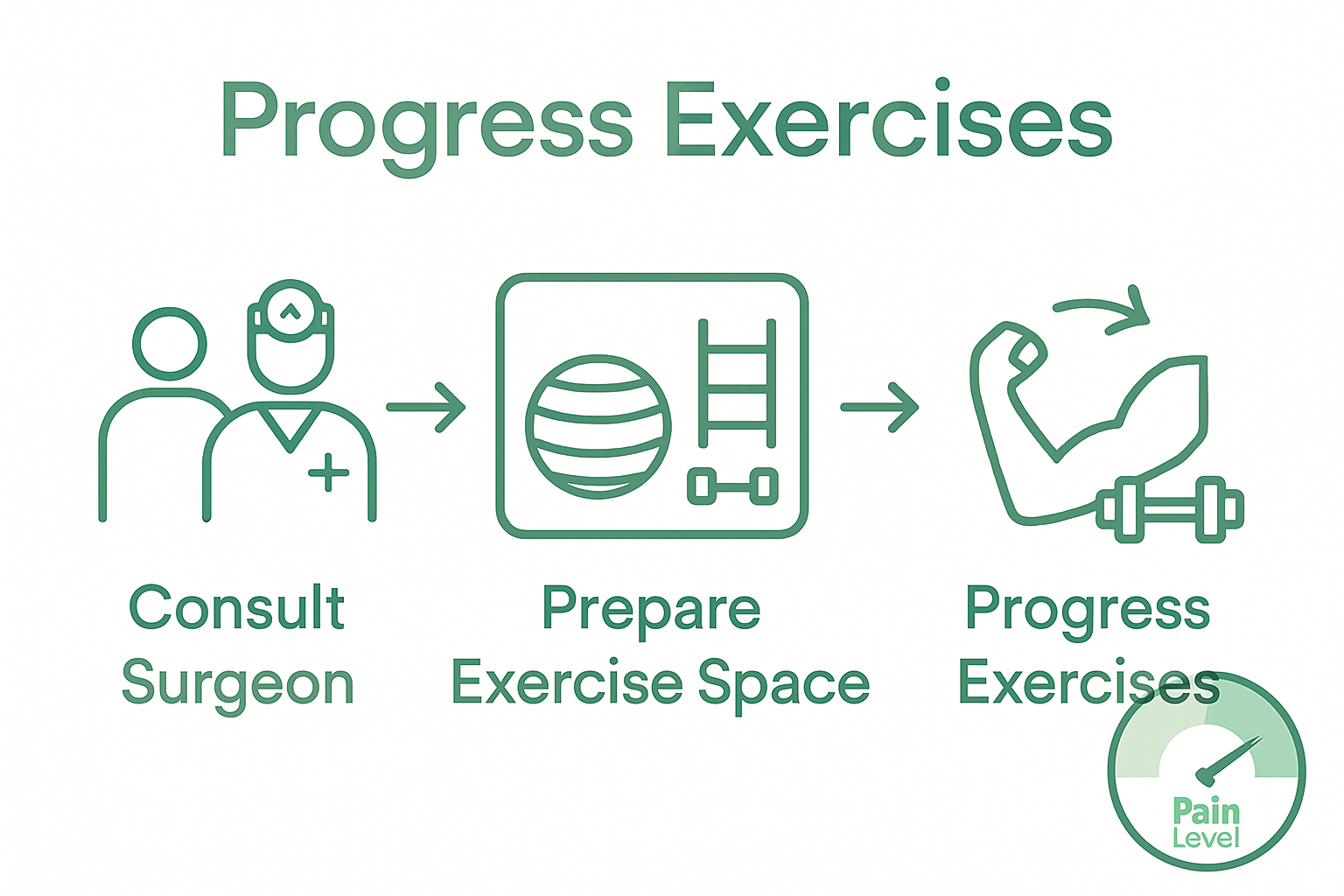
Kaiser Permanente recommends maintaining a detailed recovery journal to document your progress. Record specific details such as exercise types, duration, pain levels, and range of motion improvements. Use a simple pain scale from zero to ten to track your discomfort during and after exercises. If pain consistently scores above three or increases during rehabilitation, immediately consult your surgeon and consider alternative treatments like PRP therapy.
Your recovery is a personalized process that requires careful attention and professional guidance. Regular communication with your orthopedic surgeon will help adjust your rehabilitation strategy as needed. Remember that healing is not linear some days will feel better than others. Stay patient, remain consistent, and trust the professional guidance you receive throughout your wrist recovery journey.
Regain Your Wrist Strength with Expert Guidance and Personalized Care
Recovering wrist strength after surgery can be challenging when you face pain, limited mobility, and uncertainty about the right exercises. This article highlights the importance of gentle mobility, progressive strengthening, and careful pain monitoring to safely rebuild your wrist’s function. If you want to ensure your recovery plan is tailored to your unique surgical needs and healing pace, professional support is essential.

Discover trusted solutions at Austin Hand To Shoulder, where Dr. Manish V. Patel combines expert orthopedic care with patient-centered strategies. Explore our detailed Wrist Injury & Treatment Guides | Austin Orthopedic Blog for valuable tips and progress monitoring tools. When you are ready for personalized rehabilitation or need surgical expertise, our Surgery Recovery & Rehab Guides | Austin Orthopedic Care page offers comprehensive information to support your healing journey. Take the first step toward lasting wrist strength by scheduling a consultation today at https://handtoshoulderaustin.com. Your recovery deserves expert care tailored just for you.
Frequently Asked Questions
How can I strengthen my wrist after surgery?
To strengthen your wrist after surgery, follow a structured rehabilitation plan that includes gentle mobility exercises, followed by resistance activities. Start with basic wrist flexion and extension exercises, progressing slowly to include light weights or resistance bands within a few weeks after surgery.
What types of exercises should I begin with during wrist recovery?
Begin with gentle wrist mobility exercises like flexion and extension to restore your range of motion. Perform these exercises for 5 to 10 seconds, focusing on pain-free movements, and gradually increase frequency to several times a day as guided by your surgeon.
When should I start doing strengthening exercises for my wrist?
You should start strengthening exercises only after receiving clearance from your surgeon, usually a few weeks post-surgery. Once cleared, incorporate light resistance activities like wrist curls, using weights that are no more than one to two pounds, progressing slowly to avoid injury.
How can I track my progress during wrist rehabilitation?
To track your progress, maintain a recovery journal documenting your exercise types, duration, and pain levels. Use a simple pain scale from zero to ten to assess discomfort, reviewing this information with your surgeon regularly to adjust your rehabilitation plan as needed.
What should I do if I experience pain during wrist exercises?
If you experience pain while doing wrist exercises, stop immediately and consult your surgeon. Avoid pushing through the pain, and focus on re-evaluating your rehabilitation plan to ensure you’re not risking further injury.
How long does it take to fully strengthen my wrist after surgery?
The timeline for strengthening your wrist after surgery varies by individual and the specific procedure, but noticeable improvements often occur within 6 to 12 weeks. Stay consistent with your exercises and communicate regularly with your surgeon to ensure you’re on track for full recovery.
Recommended
- Best Practices for Wrist Rehabilitation After Injury – Austin Hand To Shoulder
- Wrist Fracture Management: Step-by-Step Recovery Guide – Austin Hand To Shoulder
- Recovery Workflow After Rotator Cuff Surgery: Step-by-Step Guide – Austin Hand To Shoulder
- 7 Common Types of Wrist Injuries and How to Identify Them – Austin Hand To Shoulder


