

Over two million American adults experience shoulder pain from rotator cuff injuries every year, yet many do not realize the subtle signs of a partial tear until daily activities become difficult. This issue matters because undiagnosed shoulder pain can limit work, sports, and quality of life. By learning the characteristics of a partial rotator cuff tear, readers will discover how early detection and treatment can prevent long-term complications and restore healthy shoulder function.
Table of Contents
- Defining Partial Rotator Cuff Tear In The Shoulder
- Types Of Partial Tears And Key Differences
- Common Symptoms And How Tears Develop
- Diagnosis And Treatment Approaches In Austin
- Risks, Recovery Timeline, And When To Seek Care
Key Takeaways
| Point | Details |
|---|---|
| Understanding Partial Tears | Partial rotator cuff tears involve tendon damage that can significantly affect shoulder function, often caused by age or repetitive activities. |
| Types of Tears | There are three main types of partial tears—articular surface, bursal surface, and intratendinous—each requiring different diagnostic and treatment approaches. |
| Symptoms and Risks | Symptoms may include persistent pain and limited motion, while untreated tears can progress to more severe injuries. |
| Treatment Strategies | Early intervention through conservative management and possibly surgery is crucial for optimal recovery and to prevent further damage. |
Defining Partial Rotator Cuff Tear in the Shoulder
A partial rotator cuff tear represents a complex shoulder injury where the tendon is damaged but not completely severed. Partial-thickness tears involve damage that extends only partially through the tendon’s thickness, creating a nuanced condition that impacts shoulder function and mobility.
These tears typically develop through a combination of age-related wear and repetitive shoulder movements. As tendons naturally degrade over time, they become more susceptible to fraying and partial tearing, particularly in individuals who engage in overhead sports or physically demanding occupations. The damage can occur on different surfaces of the rotator cuff tendon, including:
- Bursal surface tears: Affecting the top portion of the tendon
- Articular surface tears: Impacting the deeper tendon regions
- Interstitial tears: Occurring within the tendon’s central substance
Understanding the specific characteristics of a partial rotator cuff tear is crucial for accurate diagnosis and effective treatment. While some tears might be asymptomatic, others can cause significant pain and reduced shoulder range of motion. Athletes, manual laborers, and individuals over 40 are particularly vulnerable to these injuries.
Pro tip: Early detection through professional medical imaging can prevent progressive tendon damage and reduce the likelihood of requiring more invasive surgical interventions.
Types of Partial Tears and Key Differences
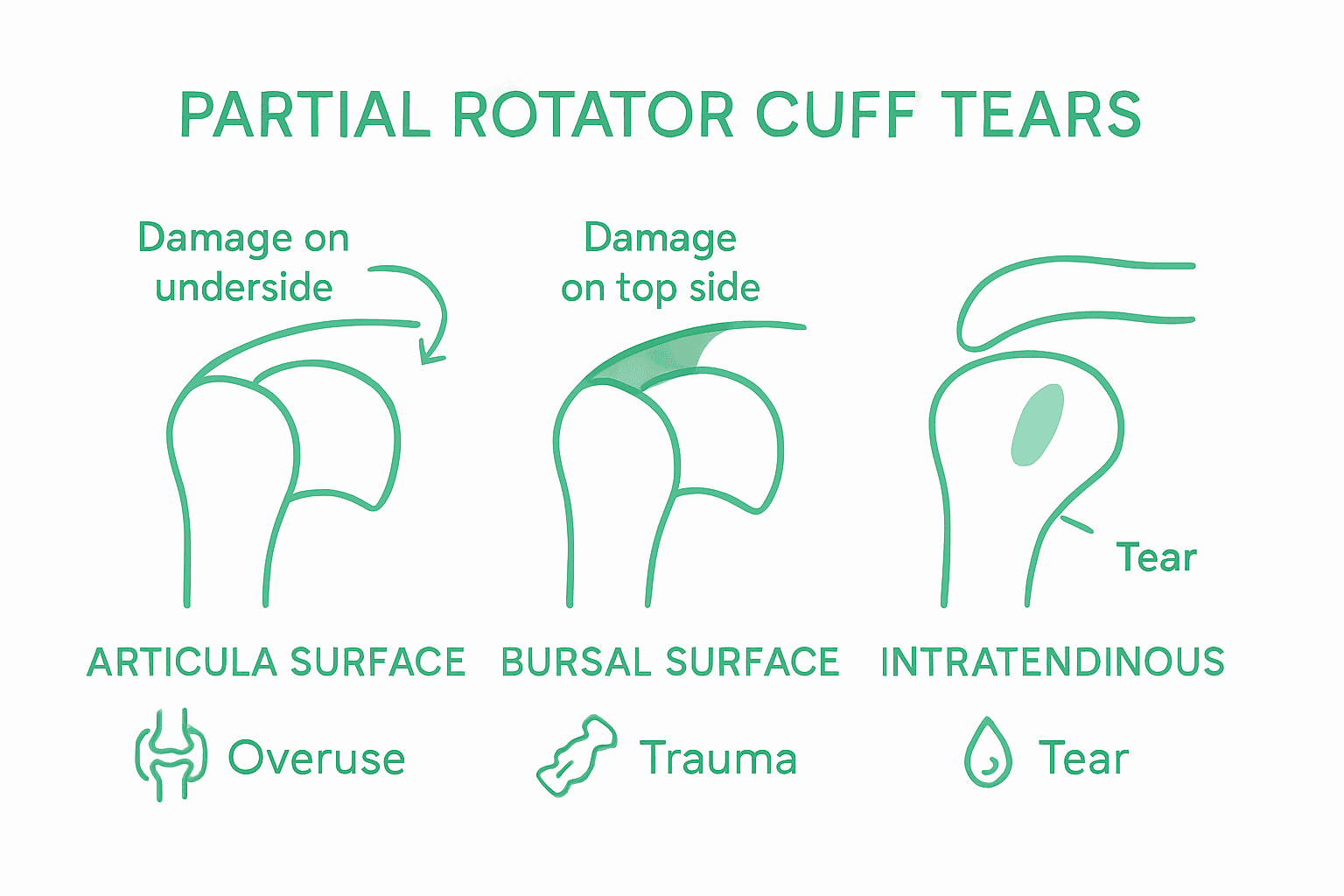
Partial-thickness rotator cuff tears can be classified into three primary categories, each presenting unique diagnostic and treatment challenges. Understanding these variations is crucial for developing an appropriate therapeutic approach tailored to the specific injury type.
The three main classifications include:
-
Articular Surface Tears: Occurring on the joint side of the tendon, these tears are the most common type and often result from intrinsic degenerative processes. They typically develop from internal tendon breakdown and can significantly impact shoulder joint mechanics.
-
Bursal Surface Tears: Located on the outer portion of the tendon, these tears are less frequent and frequently associated with external factors like subacromial impingement. They can cause pain and reduced shoulder mobility.
-
Intratendinous Tears: Developing within the central substance of the tendon, these tears represent internal damage that might not be immediately visible through standard imaging techniques.
Each tear type presents distinct characteristics that influence potential treatment strategies. Articular surface tears, for instance, often require more aggressive interventions due to their location and potential for progression. The extent of the tear, measured as a percentage of tendon thickness, also plays a critical role in determining the most appropriate treatment approach.
Here’s how the main types of partial rotator cuff tears differ:
| Tear Type | Location of Damage | Typical Cause | Diagnostic Challenge |
|---|---|---|---|
| Articular Surface | Joint side of the tendon | Internal degeneration with age | Common but sometimes subtle |
| Bursal Surface | Outer tendon surface | External impingement or overuse | Less common, often easily seen |
| Intratendinous | Tendon’s central substance | Microtrauma, less obvious factors | Hard to detect on imaging |
Pro tip: Comprehensive diagnostic imaging, including ultrasound and MRI, can help precisely identify the tear type and guide personalized treatment planning for optimal recovery.
Common Symptoms and How Tears Develop
Partial rotator cuff tears can develop through a complex interplay of intrinsic and extrinsic factors, creating a challenging condition that may not always present immediate symptoms. Many individuals might have a tear without realizing it, as the damage can progress gradually over time.
While some people experience no symptoms at all, others may notice specific signs indicating a potential rotator cuff tear. The most common symptoms include:
- Persistent shoulder pain, especially during overhead movements
- Weakness in the shoulder and arm
- Limited range of motion
- Crackling sensations when moving the shoulder
- Nighttime pain that disrupts sleep
The development of these tears typically involves multiple contributing factors. Age-related tendon degeneration plays a significant role, with the natural breakdown of tissue making tendons more susceptible to damage. Repetitive overhead movements, common in sports like tennis, swimming, and baseball, can accelerate this process. Occupations requiring frequent arm movements or heavy lifting also increase the risk of developing partial rotator cuff tears.
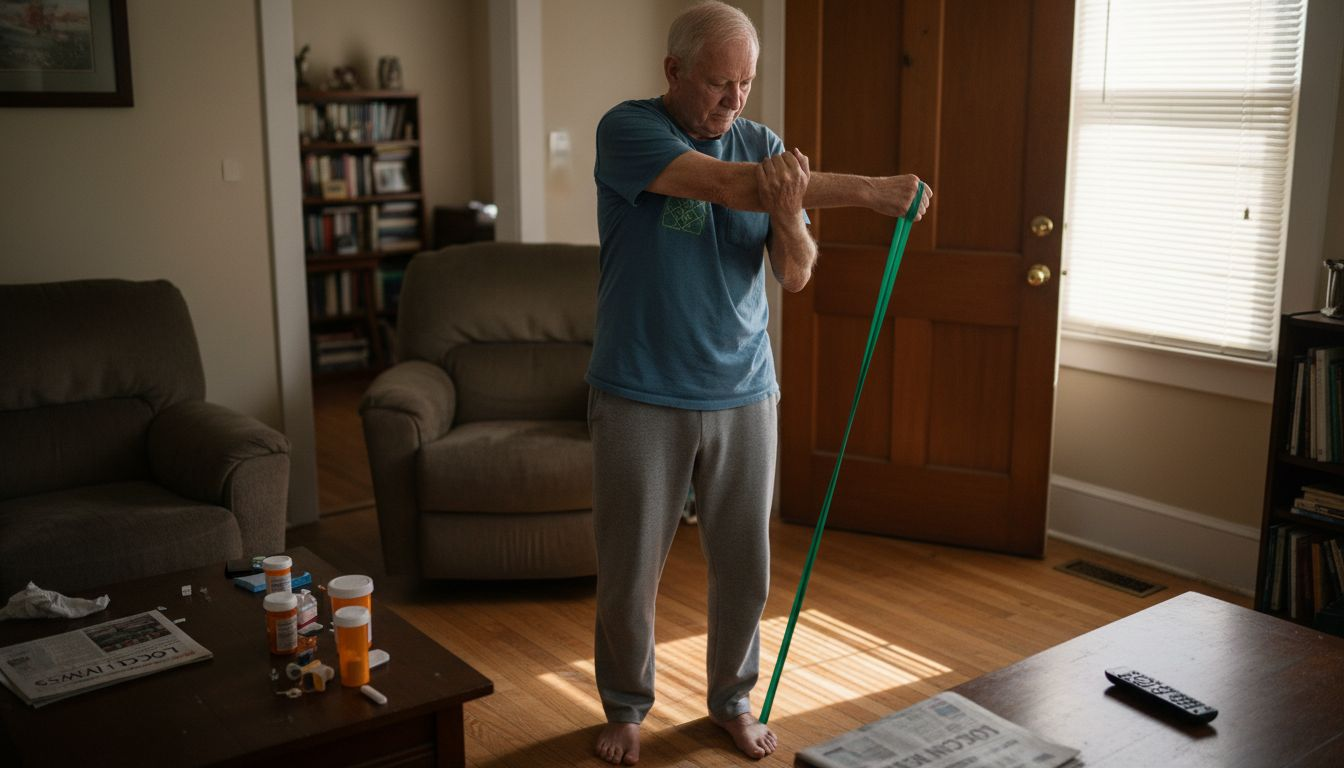
Additional risk factors include poor posture, previous shoulder injuries, and underlying medical conditions that impact muscle and tendon health. Individuals over 40 are particularly vulnerable, as tendon elasticity and repair mechanisms naturally decline with age.
Pro tip: Regular shoulder strengthening exercises and proper warm-up techniques can help prevent rotator cuff injuries and maintain shoulder joint health.
Diagnosis and Treatment Approaches in Austin
Diagnosing a partial rotator cuff tear requires a comprehensive medical evaluation that combines multiple assessment techniques. Our Austin-based specialists employ a structured approach to identify and treat these complex shoulder injuries.
The diagnostic process typically involves:
- Detailed patient history examination
- Physical examination testing shoulder mobility and strength
- Advanced imaging studies, including:
- Ultrasound
- Magnetic Resonance Imaging (MRI)
- X-ray studies to rule out additional complications
Treatment approaches for partial rotator cuff tears are often progressive and tailored to the individual patient’s condition. Conservative management remains the initial strategy, focusing on non-surgical interventions. These may include:
- Physical therapy
- Targeted pain management
- Anti-inflammatory medications
- PRP (Platelet-Rich Plasma) therapy
- Specialized shoulder rehabilitation exercises
Surgical intervention becomes a consideration when conservative treatments fail to provide adequate relief. Minimally invasive arthroscopic techniques allow surgeons to repair or debride the torn tendon with minimal tissue disruption. The specific approach depends on the tear’s location, size, and the patient’s overall shoulder health.
Pro tip: Early intervention and comprehensive assessment are crucial for preventing further tendon damage and improving long-term shoulder function.
Risks, Recovery Timeline, and When to Seek Care
Partial rotator cuff tears present unique risks that can significantly impact shoulder function if left untreated, making early assessment and intervention critical. Understanding the potential progression and complications is essential for maintaining long-term shoulder health.
Potential risks associated with untreated partial rotator cuff tears include:
- Progression to full-thickness tears
- Increased shoulder instability
- Chronic pain development
- Reduced range of motion
- Potential muscle atrophy
If left unmanaged, these tears may gradually worsen, potentially leading to more extensive damage requiring more invasive interventions. The recovery timeline varies depending on several factors:
- Conservative treatment: 4-12 weeks
- Physical therapy: 3-6 months
- Surgical repair: 6-12 months for complete recovery
Patients should seek immediate medical attention if they experience:
- Persistent shoulder pain lasting more than two weeks
- Significant weakness in the arm
- Inability to lift or rotate the arm
- Noticeable decrease in shoulder mobility
- Pain that interrupts sleep or daily activities
Recovery workflow after rotator cuff treatment requires patience and consistent rehabilitation. Each patient’s journey is unique, and personalized medical guidance ensures the most effective healing process.
The table summarizes typical recovery timeframes for different treatment approaches:
| Treatment Approach | Recovery Timeline | Expected Outcomes |
|---|---|---|
| Conservative therapy | 4–12 weeks | Pain relief, improved mobility |
| Physical therapy | 3–6 months | Strength, flexibility gains |
| Surgical repair | 6–12 months | Restored function, long rehab |
Pro tip: Document your symptoms systematically and maintain open communication with your healthcare provider to track your recovery progress and adjust treatment as needed.
Regain Shoulder Strength and Mobility with Expert Care at Austin Hand To Shoulder
Struggling with a partial rotator cuff tear can make everyday activities painful and limit your shoulder’s range of motion. The article highlights common challenges such as persistent pain during overhead movements and the risk of progression to full tendon tears. If you want to stop the worsening and start your recovery with personalized treatment, our team in Austin offers comprehensive solutions tailored to your specific tear type and symptoms. Explore proven treatment strategies and expert guidance in the Rotator Cuff Archives – Austin Hand To Shoulder to take control of your shoulder health today.

Don’t let shoulder pain hold you back any longer. Visit https://handtoshoulderaustin.com now to schedule a consultation with Dr. Manish V. Patel. Find out how early diagnosis and targeted care can speed your healing and restore your quality of life. Learn more about innovative shoulder treatments in our Shoulder Surgery & Care Articles | Austin Orthopedic Blog and discover athletic-friendly approaches through Sports Medicine & Athlete Care | Austin Orthopedic Blog. Act now for a stronger, pain-free shoulder.
Frequently Asked Questions
What are the common symptoms of a partial rotator cuff tear?
The common symptoms include persistent shoulder pain, weakness in the shoulder and arm, limited range of motion, crackling sensations when moving the shoulder, and nighttime pain that disrupts sleep.
What types of partial rotator cuff tears exist?
There are three main types: articular surface tears, which occur on the joint side of the tendon; bursal surface tears, which affect the outer portion of the tendon; and intratendinous tears, which develop within the central substance of the tendon.
How is a partial rotator cuff tear diagnosed?
Diagnosis typically involves a detailed patient history, a physical examination to test shoulder mobility and strength, and advanced imaging studies like ultrasound and MRI to assess the extent and type of the tear.
What is the recovery timeline for a partial rotator cuff tear?
Recovery timelines vary: conservative treatment may take 4-12 weeks, physical therapy generally lasts 3-6 months, and surgical repair can require 6-12 months for complete recovery.
Recommended
- Recovery Workflow After Rotator Cuff Surgery: Step-by-Step Guide – Austin Hand To Shoulder
- 6 Common Rotator Cuff Injury Types and How to Spot Them – Austin Hand To Shoulder
- Rotator Cuff Injuries: Complete Guide for Austin Residents – Austin Hand To Shoulder
- Step by Step Rotator Cuff Rehab for Shoulder Recovery – Austin Hand To Shoulder


