

Tennis elbow sidelines millions of adults each year, yet many are surprised to learn that nearly 80 percent of cases resist standard treatments like rest and physical therapy. Persistent pain and limited movement can derail your daily routine, making even simple tasks difficult. Platelet-rich plasma (PRP) injections have emerged as a promising non-surgical option that taps into your body’s own healing abilities, offering hope to those who want real relief without going under the knife.
Table of Contents
- What Are PRP Injections for Tennis Elbow
- How PRP Therapy Promotes Healing
- Step-By-Step Overview of the PRP Procedure
- Benefits and Limitations in Elbow Treatment
- Risks, Costs, and Insurance Considerations
- PRP Versus Other Tennis Elbow Treatments
Key Takeaways
| Point | Details |
|---|---|
| PRP Mechanism | PRP therapy utilizes concentrated growth factors from a patient’s blood to promote healing in tennis elbow. |
| Benefits of PRP | Offers a non-surgical alternative with potential pain reduction and improved tendon functionality; shorter recovery times compared to surgical options. |
| Risks and Costs | While generally safe, PRP therapy involves risks like infection and is often not covered by insurance, costing $500 to $1,500 per treatment. |
| Comparison to Other Treatments | PRP is one of several treatment options for tennis elbow, with varying degrees of effectiveness compared to corticosteroids, physiotherapy, and surgical interventions. |
What Are PRP Injections for Tennis Elbow
Platelet-rich plasma (PRP) injections represent an innovative regenerative medicine approach specifically targeting tennis elbow, a common overuse injury affecting the tendons connecting the forearm muscles to the outer elbow. According to research from iarconsortium.org, PRP involves extracting and concentrating a patient’s own platelets to stimulate natural healing processes.
The core mechanism of PRP therapy involves collecting a small blood sample and spinning it in a centrifuge to separate and concentrate platelets. These concentrated platelets contain powerful growth factors like platelet-derived growth factor (PDGF), transforming growth factor-beta (TGF-β), and vascular endothelial growth factor (VEGF). As studies from pubmed.ncbi.nlm.nih.gov indicate, these growth factors play a critical role in tissue repair by enhancing several key biological processes:
- Increasing blood vessel formation (angiogenesis)
- Stimulating collagen synthesis
- Promoting cellular proliferation
- Accelerating tissue healing and regeneration
For patients with tennis elbow, PRP offers a promising non-surgical treatment option that leverages the body’s own healing mechanisms. By directly injecting these concentrated platelets into the damaged tendon area, the therapy aims to reduce inflammation, alleviate pain, and potentially restore tendon function without invasive surgical intervention.
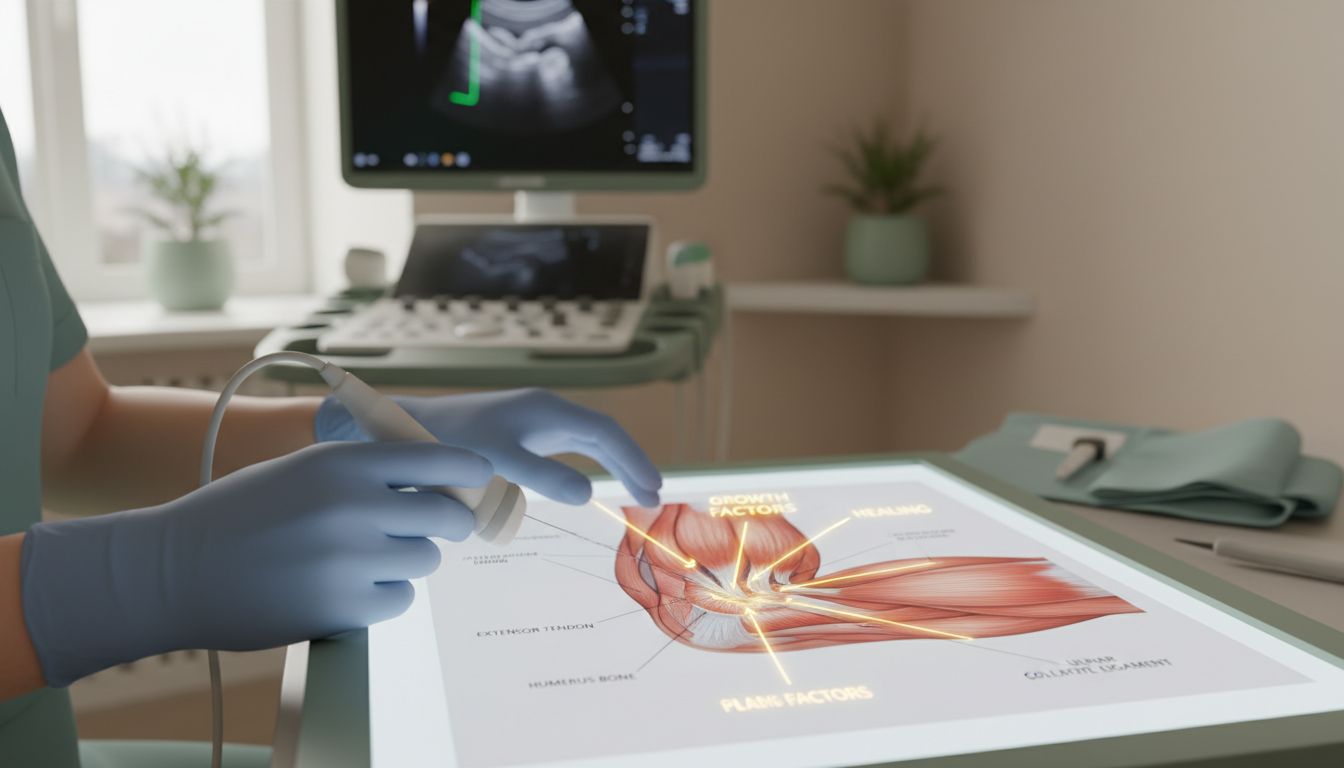 While research continues to explore its full potential, many patients have experienced significant relief and improved mobility through this advanced regenerative approach.
Learn more about how PRP can help your specific condition in our guide on PRP therapy at Hand to Shoulder Center.
How PRP Therapy Promotes Healing
PRP therapy harnesses the body’s natural healing mechanisms to address tennis elbow by strategically delivering concentrated growth factors directly to the injured tendon. According to research from iarconsortium.org, the therapy promotes healing through a sophisticated biological process that targets tissue regeneration at the cellular level.
The healing process involves several key biological mechanisms:
- Angiogenesis: Stimulating new blood vessel formation
- Cellular Proliferation: Encouraging rapid cell growth and repair
- Collagen Synthesis: Supporting structural tissue rebuilding
- Inflammation Reduction: Modulating the body’s inflammatory response
As studies from pubmed.ncbi.nlm.nih.gov suggest, PRP delivers concentrated growth factors that trigger a cascade of healing responses. These growth factors work by sending powerful signals to damaged tissues, essentially “instructing” cells to accelerate repair processes. While the exact mechanisms are still being researched, the preliminary evidence indicates significant potential for tendon healing and pain reduction.
For patients struggling with persistent tennis elbow, PRP offers a promising alternative to traditional treatments. By leveraging the body’s own regenerative capabilities, this innovative approach provides hope for those seeking non-surgical solutions to chronic tendon injuries. Learn more about our specialized PRP for hands treatment guide to understand how this cutting-edge therapy might help your specific condition.
Step-By-Step Overview of the PRP Procedure
The PRP procedure for tennis elbow is a precise, multi-step process that transforms a simple blood draw into a powerful healing intervention. According to research from iarconsortium.org, the procedure involves careful preparation and targeted delivery of concentrated platelets to the injured tendon area.
Here’s a detailed breakdown of the PRP procedure:
- Initial Consultation: A comprehensive evaluation of your tennis elbow condition
- Blood Collection: Drawing a small blood sample from your arm
- Centrifugation: Spinning the blood to separate and concentrate platelets
- Platelet Concentration: Extracting the platelet-rich plasma
- Injection Preparation: Preparing the concentrated PRP for injection
- Ultrasound Guidance: Precisely targeting the injured tendon area
- Injection Procedure: Delivering PRP directly to the damaged tissue
As studies from pubmed.ncbi.nlm.nih.gov suggest, the procedure’s effectiveness relies on precise preparation and injection techniques. The entire process typically takes about 30-60 minutes, with minimal discomfort and no significant downtime.
While the optimal preparation method continues to be researched, the goal remains consistent: delivering a concentrated dose of healing growth factors directly to the site of injury.
Patients often have questions about the procedure, and our team is committed to providing comprehensive care. For those interested in exploring how PRP might address their specific tennis elbow condition, we invite you to explore our PRP Therapy Articles for more in-depth information about this innovative treatment approach.
Benefits and Limitations in Elbow Treatment
PRP therapy for tennis elbow presents a nuanced approach with both promising potential and notable limitations. According to research from iarconsortium.org, clinical studies have demonstrated significant improvements in pain scores and functional outcomes for patients receiving PRP injections.
Key Benefits of PRP Treatment:
- Non-Surgical Alternative: Minimally invasive approach
- Natural Healing: Utilizes patient’s own biological healing mechanisms
- Reduced Recovery Time: Shorter downtime compared to surgical interventions
- Potential Pain Reduction: Significant improvements in pain management
- Improved Functionality: Enhanced tendon healing and mobility
However, as studies from pubmed.ncbi.nlm.nih.gov suggest, the treatment is not without critical limitations. A Cochrane review indicates potential uncertainties about the treatment’s clinical effectiveness, highlighting the need for more rigorous research. The lack of standardized preparation methods and dosing protocols means that results can vary significantly between patients and treatment centers.
For patients considering this treatment, a comprehensive understanding of both potential benefits and limitations is crucial. Those seeking more comprehensive insights into elbow treatment options might find our guide to elbow pain treatment options helpful in making an informed decision about their therapeutic approach.
Risks, Costs, and Insurance Considerations
Understanding the potential risks, financial implications, and insurance landscape is crucial for patients considering PRP therapy for tennis elbow. According to research from pubmed.ncbi.nlm.nih.gov, while PRP injections are generally considered safe, patients should be aware of several important considerations before proceeding with treatment.
Potential Risks of PRP Therapy:
- Infection: Minor risk associated with needle injection
- Bleeding: Potential at injection site
- Pain: Temporary discomfort following procedure
- Skin Changes: Possible depigmentation
- Tissue Damage: Rare but potential complication
From a financial perspective, PRP therapy represents a significant investment. As studies from iarconsortium.org indicate, many insurance providers currently categorize PRP as an experimental treatment. This classification means patients often must cover the entire cost out of pocket, with prices typically ranging from $500 to $1,500 per treatment.
For patients seeking comprehensive information about alternative treatment options that might be more insurance-friendly, our guide to elbow pain treatment options provides valuable insights into managing tennis elbow while navigating insurance complexities.
PRP Versus Other Tennis Elbow Treatments
Navigating treatment options for tennis elbow requires a comprehensive understanding of the various approaches available. According to research from pubmed.ncbi.nlm.nih.gov, a systematic review of randomized controlled trials reveals that PRP therapy presents a nuanced alternative to traditional treatment methods, with complex implications for patient recovery.
Comparative Treatment Approaches:
- Corticosteroid Injections: Quick pain relief, short-term effectiveness
- Physiotherapy: Non-invasive, focuses on rehabilitation
- Surgical Intervention: More invasive, potential long-term solution
- PRP Therapy: Regenerative approach utilizing body’s healing mechanisms
- Rest and Bracing: Conservative management strategy
Research from pubmed.ncbi.nlm.nih.gov suggests that while PRP shows promise, its clinical benefits remain uncertain. Interestingly, some studies indicate that PRP may offer similar short to mid-term relief as surgical interventions, though long-term outcomes still require further investigation. The treatment landscape remains complex, with no single approach universally superior for all patients.
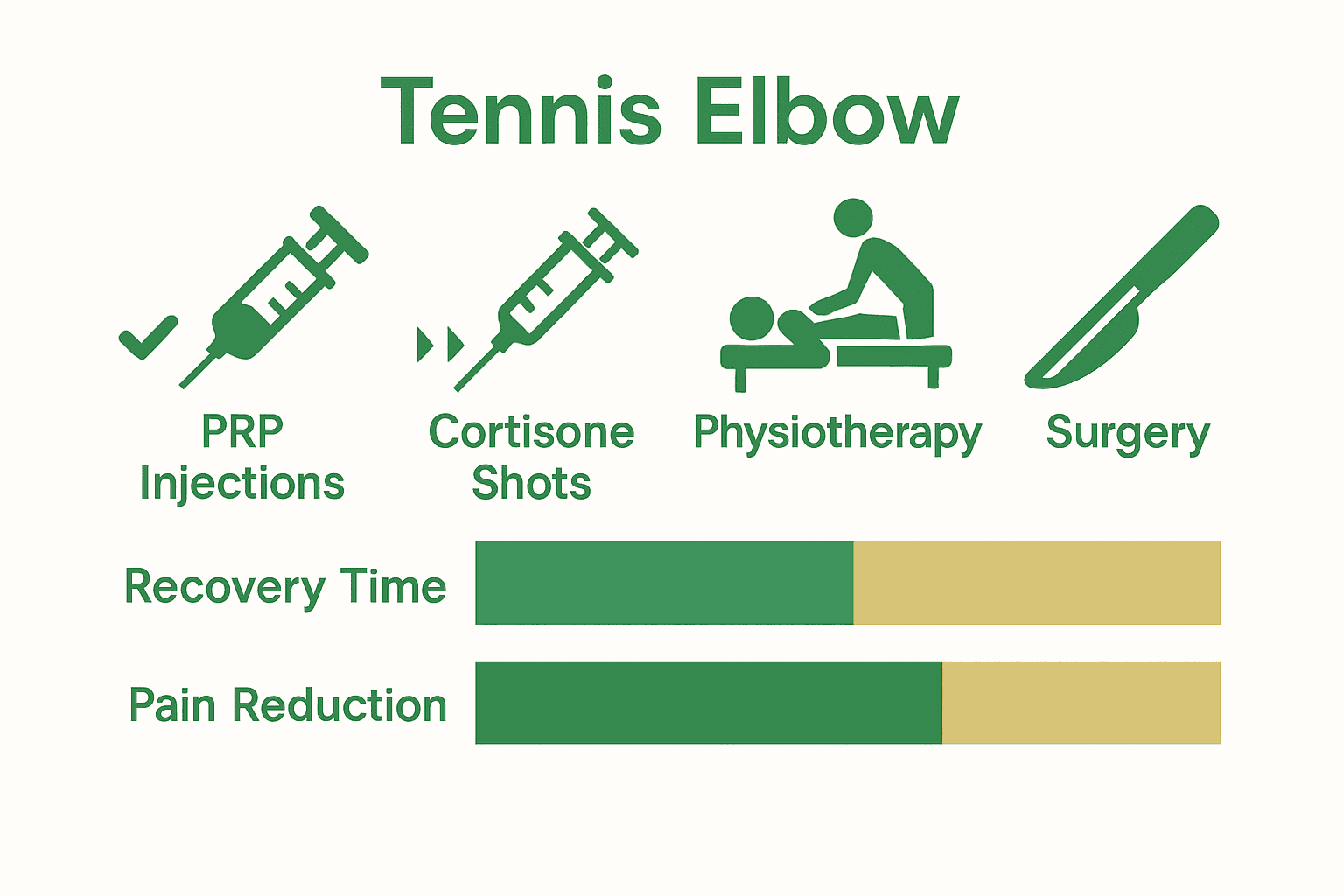
Patients seeking a comprehensive understanding of their treatment options might find our guide to elbow and wrist pain relief particularly helpful in exploring the nuanced approaches to managing tennis elbow.
Discover Lasting Relief from Tennis Elbow with Expert PRP Care
Struggling with persistent tennis elbow pain can feel discouraging, especially when traditional treatments fall short. PRP injections offer a cutting-edge solution that uses your body’s own healing power to reduce inflammation and restore tendon function. If you want to explore natural healing options that target pain at its source, our Elbow Pain & Treatment Articles | Austin Orthopedic Care provide valuable insights on innovative therapies like PRP.
Take the next step toward recovery by consulting with Dr. Manish V. Patel, a fellowship-trained, board-certified surgeon specializing in upper extremity care. At Austin Hand to Shoulder Center, we develop personalized treatment plans tailored specifically to your needs and goals. Learn more about advanced PRP Therapy Articles | Regenerative Medicine Austin Blog and how this non-surgical approach could restore your elbow’s function without lengthy downtime. Don’t wait for pain to limit your life any longer. Visit us at https://handtoshoulderaustin.com to schedule your evaluation today and begin your journey to lasting relief.
Frequently Asked Questions
What are PRP injections for tennis elbow?
PRP injections for tennis elbow involve extracting and concentrating a patient’s own platelets to stimulate healing in the affected tendons, providing a non-surgical treatment option for this common overuse injury.
How does PRP therapy promote healing in tennis elbow?
PRP therapy promotes healing by delivering concentrated growth factors directly to the injured tendon, stimulating processes such as angiogenesis, collagen synthesis, and cellular proliferation, which aids in the recovery and regeneration of the tissue.
What is the procedure for receiving PRP injections?
The PRP procedure includes an initial consultation, blood collection, centrifugation to concentrate platelets, preparation for injection, ultrasound guidance for accuracy, and the actual injection into the injured tendon.
What are the potential risks and costs associated with PRP therapy?
Potential risks include infection, temporary pain at the injection site, and tissue damage, although these are rare. The cost of PRP therapy typically ranges from $500 to $1,500 per treatment, and may not be covered by insurance as it is often considered experimental.


