
Rotator cuff surgery can turn regular routines upside down, but a thoughtful recovery plan can make all the difference. Up to 40 percent of patients encounter challenges during rehabilitation that could be eased with better preparation. From creating a safe home space to following medical advice, smart steps help you regain strength and comfort more quickly. This guide offers clear tips to help you avoid common setbacks and move confidently through every stage of your recovery.
Table of Contents
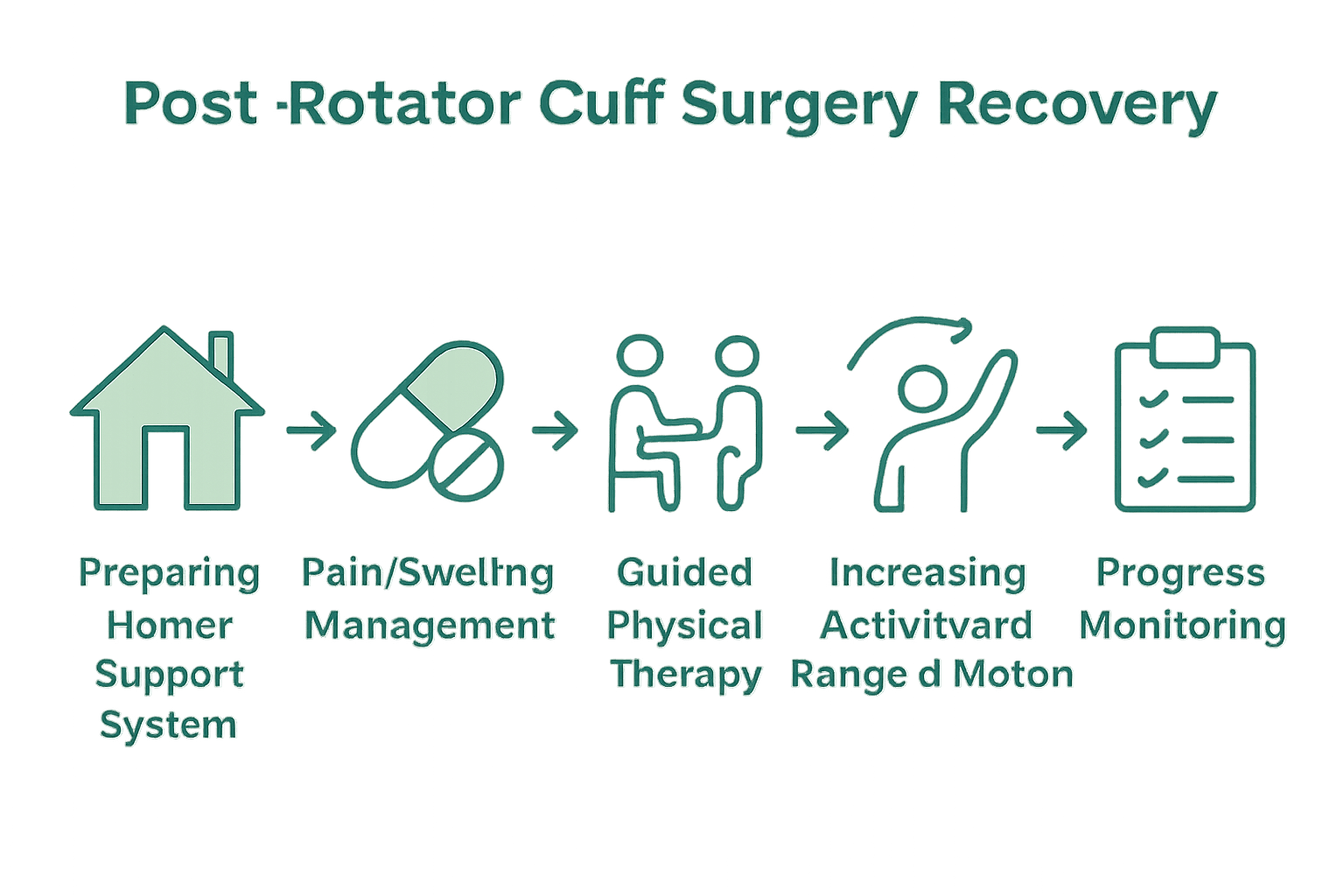
- Step 1: Prepare Your Home And Support System
- Step 2: Manage Post-Surgery Pain And Swelling
- Step 3: Begin Guided Physical Therapy Exercises
- Step 4: Increase Shoulder Activity And Range Of Motion
- Step 5: Monitor Progress And Communicate With Your Surgeon
Quick Summary
| Key Point | Explanation |
|---|---|
| 1. Designate a recovery zone. | Create a comfortable space with essentials nearby to facilitate healing and minimize strain during recovery. |
| 2. Engage a supportive network. | Involve family or friends for assistance with daily tasks to reduce physical and emotional stress during recovery. |
| 3. Manage pain and swelling strategically. | Use prescribed medications and cold therapy to control pain and swelling effectively in the initial recovery phase. |
| 4. Follow guided physical therapy. | Attend physical therapy sessions for structured exercises that gradually improve shoulder strength and mobility without strain. |
| 5. Monitor your progress closely. | Maintain open communication with your surgeon and document your healing experience to address complications early. |
Step 1: Prepare Your Home and Support System
Getting your home ready for rotator cuff surgery recovery means creating a safe and comfortable environment that supports your healing journey. According to ahn.org, strategic preparation can significantly improve your postoperative experience and reduce potential complications.
Start by designating a recovery zone in your home where everything you need is within easy reach. This area should be near a comfortable chair or bed with good back support, positioned close to electrical outlets for charging devices and near a table where you can keep essentials like water, medications, remote controls, and your phone. Consider setting up a small rolling cart or side table to minimize movement and strain on your surgical shoulder. Clear pathways of area rugs, electrical cords, and other potential tripping hazards to prevent accidental falls during your initial recovery period.
Recruit family members or close friends who can provide practical assistance during the first few weeks after surgery. Ideally, have someone who can help with cooking, cleaning, driving, and personal care tasks. Prepare some freezer meals in advance, arrange for grocery delivery, and ensure you have loose comfortable clothing that can be easily put on and taken off with minimal shoulder movement. Your support system is crucial not just for physical help but also for emotional encouragement during this healing process.
Step 2: Manage Post-Surgery Pain and Swelling
Effective pain and swelling management is critical during the initial stages of rotator cuff surgery recovery. According to faculty.washington.edu, strategic approaches can significantly reduce discomfort and support healing.
Your pain management strategy will involve a combination of prescribed medications and cold therapy. Follow your surgeon’s specific medication instructions carefully, typically alternating between prescription pain relievers and over the counter anti inflammatory drugs. Apply ice packs to the surgical area for 15 to 20 minutes every two to three hours during the first 48 to 72 hours post surgery. When applying ice, always place a thin cloth between the ice pack and your skin to prevent direct contact that could cause skin damage. Keep your arm elevated on pillows while icing to help minimize swelling and promote better circulation.
Pay close attention to your body’s signals during recovery. If pain becomes severe, increases unexpectedly, or is accompanied by unusual symptoms like fever or excessive redness, contact your healthcare provider immediately. Your pain levels will gradually decrease over the first few weeks, but consistent management and following your prescribed protocol are key to a smooth recovery process. Recovery Workflow After Rotator Cuff Surgery: Stepwise Guide can provide additional insights into your healing journey.
Step 3: Begin Guided Physical Therapy Exercises
Physical therapy represents a critical phase in your rotator cuff surgery recovery, designed to restore shoulder strength, flexibility, and range of motion. Your rehabilitation journey will be carefully structured with progressive exercises tailored to your specific surgical procedure and individual healing progress.
Your initial physical therapy sessions will focus on gentle range of motion exercises under professional supervision. Expect your therapist to start with passive movements where they carefully move your arm for you, preventing unnecessary strain on your surgical site. These early sessions are crucial for preventing stiffness and maintaining joint mobility without risking additional damage.
 Typically, you will begin with pendulum exercises where you lean forward and allow your arm to swing gently like a pendulum, using gravity to create controlled movement. As healing progresses, your therapist will gradually introduce active assisted and then independent exercises that help rebuild muscle strength and improve shoulder function.
Remember that patience and consistent effort are key to successful rehabilitation. Follow your therapist’s instructions precisely and communicate openly about any discomfort or challenges you experience. Shoulder Mobility Exercises for Pain-Free Upper Limb Movement can provide additional insights into maintaining shoulder health throughout your recovery process. Your commitment to guided physical therapy will significantly impact your long term surgical outcome and return to normal daily activities.
Step 4: Increase Shoulder Activity and Range of Motion
Progressing your shoulder mobility requires a strategic and patient approach designed to gradually restore strength and flexibility after rotator cuff surgery. As you move beyond initial recovery, your focus will shift from protecting the surgical site to carefully expanding your shoulder’s functional capabilities.
Your progression will involve graduated exercises that systematically challenge your shoulder without overwhelming healing tissues. You will start with active assisted movements where you use your uninjured arm to help move the surgical shoulder through gentle ranges of motion. Typical exercises might include using a towel or stick to support controlled movements, allowing your surgical arm to gradually bear more weight and movement independently. Your physical therapist will guide you through specific techniques like wall climbing exercises where you slowly walk your fingers up a wall, incrementally increasing the height and complexity of movements as your strength and comfort improve.
Stay attentive to your body’s signals during this process. Some mild discomfort is normal, but sharp pain indicates you should stop and consult your healthcare provider. Complete Guide to Shoulder Injury Care Options can offer additional insights into managing your recovery. Remember that consistency and gentle persistence are key to regaining full shoulder function and preventing potential setbacks in your rehabilitation journey.
Step 5: Monitor Progress and Communicate With Your Surgeon
Effective recovery from rotator cuff surgery requires consistent monitoring and open dialogue with your surgical team. According to faculty.washington.edu, maintaining clear communication is crucial for ensuring proper healing and addressing potential complications early.
Schedule and attend all recommended follow-up appointments with meticulous attention. During these visits, be prepared to provide detailed information about your recovery progress, including your pain levels, range of motion, and any challenges you are experiencing during rehabilitation. As recommended by stcharleshealthcare.org, come to each appointment with a written list of questions or concerns. This helps your surgeon conduct a comprehensive assessment and make necessary adjustments to your treatment plan. Document your daily activities, exercise progression, and any unusual symptoms between appointments so you can provide precise information during your consultations.
Stay proactive about your recovery by being honest and transparent with your medical team. If you experience persistent pain, unusual swelling, or limited mobility that seems different from your expected recovery trajectory, contact your surgeon promptly. Trust your instincts and do not hesitate to seek clarification or additional guidance. Early intervention can prevent potential setbacks and ensure a smoother rehabilitation process.
Take Control of Your Rotator Cuff Surgery Recovery Today
Navigating the recovery workflow after rotator cuff surgery can feel overwhelming. You might be struggling with pain management, limited shoulder mobility, or uncertainty about your next steps. This guide highlights the importance of a well-planned recovery process including pain control, supportive care, and progressive physical therapy. Managing these challenges early is vital to regain full shoulder function and prevent setbacks.
If you are ready to move forward with confidence, explore expert resources in our Surgery Recovery & Rehab Guides | Austin Orthopedic Care to deepen your understanding of every stage of healing. For focused support on surgical options and care, visit Upper Extremity Surgery Articles | Austin Orthopedic Blog. When you are ready to receive personalized treatment from a fellowship-trained specialist, schedule your appointment through https://handtoshoulderaustin.com. Don’t delay your recovery—connect with us now to start your step-by-step journey toward pain-free shoulder movement and lasting healing.
Frequently Asked Questions
How can I prepare my home for recovery after rotator cuff surgery?
To prepare your home for recovery, designate a comfortable recovery zone near essential items. Clear pathways of tripping hazards and arrange for help with tasks like cooking and cleaning during the initial weeks post-surgery.
What steps should I take for pain management after rotator cuff surgery?
Effective pain management involves following your surgeon’s medication guidelines and applying ice packs to the surgical area every 2-3 hours. Make sure to keep your arm elevated while icing to help reduce swelling during the first few days.
What should I expect during my first physical therapy sessions?
In your initial physical therapy sessions, you will focus on gentle range of motion exercises under supervision, including passive movements. Expect to start with pendulum exercises, which help maintain mobility without straining your surgical site.
How can I safely increase shoulder activity after rotator cuff surgery?
To safely increase shoulder activity, begin with active assisted movements using your uninjured arm to help move the surgical shoulder. Gradually introduce exercises like wall climbing as your strength and comfort improve, ensuring that you listen to your body and stop if you feel sharp pain.
How do I monitor my recovery progress after rotator cuff surgery?
Monitor your recovery by documenting pain levels, range of motion, and any challenges you encounter during rehabilitation. Attend all follow-up appointments and bring a list of questions or concerns to discuss with your surgeon for tailored guidance on your healing journey.
When should I contact my surgeon after rotator cuff surgery?
Contact your surgeon if you experience persistent pain, unusual swelling, or restricted mobility that deviates from your recovery expectations. Being proactive, especially within the first few weeks post-surgery, can help address potential complications early.


