

Most American adults will face shoulder pain at some point, yet misconceptions about this joint remain widespread among Austin residents. The shoulder is a complex network of bones, muscles, and nerves that provides unmatched mobility but is vulnerable to injury. Knowing the real anatomy behind your symptoms can help you spot common myths, make sense of lingering discomfort, and choose whether orthopedic care like surgery or recovery therapy is right for your situation.
Table of Contents
- Defining Shoulder Anatomy And Common Myths
- Bones And Joints Forming The Shoulder Complex
- Major Muscles, Tendons, And Their Functions
- Nerve Pathways And Blood Supply To The Shoulder
- How Injuries Affect Shoulder Structures
- Recognizing When To Seek Orthopedic Care
Key Takeaways
| Point | Details |
|---|---|
| Shoulder Anatomy is Complex | The shoulder consists of multiple bones, ligaments, and muscles that work together, revealing both its remarkable mobility and inherent vulnerability to injuries. |
| Common Misconceptions | Many patients mistakenly view the shoulder as a simple joint; understanding its complexity is essential for effective treatment strategies like PRP therapy. |
| Recognizing Injuries | Symptoms such as chronic pain, instability, and neurological sensations should prompt immediate orthopedic evaluation to prevent further functional impairment. |
| Documenting Symptoms is Crucial | Keeping track of specific movements that trigger pain can assist healthcare professionals in diagnosing problems more accurately and planning effective treatment. |
Defining Shoulder Anatomy and Common Myths
The human shoulder is far more intricate than most Austin patients realize – it’s a remarkable biomechanical system involving multiple interconnected structures that enable extraordinary movement. The shoulder joint contains three primary bones: the clavicle (collarbone), scapula (shoulder blade), and humerus (upper arm bone), which work together in a complex dance of mobility and stability.
Understanding the shoulder’s anatomy reveals why this joint is simultaneously powerful and vulnerable. The glenohumeral joint, which connects the upper arm bone to the shoulder blade, permits an incredible range of motion unlike any other joint in the human body. This flexibility comes with a trade-off: increased mobility means reduced structural stability, making the shoulder more susceptible to potential injuries and conditions that can limit movement.
Many patients harbor misconceptions about shoulder function. Common myths include believing the shoulder is a single, simple joint, when in reality it’s a sophisticated network of bones, muscles, ligaments, and tendons. The shoulder contains multiple articulations and supportive structures that work harmoniously to enable everything from throwing a baseball to reaching for a high shelf. Understanding these intricate connections helps patients appreciate why targeted treatments like PRP therapy can be so effective for addressing shoulder-related issues.
Pro Tip: When experiencing persistent shoulder discomfort, document the specific movements that trigger pain, as this information can help orthopedic specialists like Dr. Patel diagnose underlying anatomical issues more precisely.
Bones and Joints Forming the Shoulder Complex
The shoulder complex represents a remarkable architectural marvel of human anatomy, composed of three primary bones that work in intricate coordination: the clavicle (collarbone), scapula (shoulder blade), and humerus (upper arm bone). These interconnected bones form a sophisticated joint system that enables an extraordinary range of motion unprecedented in human musculoskeletal structure.

At the core of shoulder biomechanics is the glenohumeral joint, a ball-and-socket configuration where the rounded head of the humerus fits precisely into the glenoid cavity of the scapula. This unique design allows for remarkable mobility – enabling movements like throwing a baseball, reaching overhead, or performing delicate surgical procedures. However, this flexibility comes with inherent vulnerability, making the shoulder susceptible to potential injuries that Austin patients often experience.
Beyond the primary glenohumeral joint, the shoulder complex includes additional critical articulations that contribute to its overall function. The acromioclavicular joint connects the shoulder blade’s acromion to the collarbone, while the sternoclavicular joint links the collarbone to the breastbone. These secondary joints work in concert, providing stability and allowing nuanced movements that our daily activities demand. Understanding these interconnected structures helps explain why targeted treatments like PRP therapy can be so effective in addressing shoulder-related conditions.
Here’s a summary of key shoulder joint components and their unique functions:
| Component | Main Function | Importance to Mobility |
|---|---|---|
| Glenohumeral joint | Enables arm rotation | Allows widest range of motion |
| Acromioclavicular joint | Transfers forces across joint | Helps raise the arm above head |
| Sternoclavicular joint | Connects arm to trunk | Provides overall shoulder support |
Pro Tip: When experiencing persistent shoulder discomfort, pay close attention to specific movements that trigger pain, as this detailed information can help orthopedic specialists accurately diagnose underlying structural issues.
Major Muscles, Tendons, and Their Functions
The shoulder’s muscular system is a sophisticated network of interconnected tissues that enable remarkable movement and stability. The rotator cuff muscles form a critical group of four key stabilizers – supraspinatus, infraspinatus, teres minor, and subscapularis – which work in concert to keep the humeral head precisely positioned within the shoulder socket during complex arm movements.
Beyond the rotator cuff, the deltoid muscle emerges as the primary powerhouse of shoulder mobility. This large, triangular muscle covers the shoulder joint and provides the primary force for arm lifting and rotation. Complementing the deltoid are supporting muscles like the trapezius and pectoralis, which contribute to nuanced shoulder blade movements and overall upper body mechanics. These muscle groups work together to create a complex system of movement and stabilization/9%3A_Muscular_System/9.9%3A_Muscles_of_the_Upper_Limb/9.9C%3A_Muscles_of_the_Shoulder), allowing everything from delicate surgical procedures to powerful athletic movements.
Understanding the intricate relationship between these muscles helps explain why certain conditions develop and how targeted treatments like PRP therapy can effectively address shoulder dysfunction. The tendons connecting these muscles to bones play a crucial role in transmitting force and maintaining joint integrity, making them vulnerable to repetitive stress and potential injury.
Pro Tip: Perform gentle stretching and strengthening exercises targeting rotator cuff muscles to maintain shoulder flexibility and reduce injury risk.
Nerve Pathways and Blood Supply to the Shoulder
The complex nerve network of the shoulder originates from the intricate brachial plexus, a sophisticated nerve junction located in the neck that serves as the primary communication highway for upper extremity neural signals. The axillary nerve emerges as a critical component, traveling beneath the collarbone and running behind the upper arm bone to innervate essential shoulder muscles like the deltoid and teres minor, while simultaneously providing sensory feedback to the shoulder’s skin surface.
Blood supply to the shoulder region is equally intricate, with multiple arterial pathways ensuring robust circulation. The subscapular and posterior circumflex humeral arteries play pivotal roles in delivering oxygen and nutrients to the shoulder joint capsule and surrounding tissues. These blood vessels work in concert with nerve pathways to maintain the shoulder’s complex biomechanical functionality, supporting everything from subtle movements to high-intensity athletic performances.
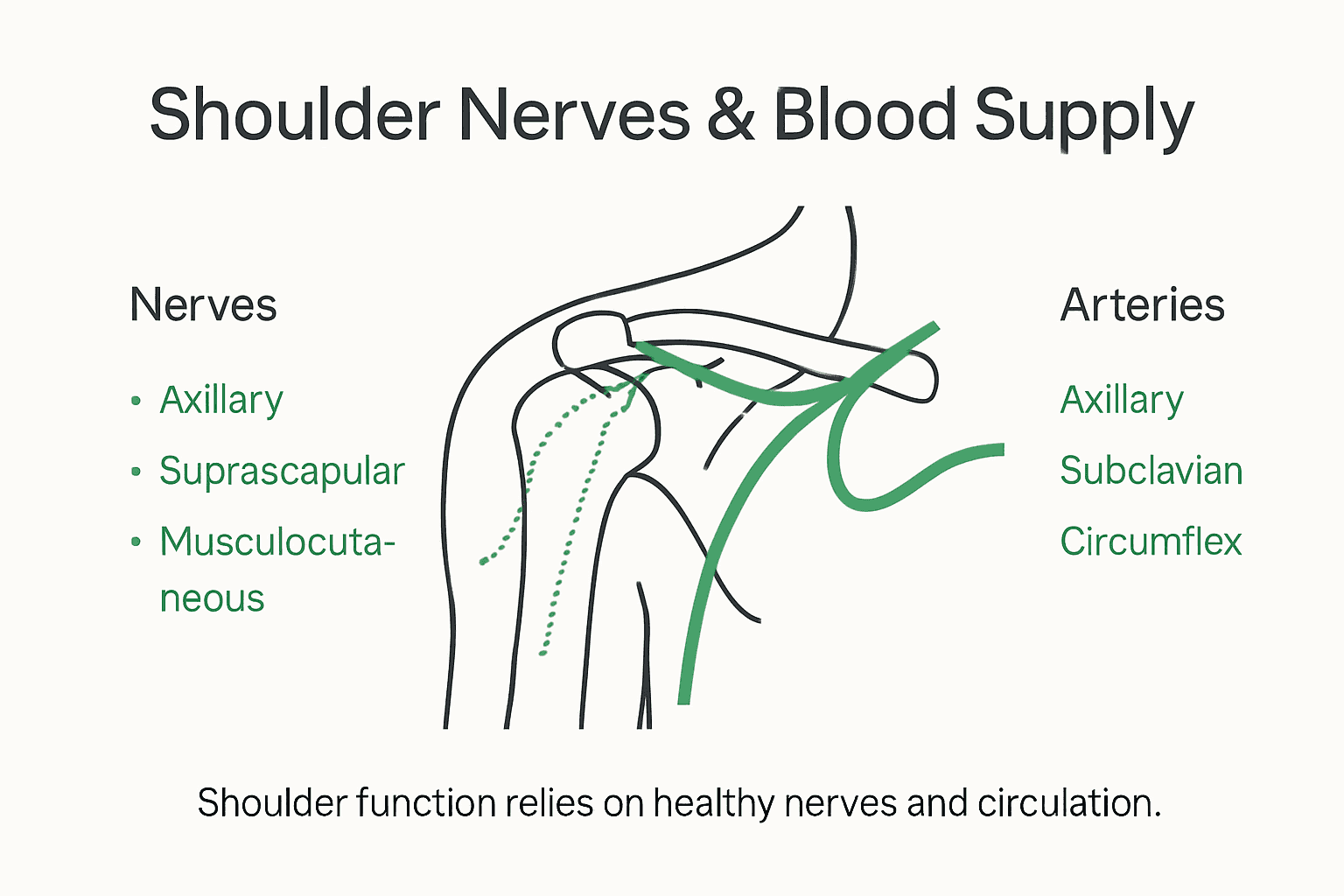
Beyond the axillary nerve, several additional nerves contribute to shoulder function, including the suprascapular, musculocutaneous, and radial nerves. Each nerve pathway serves a unique purpose, controlling specific muscle groups and transmitting sensory information. Understanding these neural networks helps explain why conditions like nerve compression or injury can dramatically impact shoulder mobility and why targeted treatments such as PRP therapy can be so effective in addressing neurological shoulder issues.
Pro Tip: Pay attention to any persistent numbness or tingling in your shoulder region, as these could indicate potential nerve pathway disruptions requiring professional medical evaluation.
How Injuries Affect Shoulder Structures
Shoulder injuries can dramatically compromise the intricate anatomical structures that enable complex upper body movements, with potential consequences ranging from temporary discomfort to long-term functional impairment. These injuries frequently impact multiple interconnected components, including bones like the clavicle and humerus, muscles of the rotator cuff, ligaments, and critical neurovascular networks that provide sensation and mobility.
The most common shoulder injuries manifest through distinct mechanisms that challenge different anatomical structures. Rotator cuff injuries represent a particularly prevalent concern, often resulting from repetitive overhead movements or acute trauma that can cause partial or complete tendon tears. These injuries typically trigger pain, swelling, and progressive limitations in range of motion, potentially compromising an individual’s ability to perform basic daily activities or engage in athletic pursuits.
Use this quick reference to recognize major types of shoulder injuries and their effects:
| Injury Type | Typical Mechanism | Common Impact |
|---|---|---|
| Rotator cuff tear | Overuse or trauma | Pain, limited movement |
| Dislocation | Sudden force or fall | Deformity, instability |
| Fracture | Direct blow or accident | Intense pain, swelling |
Understanding the complexity of shoulder injuries underscores why specialized treatments like PRP therapy can be so effective. Different injury types – from fractures and dislocations to muscle strains and ligament sprains – require nuanced diagnostic approaches and targeted interventions. The shoulder’s remarkable mobility makes it inherently vulnerable, with each structural compromise potentially creating a cascade of functional challenges that extend far beyond the immediate point of injury.
Pro Tip: Document the specific circumstances and movements associated with your shoulder pain, as these details can provide critical insights for precise medical diagnosis and treatment planning.
Recognizing When to Seek Orthopedic Care
Shoulder pain and dysfunction can signal serious underlying conditions that require professional medical evaluation, demanding careful attention from Austin patients. Persistent symptoms that extend beyond typical muscle soreness or temporary strain represent critical warning signs that should prompt immediate consultation with an orthopedic specialist like Dr. Patel.
Several key indicators suggest the need for professional orthopedic intervention. Chronic pain lasting more than four weeks, particularly pain that intensifies over time or does not respond to rest and conservative home treatments, represents a significant red flag. Specific symptoms requiring urgent medical attention include severe trauma-related pain, complete inability to move the arm, and neurological sensations like numbness or tingling, which could indicate nerve involvement or structural damage that might worsen without proper medical assessment.
Patients should also be alert to more subtle signs of shoulder dysfunction. Feelings of shoulder instability, recurring weakness during routine activities, or a sense that the shoulder might ‘slip’ or give way are all legitimate reasons to seek orthopedic expertise. These symptoms could indicate complex issues involving rotator cuff integrity, ligament damage, or nerve pathway disruptions that specialized treatments like PRP therapy might effectively address.
Pro Tip: Document the specific characteristics of your shoulder pain – including duration, intensity, triggering movements, and any accompanying symptoms – to provide your orthopedic specialist with comprehensive diagnostic information.
Take Control of Your Shoulder Health with Expert Care
Understanding the intricate anatomy of your shoulder is the first step toward overcoming persistent pain and preventing injury. If you are experiencing discomfort, instability, or limited motion caused by issues affecting the rotator cuff, joints, or nerve pathways, personalized treatment tailored to your condition can make all the difference. At our practice, we specialize in diagnosing and treating shoulder conditions with a focus on restoring function and reducing pain.
Explore comprehensive solutions in Shoulder Surgery & Care Articles | Austin Orthopedic Blog to better understand your condition. For athletes and active individuals, our Sports Medicine & Athlete Care | Austin Orthopedic Blog offers insights on preventing injuries and enhancing recovery. Ready to begin your journey toward relief? Visit Austin Hand to Shoulder today to schedule an evaluation with Dr. Manish V. Patel, a fellowship-trained specialist dedicated to your recovery. Act now to regain comfortable shoulder movement and improve your quality of life.
Frequently Asked Questions
What are the three primary bones in the shoulder complex?
The shoulder complex consists of three main bones: the clavicle (collarbone), scapula (shoulder blade), and humerus (upper arm bone). These bones work together to enable a broad range of arm movements.
What is the function of the rotator cuff muscles?
The rotator cuff muscles, which include the supraspinatus, infraspinatus, teres minor, and subscapularis, play a critical role in stabilizing the shoulder by keeping the humeral head positioned within the socket during arm movements.
When should I seek orthopedic care for shoulder pain?
You should seek orthopedic care for shoulder pain if you experience chronic pain lasting more than four weeks, severe pain after an injury, inability to move your arm, or neurological symptoms like numbness or tingling, which could indicate serious underlying issues.
How do shoulder injuries typically occur?
Shoulder injuries often occur from repetitive overhead movements, acute trauma, or falls. Common injuries include rotator cuff tears, dislocations, and fractures, each affecting the shoulder’s complex structures in different ways.
Recommended
- Diagnosing Shoulder Injuries: What Austin Patients Need – Austin Hand To Shoulder
- Shoulder Surgery in Austin, TX: Treatment & Recovery Guide
- Top Causes of Shoulder Pain—What Austin Patients Need to Know – Austin Hand To Shoulder
- Rotator Cuff Injuries: Complete Guide for Austin Residents – Austin Hand To Shoulder


