

Nearly 70 percent of adults experience shoulder pain or limited movement at some point in their lives. Everyday activities like reaching for a top shelf or fastening a seatbelt can feel tough when your shoulders are stiff. Understanding and improving your shoulder mobility could mean less discomfort and better overall movement. This guide breaks down practical steps that help you build strength, flexibility, and confidence in every reach and lift.
Table of Contents
- Step 1: Assess Current Shoulder Movement
- Step 2: Prepare for Safe Exercise Sessions
- Step 3: Perform Foundational Shoulder Mobility Exercises
- Step 4: Advance with Progressive Stretching Techniques
- Step 5: Monitor Progress and Adjust Routine
Quick Summary
| Key Point | Explanation |
|---|---|
| 1. Assess Your Shoulder Mobility | Perform an open hands test to evaluate the range of motion and identify any limitations. |
| 2. Warm Up Properly | Use dynamic stretching techniques like arm circles to prepare your shoulders and prevent injuries. |
| 3. Incorporate Foundational Exercises | Engage in key exercises like Wall Angels and External Rotations to improve strength and flexibility. |
| 4. Progress to Advanced Stretches | Add stretches such as the Doorway Pec Stretch to enhance mobility and reduce pain incrementally. |
| 5. Monitor Your Progress | Track changes in flexibility and pain to adjust your routine and ensure long-term improvement. |
Step 1: Assess Current Shoulder Movement
Before starting any shoulder mobility program, you need to understand your current range of motion and potential limitations. This step helps you establish a baseline for your shoulder movement and identify areas that might require specific attention.
To assess your shoulder mobility, you will perform a simple yet effective open hands mobility test. According to exrx.net, this test evaluates upper quadrant symmetry and joint range of motion by measuring the distance between fingertips when reaching behind your back.
Here is how to perform the assessment:
- Reach one hand behind your back from the top, placing your palm against your upper back
- Simultaneously reach your other hand behind your back from the bottom, attempting to touch your other hand
- Note how close your hands can get to each other
Pay attention to symmetry and range. Do both sides move equally? Are there differences in flexibility or discomfort? If you experience sharp pain during this test, stop immediately and consult a professional like those at Austin Hand to Shoulder for a comprehensive evaluation.
This simple test provides crucial insights into your shoulder mobility. The results will help guide your subsequent exercises and potential need for targeted interventions like PRP therapy to improve joint function and reduce potential injuries.
Step 2: Prepare for Safe Exercise Sessions
Preparing your body for shoulder mobility exercises is crucial to prevent injury and maximize your workout effectiveness. In this step, you will learn how to warm up and create an optimal environment for safe shoulder movement.
According to Healthline, warming up your muscles before exercise is essential to prevent potential injuries and enhance overall flexibility. Think of your warm up as a preparation ritual for your shoulders.
Start with dynamic stretching techniques. As PhysioEd recommends, arm circles are an excellent way to increase blood flow and prepare your shoulder joints for upcoming movements. Here are some specific warm up techniques:
- Perform gentle arm circles forward and backward
- Slowly rotate your shoulders in wide circular motions
- Gently swing your arms side to side to loosen shoulder muscles
PRP therapy patients should be especially careful during warm ups. Always start with gentle movements and listen to your body. If you feel any sharp pain or unusual discomfort, stop immediately and consult with a professional at Austin Hand to Shoulder.
A proper warm up typically takes 5 to 10 minutes and should leave you feeling loose and ready for more intense shoulder mobility work. Remember that consistent gentle movement is key to maintaining shoulder health and preventing potential injuries.
Step 3: Perform Foundational Shoulder Mobility Exercises
Now that you have warmed up and assessed your shoulder mobility, it is time to engage in specific exercises designed to improve your range of motion and flexibility. These foundational exercises will help you build strength and prevent potential injuries.
According to Nourish Move Love, a targeted routine of six key shoulder mobility exercises can significantly reduce injury risk and enhance overall shoulder function. Morgain Physical Therapy recommends specific movements that can dramatically improve shoulder flexibility.
Here are three foundational exercises to get started:
Here’s a summary comparison of the foundational shoulder mobility exercises:
| Exercise | Starting Position | Key Benefit |
|---|---|---|
| Wall Angels | Standing, back to wall | Improves range of motion |
| Open Book Stretch | Lying on side | Increases rotational mobility |
| External Rotations | Standing, using resistance | Strengthens rotator cuff |
- Wall Angels: Stand with your back against a wall, slowly sliding your arms up and down while maintaining contact with the wall
- Open Book Stretch: Lie on your side with arms extended, then slowly rotate your top arm open like turning pages of a book
- External Rotations: Use a light resistance band to perform controlled rotational movements
Patients considering PRP therapy should perform these exercises gently and stop if experiencing significant pain. Your comfort and safety are paramount.
These exercises work together to enhance shoulder joint mobility, increase flexibility, and prepare your body for more advanced movements. Consistency is key. Aim to perform these exercises 3 to 4 times per week, gradually increasing repetitions as your shoulder strength improves.
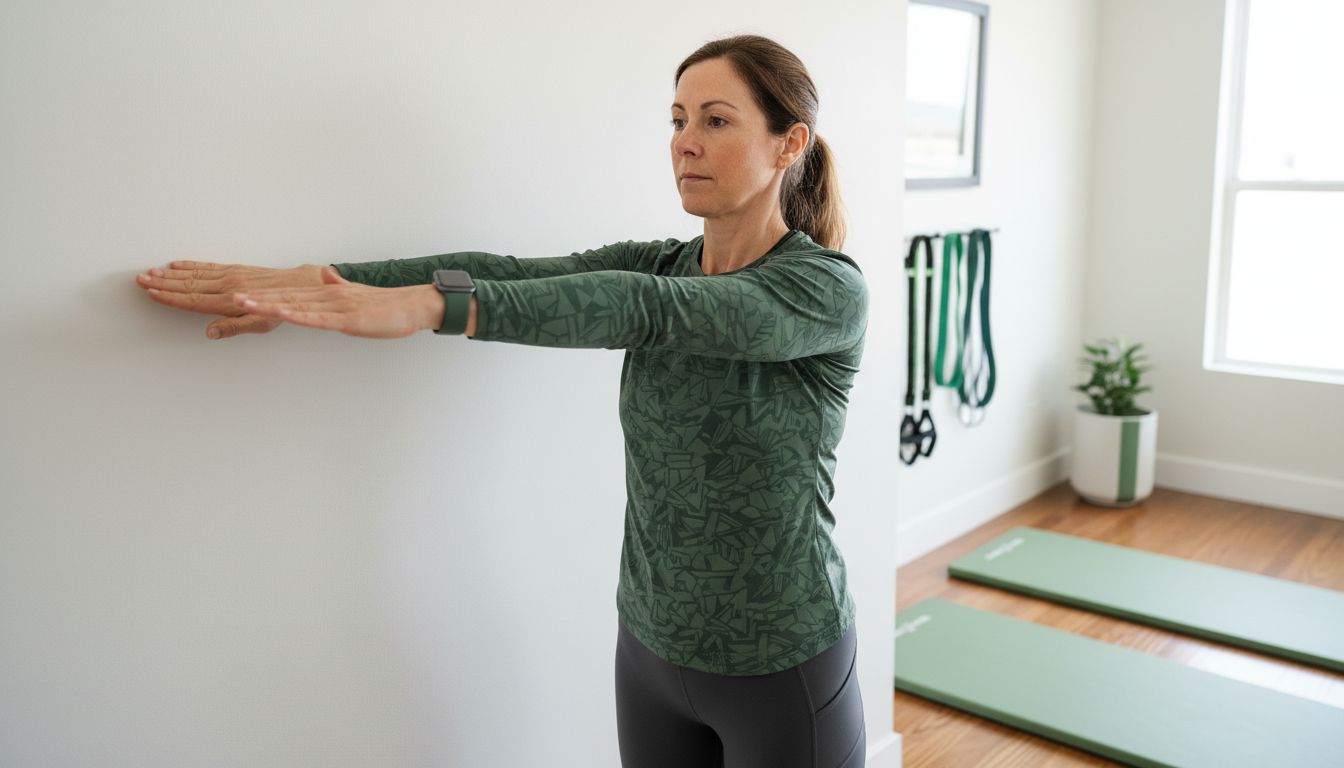
If you experience persistent discomfort or limitations, consulting with experts at Austin Hand to Shoulder can provide personalized guidance tailored to your specific shoulder condition.
Step 4: Advance with Progressive Stretching Techniques
After mastering foundational shoulder mobility exercises, you are ready to progress to more advanced stretching techniques that can further improve your range of motion and reduce potential pain. These progressive stretches will challenge your shoulder flexibility and build greater joint resilience.
According to Sustain PT Performance, advanced stretching techniques like the doorway pec stretch and thread the needle stretch can significantly enhance shoulder mobility and provide pain relief.
Here are two progressive stretching techniques to incorporate into your routine:
- Doorway Pec Stretch: Stand in a doorway, place your forearms on the door frame at shoulder height, then lean forward to open up your chest and shoulders
- Thread the Needle Stretch: Begin on all fours, then slide one arm under your body, rotating your upper body to increase shoulder flexibility
Patients considering PRP therapy should approach these advanced stretches with caution. Start slowly and pay close attention to your body’s response. If you experience sharp or persistent pain, pause the exercise and consult with professionals at Austin Hand to Shoulder.
Progressive stretching is about gradual improvement.
Aim to hold each stretch for 20 to 30 seconds, breathing deeply and maintaining a comfortable tension. As your shoulder mobility improves, you can increase the duration and intensity of these stretches.
Step 5: Monitor Progress and Adjust Routine
Tracking your shoulder mobility improvements is crucial for long term success and preventing potential injuries. Consistent monitoring allows you to understand your body’s response to the exercises and make informed adjustments to your routine.
According to PhysioEd, monitoring progress through consistent practice enables individuals to customize shoulder mobility exercises to meet their unique needs and goals.
Here are key strategies for tracking your shoulder mobility progress:
- Keep a detailed exercise journal documenting range of motion measurements
- Take periodic photos or videos to visually track your shoulder movement
- Note any changes in pain levels or flexibility during daily activities
- Record the number of repetitions and sets you can comfortably perform
PRP therapy patients should be especially attentive to their body’s signals. If you notice persistent discomfort or limited improvement, consulting with Austin Hand to Shoulder can provide professional guidance on modifying your approach.
Remember that progress is not linear. Some weeks you might feel more flexible, while others might feel more challenging. The key is consistent effort and listening to your body. Adjust your routine every 4 to 6 weeks based on your observed progress and any recommendations from healthcare professionals.
Regain Pain-Free Shoulder Movement with Expert Care
Struggling with limited shoulder mobility or persistent pain can affect every aspect of your daily life. This article breaks down essential exercises designed to improve your range of motion and reduce discomfort. However, when pain or injury persists despite your best efforts, professional evaluation and tailored treatment become essential. At Austin Hand To Shoulder, we specialize in personalized care for shoulder conditions, providing solutions that go beyond exercises to restore comfort and function.
Take control of your shoulder health today by exploring expert insights and comprehensive treatments in our Shoulder Archives – Austin Hand To Shoulder. Whether you are recovering from an injury or managing chronic pain, Dr. Manish V. Patel’s fellowship-trained expertise ensures you receive the highest quality orthopedic care. Don’t wait for pain to hold you back—visit Austin Hand To Shoulder now to schedule your consultation and begin a path toward lasting relief.
Frequently Asked Questions
How can I assess my current shoulder mobility before starting exercises?
To assess your current shoulder mobility, perform the open hands mobility test by reaching one hand behind your back from the top and the other from the bottom. Measure the distance between your fingertips as you try to touch them together to identify flexibility and symmetry.
What are the best warm-up techniques for shoulder mobility exercises?
Start with dynamic stretching techniques like arm circles, shoulder rotations, and gentle arm swings to prepare your shoulder muscles for movement. Aim for a warm-up duration of about 5 to 10 minutes to enhance flexibility and reduce the risk of injury.
What foundational shoulder mobility exercises should I begin with?
Begin with foundational exercises such as Wall Angels, Open Book Stretches, and External Rotations. Aim to perform these exercises 3 to 4 times per week, gradually increasing repetitions as your shoulder strength improves.
How do I incorporate advanced stretching techniques into my routine?
Incorporate advanced techniques like the Doorway Pec Stretch and Thread the Needle Stretch as you progress. Hold each stretch for 20 to 30 seconds, focusing on maintaining a comfortable tension while breathing deeply.
What should I monitor to track my shoulder mobility progress?
Track your progress by maintaining an exercise journal that documents your range of motion, any changes in pain levels, and the number of repetitions you can comfortably perform. Regularly review your entries every 4 to 6 weeks to inform necessary adjustments to your routine.
What should I do if I experience pain during these exercises?
If you experience sharp or persistent pain during any shoulder mobility exercise, stop immediately and assess your body’s response. Consider consulting a healthcare professional for tailored guidance to adjust your routine safely.


