
Over eight million American adults experience problems with their upper limbs each year, affecting everything from daily tasks to sleep quality. When pain or limited mobility becomes more than just an inconvenience, understanding orthopedic surgery options can make a life-changing difference. This overview breaks down how specialized surgical care for the shoulder, arm, wrist, and hand empowers patients with effective solutions that restore comfort and movement.
Table of Contents
- What Is Orthopedic Surgery for Upper Limbs
- Types of Upper Limb Orthopedic Procedures
- How Surgery Addresses Common Upper Arm Conditions
- Benefits of Surgical Intervention vs. Nonsurgical Options
- Risks, Recovery, and What to Expect After Surgery
Key Takeaways
| Point | Details |
|---|---|
| Orthopedic Surgery Focus | Orthopedic surgery for upper limbs addresses conditions of the shoulder, arm, elbow, forearm, wrist, and hand, utilizing specialized techniques for improved mobility and function. |
| Surgical vs. Nonsurgical Approaches | Surgical interventions provide definitive solutions for complex musculoskeletal issues that fail to respond to nonsurgical treatments, ensuring long-term structural correction. |
| Minimally Invasive Techniques | Modern orthopedic practices increasingly favor minimally invasive surgeries, which reduce recovery time and tissue trauma while maximizing functional outcomes. |
| Recovery and Rehabilitation | Post-surgical recovery involves structured rehabilitation and pain management strategies, with expected functional improvement within 3-6 months following surgery. |
What Is Orthopedic Surgery for Upper Limbs
Orthopedic surgery for upper limbs represents a specialized medical discipline focused on diagnosing, treating, and surgically correcting conditions affecting the shoulder, arm, elbow, forearm, wrist, and hand. Orthopedic surgeons who specialize in upper extremity care provide targeted interventions for complex musculoskeletal challenges that impact mobility, function, and quality of life.
These surgical procedures address a wide range of conditions, from traumatic injuries to chronic degenerative disorders. Upper extremity surgical techniques encompass multiple approaches tailored to specific patient needs, including repairing torn ligaments, reconstructing damaged joints, treating fractures, and addressing nerve compression syndromes. Advanced techniques like minimally invasive procedures and precision surgical interventions allow orthopedic specialists to restore function with reduced recovery times.
The scope of upper limb orthopedic surgery extends beyond traditional treatment methods. Innovative approaches such as PRP therapy provide non-surgical alternatives that can complement surgical interventions, offering patients comprehensive treatment strategies. Surgeons assess each patient’s unique anatomical challenges, medical history, and functional requirements to develop personalized treatment plans that maximize recovery potential and restore optimal upper extremity performance.
Types of Upper Limb Orthopedic Procedures
Orthopedic procedures for upper limbs encompass a diverse range of surgical interventions designed to address complex musculoskeletal conditions. Controversies in orthopedic surgical approaches highlight the intricate nature of these procedures, which span multiple anatomical regions including the shoulder, elbow, wrist, and hand.
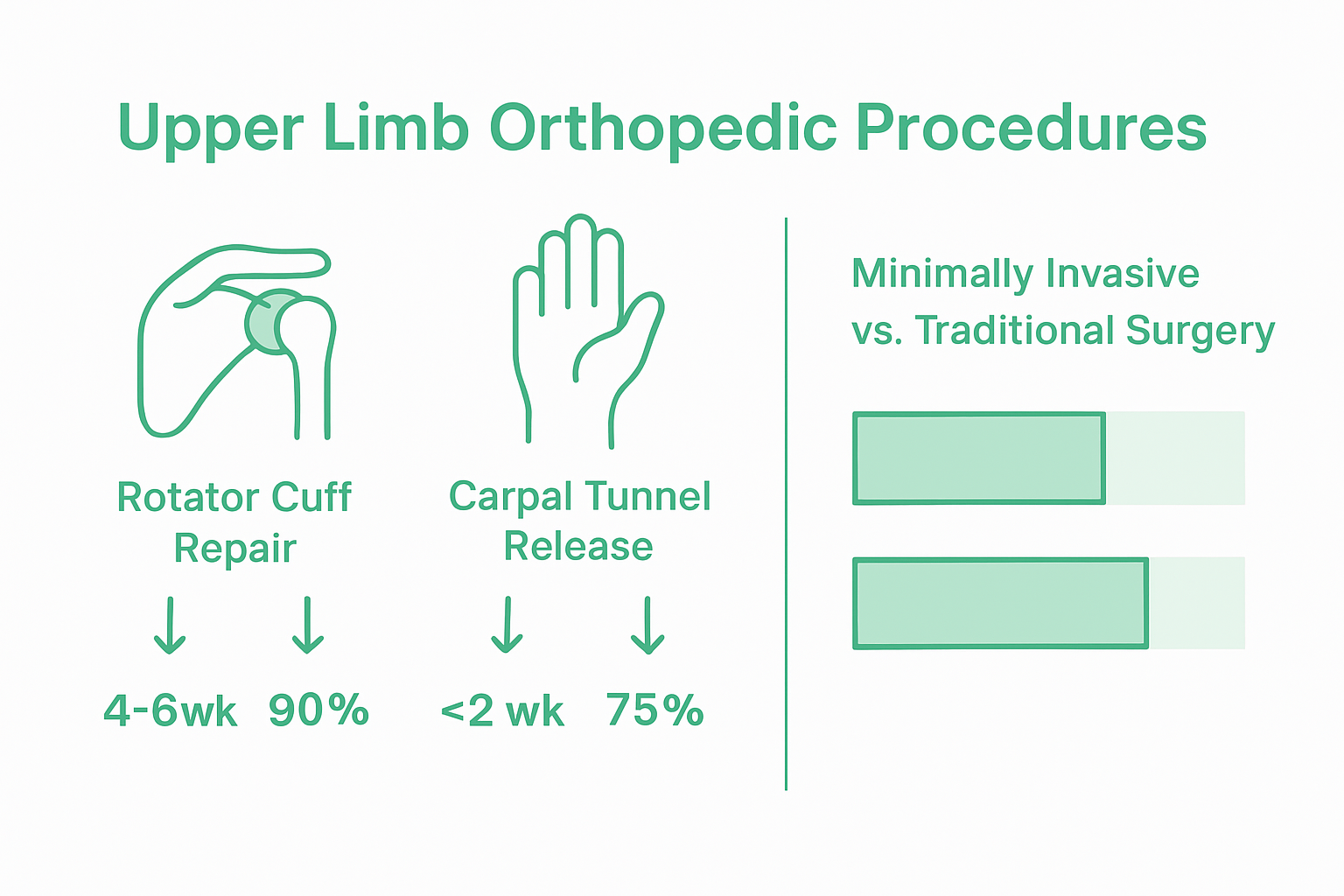
Shoulder procedures represent a critical component of upper limb orthopedic surgery. Techniques like the Mumford procedure offer targeted solutions for specific conditions, such as removing part of the clavicle to alleviate chronic shoulder pain and improve joint function. Other prominent shoulder surgeries include rotator cuff repair, shoulder stabilization, and total shoulder replacement for patients with severe arthritis or complex joint damage.
Beyond shoulder interventions, upper limb orthopedic procedures encompass a wide array of surgical techniques. Reconstructive surgeries can address complex hand and wrist conditions, including tendon repairs, nerve decompression, fracture reconstruction, and joint reconstruction. Surgeons may also perform specialized procedures like tendon transfer surgeries that restore function in patients with nerve or muscle injuries, enabling improved mobility and quality of life.
Modern orthopedic approaches increasingly emphasize minimally invasive techniques and precision surgical interventions. PRP therapy and advanced regenerative treatments complement traditional surgical methods, offering patients comprehensive treatment strategies that minimize recovery time and maximize functional outcomes. These innovative approaches allow orthopedic specialists to develop personalized treatment plans that address each patient’s unique anatomical challenges and functional requirements.
How Surgery Addresses Common Upper Arm Conditions
Upper extremity surgical approaches provide targeted solutions for addressing complex musculoskeletal challenges in the upper arm. Orthopedic surgeons utilize advanced diagnostic techniques and precision interventions to treat conditions ranging from traumatic injuries to chronic degenerative disorders that significantly impact patient mobility and quality of life.
Common upper arm conditions requiring surgical intervention include rotator cuff tears, nerve compression syndromes, and complex joint injuries. Surgical treatment strategies are carefully designed to restore functional movement, alleviate chronic pain, and prevent long-term musculoskeletal deterioration. Procedures such as nerve decompression, tendon repair, and joint reconstruction can dramatically improve a patient’s range of motion and overall upper arm functionality.
Modern orthopedic techniques increasingly emphasize minimally invasive surgical approaches. Precision interventions allow surgeons to address specific anatomical challenges with reduced tissue trauma and faster recovery times. Why surgery may be necessary becomes clear when conservative treatments fail to provide adequate relief, and patients experience persistent pain, limited mobility, or progressive functional decline.
Innovative treatments like PRP therapy complement traditional surgical methods, offering patients comprehensive rehabilitation strategies. These advanced approaches enable orthopedic specialists to develop personalized treatment plans that not only address immediate surgical needs but also support long-term musculoskeletal health and functional restoration. By combining cutting-edge surgical techniques with regenerative therapies, surgeons can provide targeted solutions that minimize recovery time and maximize patient outcomes.
Benefits of Surgical Intervention vs. Nonsurgical Options
Comparative treatment approaches reveal critical distinctions between surgical and nonsurgical interventions for upper limb conditions. While nonsurgical treatments like physical therapy, medication, and PRP therapy offer initial relief, surgical options provide definitive solutions for complex musculoskeletal challenges that do not respond to conservative management.
Upper extremity treatment protocols demonstrate that surgical intervention becomes necessary when patients experience persistent pain, significant functional limitation, or progressive deterioration of their condition. Surgical procedures can address underlying structural problems that nonsurgical treatments cannot resolve, such as torn ligaments, severe joint damage, nerve compression, and advanced degenerative conditions.
Key advantages of surgical intervention include permanent structural correction, immediate pain relief, and comprehensive restoration of mobility. Signs you need wrist surgery become evident when nonsurgical treatments fail to provide meaningful improvement, and patients continue to experience reduced quality of life due to chronic pain and limited functionality.
Modern orthopedic techniques emphasize minimally invasive approaches that minimize recovery time and maximize patient outcomes. Precision surgical interventions offer targeted solutions that not only address immediate medical concerns but also support long-term musculoskeletal health. By combining advanced surgical techniques with regenerative therapies like PRP, orthopedic specialists can develop personalized treatment strategies that provide comprehensive healing and functional restoration beyond what nonsurgical options can achieve.
Risks, Recovery, and What to Expect After Surgery
Comprehensive postoperative protocols emphasize the importance of understanding potential risks and recovery expectations for upper limb surgeries. Patients should anticipate a structured rehabilitation process that involves careful management of pain, gradual restoration of mobility, and strategic interventions to support optimal healing.
Surgical outcome management reveals that potential risks can include infection, temporary nerve sensitivity, limited initial range of motion, and minimal scarring. Recovery timelines vary depending on the specific procedure, with most patients experiencing significant functional improvement within 3-6 months. Recovery workflow after rotator cuff surgery typically involves progressive physical therapy, pain management strategies, and personalized rehabilitation protocols.
Pain management represents a critical component of post-surgical recovery. PRP therapy and advanced regenerative treatments can significantly enhance healing processes, reducing inflammation and accelerating tissue repair. Patients can expect initial discomfort, which gradually diminishes as healing progresses. Most surgical interventions require wearing a supportive brace or sling, with specific movement restrictions during the initial recovery phase.
Modern orthopedic techniques prioritize minimally invasive approaches that reduce recovery time and complications. Precision surgical interventions are designed to minimize tissue trauma and support faster healing. Patients should maintain open communication with their surgeon, attend all follow-up appointments, and strictly adhere to recommended rehabilitation protocols to ensure optimal surgical outcomes and long-term functional restoration.
Discover Expert Orthopedic Surgery for Upper Limb Pain in Austin
Struggling with persistent upper limb pain that limits your daily activities and affects your quality of life is frustrating. This article highlights how orthopedic surgery offers precise and lasting solutions for conditions like torn tendons, nerve compression, and arthritis. If you are seeking expert care that focuses on restoring your upper extremity function through personalized treatment plans, explore our Upper Extremity Surgery Articles | Austin Orthopedic Blog for in-depth knowledge and patient stories.
Take control of your recovery today by choosing the specialized care you deserve at Austin Hand To Shoulder. Our fellowship-trained, board-certified surgeon Dr. Manish V. Patel offers comprehensive orthopedic care tailored to your unique needs. Don’t wait until pain worsens. Visit our Orthopedic Care Archives – Austin Hand To Shoulder and schedule an appointment now to start your journey to renewed strength and mobility.
Frequently Asked Questions
What conditions can orthopedic surgery address for upper limb pain?
Orthopedic surgery can address a variety of conditions affecting the upper limbs, including rotator cuff tears, nerve compression syndromes, complex joint injuries, fractures, tendon injuries, and chronic degenerative disorders.
How does surgery improve mobility and quality of life for upper limb conditions?
Surgery can provide permanent structural correction, relieve chronic pain, and enhance mobility by repairing or reconstructing damaged tissues, tendons, and joints, thereby significantly improving a patient’s overall functioning and quality of life.
What are the benefits of choosing surgical intervention over nonsurgical options for upper limb pain?
Surgical intervention often provides more definitive solutions compared to nonsurgical treatments. Benefits include immediate pain relief, correction of underlying structural problems, and a targeted approach to restoring functionality, especially when conservative methods fail to provide relief.
What should patients expect during recovery after upper limb orthopedic surgery?
Patients can expect a structured rehabilitation process involving pain management, gradual restoration of mobility, and adherence to specific movement restrictions. Recovery timelines may vary based on the procedure, but significant functional improvement is typically observed within 3-6 months.


