

Pain in the elbows or wrists can make even the simplest tasks feel like an uphill battle. Nearly one in five adults will experience persistent joint pain in their lifetime, impacting everything from typing to lifting groceries. Understanding what causes these aches is the first step toward relief and lasting joint health. This guide sheds light on the common sources of elbow and wrist pain, helping you identify what might be behind your discomfort and what to do next.
Table of Contents
Key Takeaways
| Point | Details |
| Identification of Causes | Understanding various causes of elbow and wrist pain is essential for effective treatment, including repetitive motion injuries and age-related wear. |
| Common Conditions | Familiarity with prevalent conditions such as tendinitis and tennis elbow can guide individuals in recognizing symptoms and seeking timely care. |
| When to Seek Care | Prompt medical attention is advised for severe pain, swelling, or changes in sensation to prevent complications. |
| Preventative Measures | Implementing ergonomic adjustments and strengthening exercises can significantly reduce the risk of injuries to the elbows and wrists. |
Understanding Elbow and Wrist Pain Causes
Pain in your elbows and wrists can transform everyday activities into challenging ordeals. According to Froedtert, these discomforts can stem from multiple complex conditions including fractures, tendinitis, instability, and arthritis. Understanding the underlying causes is crucial for proper treatment and long-term relief.
One common condition affecting many individuals is tennis elbow, which contrary to its name, isn’t limited to athletes. As Mayo Clinic explains, this condition results from repetitive strain and overuse of forearm muscles and tendons. It frequently occurs in professions requiring consistent arm and wrist movements, such as construction workers, painters, typists, and musicians.
The range of potential causes for elbow and wrist pain is remarkably diverse. Some key triggers include:
-
Repetitive motion injuries
-
Sudden traumatic impacts
-
Age-related wear and tear
-
Underlying inflammatory conditions
-
Workplace ergonomic challenges
Precisely identifying the source of your pain requires a comprehensive medical evaluation. Dr. Manish V. Patel, a fellowship-trained orthopedic surgeon specializing in upper extremity conditions, recommends a detailed guide to wrist pain relief for those experiencing persistent discomfort. Early diagnosis and targeted treatment can significantly improve recovery outcomes and prevent long-term complications.
Common Conditions Affecting Elbows and Wrists
Navigating the complex landscape of elbow and wrist conditions requires understanding their unique characteristics and potential impacts. Froedtert highlights several critical conditions that can significantly disrupt daily functioning, including Colles fractures, cubital tunnel syndrome, de Quervain’s tendinitis, and distal bicep ruptures.
Mayo Clinic provides deep insight into tennis elbow, a prevalent condition characterized by pain where forearm muscle tendons attach to the elbow’s outer bony bump. This condition often extends beyond athletes, affecting individuals whose work or hobbies involve repetitive arm and wrist movements.
The most common conditions impacting elbows and wrists include:
-
Tendinitis: Inflammation of tendons causing sharp, localized pain
-
Arthritis: Degenerative joint conditions leading to chronic discomfort
-
Repetitive Strain Injuries: Caused by consistent, unvaried movements
-
Nerve Compression Syndromes: Impacting sensation and motor function
-
Traumatic Injuries: Sudden impacts or accidents affecting joint integrity
Understanding these conditions is crucial for proper diagnosis and treatment. For those experiencing persistent discomfort, our comprehensive guide to elbow and wrist pain relief offers valuable insights into managing and potentially alleviating these challenging medical issues.
Here’s a summary of the most common elbow and wrist conditions and their key characteristics:
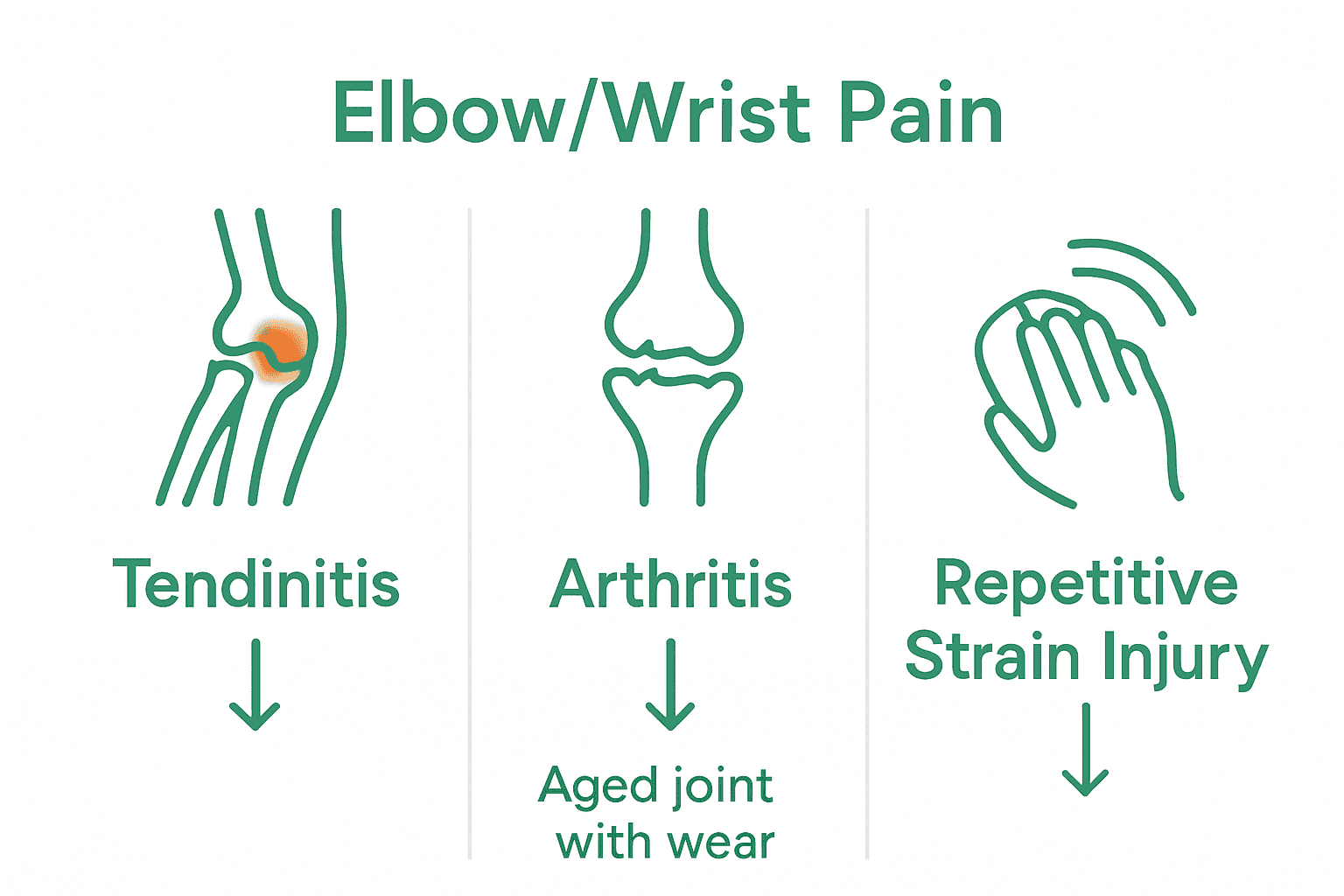
| Condition | Main Symptoms | Common Causes |
| Tennis Elbow | Outer elbow pain | Repetitive arm movements |
| Tendinitis | Sharp, localized pain | Inflammation Overuse |
| Arthritis | Chronic joint discomfort | Age-related wear Degeneration |
| Nerve Compression Syndromes | Numbness Tingling Weakness |
Compression of nerves Improper posture |
| Traumatic Injuries | Sudden severe pain Swelling |
Falls Direct impacts |
| Colles Fracture | Wrist deformity Immediate pain |
Direct trauma Falling on outstretched hand |
| De Quervain’s Tendinitis | Thumb-side wrist pain | Repetitive thumb or wrist motions |
Key Symptoms and When to Seek Care
Recognizing the warning signs of serious elbow and wrist conditions is crucial for timely medical intervention. Mayo Clinic emphasizes that persistent pain, especially around the elbow’s outer bony bump extending into the forearm and wrist, should not be ignored or simply managed with rest and self-care.
Froedtert recommends seeking professional medical attention when experiencing specific red-flag symptoms. These critical warning signs include:
-
Severe pain accompanied by noticeable swelling
-
Persistent redness or warmth in the affected area
-
Unexplained numbness or tingling sensations
-
Significant loss of joint function or mobility
-
Pain that continues or worsens after initial injury
-
Inability to perform daily activities due to discomfort
Early diagnosis can prevent long-term complications and provide more effective treatment options. For Austin residents experiencing ongoing elbow or wrist issues, our symptom checklist offers a comprehensive guide to understanding your potential condition and next steps. Remember, your body’s warning signals should never be overlooked or minimized.
Diagnosis and Treatment Options Explained
Diagnosing elbow and wrist conditions requires a comprehensive approach that combines clinical expertise and advanced medical technologies. Mayo Clinic highlights that the diagnostic process typically involves a thorough physical examination, potentially supplemented by imaging tests to understand the underlying structural issues.
Froedtert outlines several critical treatment strategies designed to restore function and alleviate pain. The treatment spectrum ranges from conservative approaches to more intensive interventions:
-
Conservative Management
-
Rest and activity modification
-
Physical therapy
-
Pain management medications
-
-
Advanced Treatment Options
-
Platelet-Rich Plasma (PRP) Therapy: A regenerative approach targeting tissue healing
-
Corticosteroid injections
-
Minimally invasive surgical procedures
-
Our practice specializes in personalized treatment plans, with a particular focus on non-surgical interventions like PRP therapy. For Austin residents seeking a comprehensive understanding of their treatment journey, our complete guide to elbow and wrist pain relief offers in-depth insights into navigating your specific condition with expert medical guidance.
Prevention Tips and Lifestyle Adjustments
Protecting your elbows and wrists requires a proactive approach to daily activities and movement patterns. Mayo Clinic emphasizes the importance of strengthening forearm muscles and using proper techniques during repetitive tasks to prevent potential injuries.
Froedtert recommends comprehensive strategies for maintaining upper extremity health:
-
Ergonomic Workplace Setup
-
Adjust chair and desk height
-
Use ergonomic keyboards and mouse pads
-
Take regular breaks and stretch
-
-
Exercise and Conditioning
-
Perform targeted forearm strengthening exercises
-
Practice gentle stretching routines
-
Maintain overall upper body flexibility
-
-
Activity Modification
-
Vary repetitive movements
-
Use proper equipment and technique
-
Listen to your body’s pain signals
-
For Austin residents seeking personalized prevention strategies, our comprehensive wrist pain self-care guide provides expert insights into protecting your upper extremities and maintaining long-term musculoskeletal health. Remember, prevention is always more comfortable than treatment.

Find Relief for Elbow and Wrist Pain With Expert Care
If you are struggling to understand why your elbows and wrists hurt and how to effectively manage that pain, you are not alone. Many people face challenges with conditions like tendinitis, tennis elbow, and nerve compression that limit movement and disrupt daily life. Recognizing these pain points is the first step toward personalized treatment that targets your unique needs and promotes lasting recovery.
Discover specialized solutions tailored for upper extremity conditions at our practice in Austin. Explore our comprehensive resources on Elbow Pain & Treatment Articles | Austin Orthopedic Care and Wrist Injury & Treatment Guides | Austin Orthopedic Blog to learn more about your condition. When you are ready to take control of your pain, visit https://handtoshoulderaustin.com to schedule a consultation with Dr. Manish V. Patel, board-certified in orthopedic surgery. Don’t let discomfort hold you back any longer. The path to relief begins here.
Frequently Asked Questions
What are common causes of elbow and wrist pain?
Pain in the elbows and wrists can stem from various conditions including repetitive motion injuries, sudden traumatic impacts, age-related wear and tear, inflammatory conditions, and ergonomic challenges associated with work.
When should I seek medical care for my elbow or wrist pain?
You should seek medical attention if you experience severe pain accompanied by swelling, persistent redness or warmth, unexplained numbness or tingling, significant loss of joint function, or pain that worsens after an injury.
What are some common conditions that lead to elbow and wrist pain?
Common conditions affecting these areas include tennis elbow, tendinitis, arthritis, nerve compression syndromes, traumatic injuries, Colles fractures, and de Quervain’s tendinitis.
What treatment options are available for elbow and wrist pain?
Treatment options range from conservative management like rest, physical therapy, and pain medication to advanced treatments including corticosteroid injections and Platelet-Rich Plasma (PRP) Therapy. Personalized treatment plans should be discussed with a healthcare provider.


