

Most American adults rely on their wrists for every task, yet few realize how intricate this joint truly is. The human wrist is not just one joint but a complex network of eight bones, over thirty ligaments, and multiple tendons that enable everything from typing to lifting. More than half of all wrist injuries stem from misunderstandings about how this joint works. Knowing the real wrist anatomy helps prevent common mistakes and improve overall hand health.
Table of Contents
- Wrist Anatomy Basics and Common Misconceptions
- Key Bones and Ligaments in the Wrist Joint
- How Wrist Movements and Function Work
- Common Wrist Injuries and Their Causes
- Treatment Approaches and Preventive Strategies
Key Takeaways
| Point | Details |
|---|---|
| Wrist Complexity | The wrist is a network of bones, ligaments, and tendons, not a single joint, allowing for complex movements and interactions. |
| Injury Awareness | Common misconceptions about wrist injuries can lead to misdiagnosis; not all wrist pain indicates serious damage. |
| Treatment Options | PRP therapy is a promising non-surgical treatment for various wrist conditions, supporting recovery without invasive procedures. |
| Prevention Strategies | Ergonomic adjustments and proper technique during activities are crucial in minimizing wrist injury risks. |
Wrist Anatomy Basics and Common Misconceptions
The human wrist is an extraordinarily sophisticated anatomical structure that enables remarkable mobility and precision. Complex joint systems encompass multiple intricate components working seamlessly together, allowing everything from delicate finger movements to powerful gripping actions.
Contrary to popular belief, the wrist is not a single unified joint but a sophisticated network of interconnected bones, ligaments, and tendons. The articulation between forearm bones (radius and ulna) and eight distinct carpal bones creates a dynamic system capable of multidirectional movement. This complexity means that damage or strain in one area can significantly impact overall wrist function.
Common Misconceptions About Wrist Anatomy
- The wrist is a single, simple joint
- Wrist pain always indicates a serious injury
- All wrist movements are identical across individuals
- Rest is the only treatment for wrist discomfort
Understanding wrist anatomy helps patients recognize potential issues early. For athletes, manual laborers, and anyone experiencing persistent discomfort, consulting an orthopedic specialist who understands the nuanced biomechanics of upper extremity joints becomes crucial. Treatments like PRP therapy can often address underlying issues without invasive surgical intervention, providing targeted relief and promoting natural healing processes.
Key Bones and Ligaments in the Wrist Joint
The wrist joint represents an extraordinary marvel of human biomechanical engineering, comprising eight intricate carpal bones arranged in complex interconnected rows. These bones work in remarkable harmony, allowing for an unprecedented range of motion that enables everything from delicate surgical procedures to powerful athletic movements.

Bone Structure and Configuration
The wrist is fundamentally composed of two primary joint systems: the radiocarpal and ulnocarpal joints. These joints involve precise articulations between the radius, ulna, and multiple carpal bones, creating a dynamic mechanical system capable of multidirectional movement. The scapholunate ligament plays a particularly crucial role in maintaining wrist stability and facilitating smooth, coordinated motion.
Key Anatomical Components
- Carpal Bones: Eight small bones arranged in proximal and distal rows
- Primary Ligaments: 33 distinct ligamentous connections
- Joint Types: Radiocarpal and ulnocarpal articulations
- Primary Movement Axes: Flexion, extension, radial/ulnar deviation
Understanding these intricate anatomical relationships becomes essential for patients experiencing wrist pain or mobility challenges. Treatments like PRP therapy can often address underlying ligament and joint issues, providing targeted intervention without invasive surgical procedures. For athletes, manual workers, and individuals with repetitive strain, recognizing the complexity of wrist anatomy helps develop more effective prevention and rehabilitation strategies.
How Wrist Movements and Function Work
The human wrist represents a remarkable biomechanical marvel, enabling an extraordinary range of precise movements through complex joint interactions. These intricate motions allow us to perform everything from delicate surgical maneuvers to powerful athletic gestures with remarkable precision and flexibility.
Fundamental Wrist Movement Mechanisms
The radiocarpal joint, a sophisticated synovial condyloid joint, serves as the primary mechanism for wrist flexion and extension. This specialized joint creates a dynamic interface between the radius and the proximal row of carpal bones, generating a complex range of motion that includes:
- Flexion: Bending the hand downward
- Extension: Raising the hand upward
- Radial Deviation: Tilting toward the thumb side
- Ulnar Deviation: Tilting toward the pinky side
- Rotational Movements: Circular and pivoting motions
Understanding these movement patterns becomes critical for patients experiencing mobility challenges. Treatments like PRP therapy can address underlying joint restrictions, providing targeted interventions that restore natural movement without invasive surgical procedures. For athletes, manual workers, and individuals with repetitive strain injuries, recognizing the wrist’s sophisticated biomechanical design helps develop more effective prevention and rehabilitation strategies.
Common Wrist Injuries and Their Causes
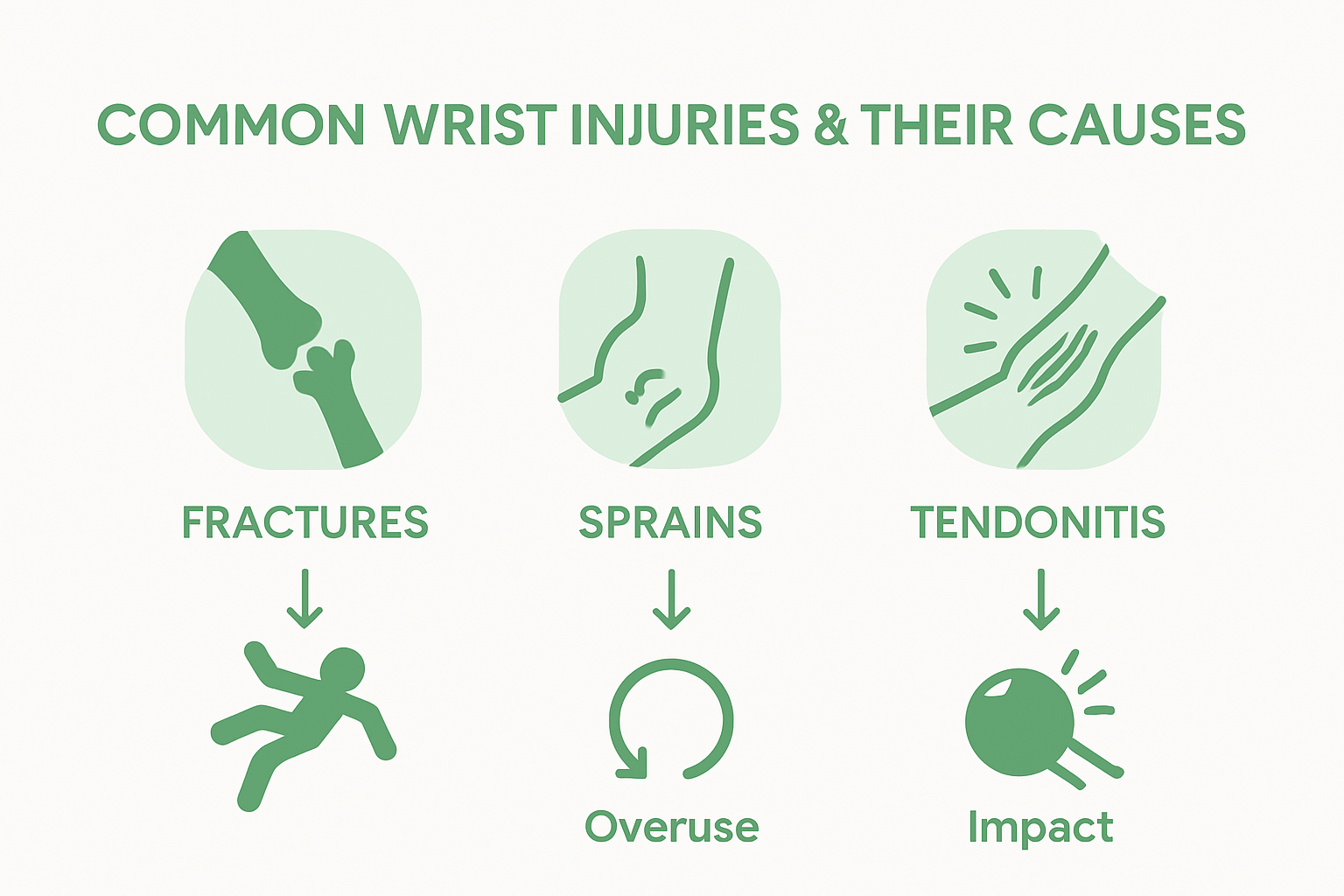
Wrist injuries represent a complex spectrum of conditions that can dramatically impact an individual’s mobility and daily functionality. These injuries often emerge from a combination of sudden traumatic events, repetitive stress, and underlying biomechanical vulnerabilities that compromise the intricate joint structure.
Primary Wrist Injury Categories
The scapholunate ligament tear stands out as a particularly significant injury, frequently resulting from falls or excessive mechanical stress. This specific ligament damage can lead to profound wrist instability and persistent pain, potentially disrupting an individual’s ability to perform basic hand movements.
Common Injury Mechanisms
-
Sudden Impact Injuries
- Falls with outstretched hands
- Sports-related collisions
- Workplace accidents
-
Repetitive Stress Injuries
- Continuous typing
- Manual labor
- Athletic training
- Musical instrument performance
-
Structural Vulnerability Injuries
- Ligament weakening
- Cartilage deterioration
- Joint misalignment
PRP therapy emerges as a promising non-surgical intervention for many wrist injuries, offering targeted healing strategies that can restore functionality without invasive procedures. Athletes, manual workers, and individuals experiencing chronic wrist discomfort can benefit significantly from understanding these injury mechanisms and seeking early professional assessment.
Treatment Approaches and Preventive Strategies
Wrist injuries demand a comprehensive and nuanced approach that balances immediate intervention with long-term rehabilitation strategies. Treatment methodologies range from conservative interventions to advanced surgical techniques, depending on the specific nature and severity of the injury.
Treatment Spectrum
Preventive strategies play a crucial role in minimizing wrist injury risks through targeted ergonomic adjustments and strategic physical conditioning. The most effective treatment approaches typically involve a multi-dimensional strategy that addresses both immediate symptoms and underlying biomechanical vulnerabilities.
Key Treatment and Prevention Components
-
Conservative Treatments
- Wrist bracing and immobilization
- Rest and inflammation management
- Physical therapy
- Targeted rehabilitation exercises
-
Advanced Interventions
- PRP therapy
- Minimally invasive surgical repair
- Advanced joint reconstruction
- Regenerative medicine techniques
-
Preventive Strategies
- Ergonomic workplace modifications
- Strength and flexibility training
- Proper technique during high-stress activities
- Regular biomechanical assessments
PRP therapy emerges as a particularly promising treatment modality, offering targeted healing without invasive surgical procedures. By stimulating the body’s natural regenerative processes, this approach provides athletes, manual workers, and individuals with chronic wrist conditions a potentially transformative path to recovery and enhanced functional mobility.
Take Control of Your Wrist Health with Expert Care
Understanding the complex anatomy of the wrist is the first step toward managing pain and restoring mobility. If you are struggling with wrist instability, ligament injuries, or persistent discomfort as discussed in the article, you deserve a treatment plan tailored to your unique needs. From the precise mechanics of the radiocarpal joint to the challenges of ligament tears, expert insight makes all the difference in recovery.

Explore detailed solutions in our Wrist Injury & Treatment Guides | Austin Orthopedic Blog where you will find guidance on conservative and advanced treatments including innovative PRP therapy. At Austin Hand To Shoulder Center, Dr. Manish V. Patel offers personalized orthopedic care designed to relieve pain and improve function. Don’t wait for your symptoms to worsen. Visit our main site https://handtoshoulderaustin.com now to schedule your consultation and start your journey toward lasting wrist health.
Frequently Asked Questions
What are the main components of wrist anatomy?
The wrist is composed of multiple interconnected bones, including the radius, ulna, and eight carpal bones, alongside ligaments such as the scapholunate ligament that maintain stability and facilitate movement.
What are common causes of wrist injuries?
Wrist injuries can arise from sudden impacts, such as falls with outstretched hands, repetitive stress from activities like typing or manual labor, and structural vulnerabilities within the wrist joint.
How can PRP therapy help with wrist injuries?
PRP therapy is a non-surgical treatment that utilizes the body’s own healing properties to address ligament and joint issues, promoting recovery and restoring function without the need for invasive procedures.
What preventive strategies can reduce the risk of wrist injuries?
Preventive strategies include ergonomic modifications in the workplace, strength and flexibility training, proper techniques during physically demanding activities, and regular biomechanical assessments.
Recommended
- Wrist Anatomy Basics – How Structure Impacts Function – Austin Hand To Shoulder
- Wrist Anatomy Basics: Understanding Bones, Joints, and Injury Risks – Austin Hand To Shoulder
- Complete Guide to Wrist Anatomy Basics – Austin Hand To Shoulder
- Wrist Dislocation Causes: Complete Patient Guide – Austin Hand To Shoulder


