
Most american adults will experience elbow pain at some point, yet more than 90 percent respond well to non-surgical care. When discomfort lingers or movement becomes difficult, the idea of elbow surgery raises many questions and anxieties. Myths about pain, recovery, and necessity often cloud the facts. This guide untangles those misconceptions and gives you straightforward answers about what elbow surgery really involves and when it might be the right choice.
Table of Contents
- What Elbow Surgery Involves And Common Myths
- Conditions That May Require Elbow Surgery
- Non-Surgical Treatments And Their Limitations
- Key Signs Indicating Surgery Is Needed
- Risks, Recovery, And Expected Outcomes
Key Takeaways
| Point | Details |
|---|---|
| Surgical Techniques | Elbow surgery often utilizes minimally invasive methods such as arthroscopy, leading to faster recovery times and less post-operative pain. |
| Common Myths | Contrary to popular belief, surgery is not the first solution, and many conservative treatments are explored before considering surgical options. |
| Indications for Surgery | Surgery is typically recommended for patients with persistent pain, reduced mobility, or failed non-surgical treatments over a significant duration. |
| Recovery Process | Advances in surgical techniques have improved outcomes, but full recovery may take 3-6 months, emphasizing the need for tailored rehabilitation. |
What Elbow Surgery Involves and Common Myths
Elbow surgery represents a precise medical intervention designed to address complex upper extremity conditions that significantly impact mobility and quality of life. According to Cleveland Clinic, these procedures encompass various surgical techniques aimed at treating chronic elbow pain and restoring joint functionality.
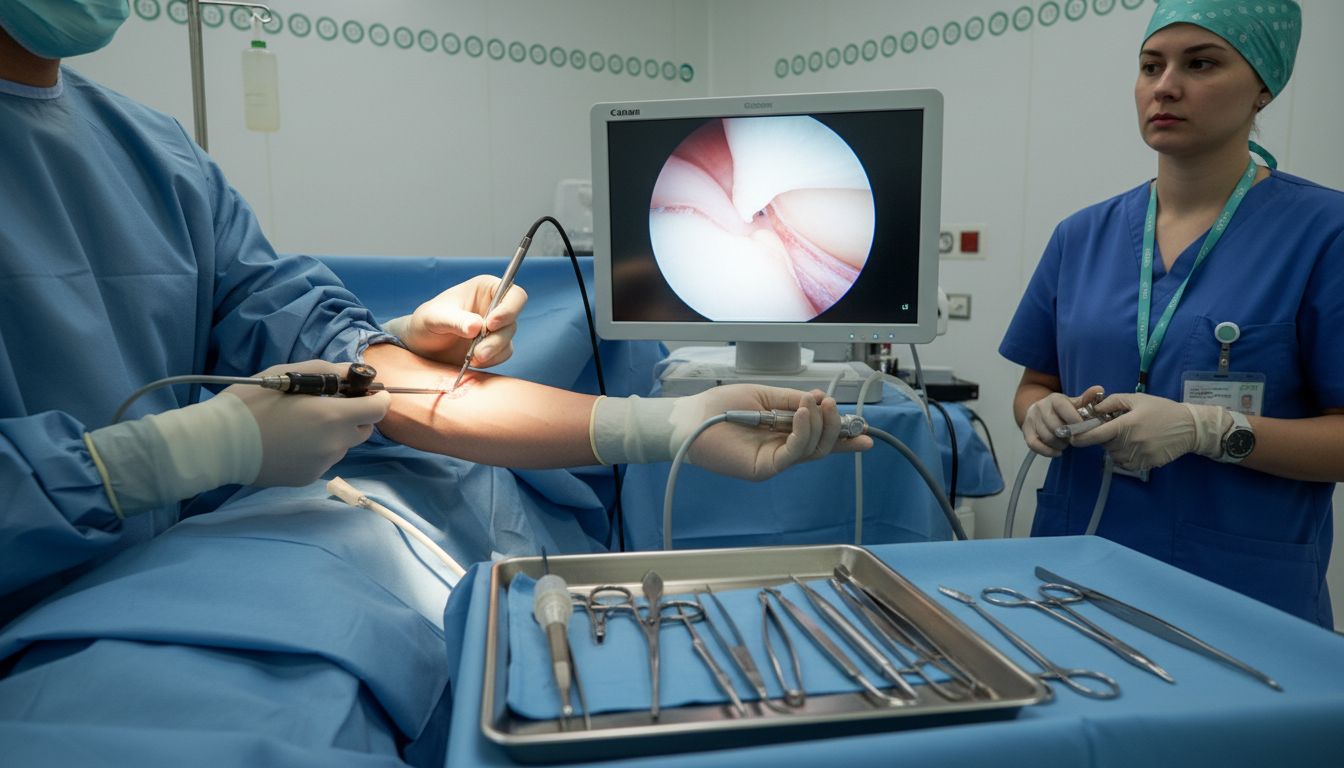
Surgical Techniques often involve minimally invasive approaches like arthroscopy, which allow surgeons to diagnose and treat elbow conditions with smaller incisions and reduced recovery times. Mayo Clinic explains that in more severe cases, elbow replacement surgery (arthroplasty) might be recommended when other treatments have failed, involving the replacement of damaged joint areas with specialized metal and plastic implants.
Common Myths About Elbow Surgery
-
Myth: Surgery Always Means Long Recovery
Reality: Modern surgical techniques, especially minimally invasive procedures, can significantly reduce recovery times. -
Myth: Elbow Surgery is Extremely Painful
Reality: Advanced pain management techniques and precision surgical methods have made post-operative discomfort much more manageable.
- Myth: Surgery is the First Option
Reality: Surgeons typically exhaust conservative treatments like physical therapy, PRP therapy, and medications before recommending surgical intervention.
At Hand to Shoulder Austin, our approach prioritizes personalized treatment plans that consider your unique medical history and specific elbow condition. We understand that every patient’s journey is different, which is why we offer comprehensive evaluations to determine the most appropriate treatment strategy. Understanding Elbow Anatomy Explained provides additional insights into how we assess and approach elbow-related medical challenges.
Conditions That May Require Elbow Surgery
Elbow surgery becomes a critical intervention when chronic pain and limited mobility significantly disrupt daily life. Arthritis.org highlights several key conditions that may necessitate surgical treatment, including severe arthritis, complex fractures, and persistent tendon injuries that do not respond to conservative management.
Specifically, nerve compression disorders can also trigger the need for surgical intervention. According to DIR California, patients experiencing subacute or chronic median neuropathies in the forearm who have not improved with non-operative treatments over 3 to 6 months might require surgical correction.
Common Conditions Requiring Surgical Intervention
- Rheumatoid Arthritis: Advanced joint degeneration causing significant pain and reduced mobility
- Severe Osteoarthritis: Breakdown of joint cartilage leading to bone-on-bone friction
- Complex Elbow Fractures: Injuries that cannot heal properly through traditional immobilization
- Chronic Tendon Injuries: Persistent inflammation or tears that do not respond to conservative treatments
- Nerve Compression Syndromes: Ongoing neurological issues affecting arm function
At Hand to Shoulder Austin, we understand that each patient’s condition is unique. Our comprehensive approach involves thoroughly evaluating whether Why Surgery May Be Needed applies to your specific situation, ensuring we recommend the most appropriate treatment plan tailored to your individual needs.
Non-Surgical Treatments and Their Limitations
Non-surgical treatments represent the first line of defense in managing elbow conditions, offering patients potential relief without invasive interventions. PubMed Central research indicates that nonoperative treatments for conditions like lateral epicondylitis can achieve success rates up to 95% through methods such as NSAIDs, bracing, physical therapy, and corticosteroid injections.
Conservative Treatment Options typically include a comprehensive approach targeting pain management and functional restoration. These strategies often involve PRP therapy, anti-inflammatory medications, targeted physical therapy, and specialized bracing techniques designed to reduce joint stress and promote healing. However, PubMed Central suggests that persistent symptoms do not necessarily predict poor outcomes, meaning that not all treatment challenges require immediate surgical intervention.
Limitations of Non-Surgical Approaches
- Pain Management Challenges: Some treatments provide only temporary relief
- Progressive Conditions: Certain degenerative diseases continue to worsen despite conservative treatments
- Limited Mobility: Non-surgical methods may not fully restore joint function
- Individual Variability: Treatment effectiveness varies significantly between patients
- Potential Progression: Some conditions may require more aggressive interventions if conservative methods fail
At Hand to Shoulder Austin, we understand that each patient’s journey is unique. Our comprehensive evaluation process ensures we explore every possible non-surgical avenue before recommending more invasive procedures. What Is Elbow Surgery? Complete Overview for Patients provides additional insights into when surgical intervention might become necessary.
Key Signs Indicating Surgery Is Needed
Determining when elbow surgery becomes necessary involves carefully evaluating multiple clinical indicators and treatment responses. University of Iowa Orthopedics suggests that surgery for conditions like tennis elbow is typically considered when symptoms persistently impact quality of life, specifically after 6 to 12 months of unsuccessful conservative treatments.
The decision to pursue surgical intervention is complex and depends on several critical factors. PubMed Central highlights that individual patient circumstances, particularly the severity of ligament instability and biomechanical function, play crucial roles in determining surgical necessity. These considerations extend beyond simple symptom duration to include overall functional impairment and potential long-term joint health.

Key Indicators Surgery Might Be Required
- Persistent Pain: Chronic discomfort lasting 6-12 months despite conservative treatments
- Reduced Mobility: Significant limitations in range of motion
- Functional Impairment: Inability to perform daily activities or work-related tasks
- Failed Conservative Treatments: No improvement with physical therapy, medications, or PRP
- Structural Damage: Evidence of significant ligament or tendon deterioration
- Progressive Weakness: Ongoing muscle weakness or neurological symptoms
At Hand to Shoulder Austin, we understand that each patient’s journey is unique. Our comprehensive evaluation process ensures we explore every diagnostic avenue before recommending surgical intervention. Elbow Arthritis Explained provides additional context for understanding the nuanced decision-making process in elbow treatments.
Risks, Recovery, and Expected Outcomes
Mayo Clinic highlights that while elbow replacement surgery historically presented higher complication risks compared to other joint surgeries, recent technological advancements have dramatically improved surgical techniques and implant designs, significantly enhancing patient outcomes and reducing potential risks.
Surgical Recovery involves a strategic, patient-specific rehabilitation process. Cleveland Clinic emphasizes that most elbow surgeries now utilize minimally invasive methods, which can substantially reduce recovery time and improve overall healing potential. The post-surgical rehabilitation phase becomes crucial in restoring joint function and preventing potential complications.
Potential Risks and Recovery Considerations
- Infection Risk: Low but potential complication requiring immediate medical attention
- Nerve Damage: Minimal risk with experienced surgical teams
- Implant Loosening: Potential long-term consideration requiring periodic monitoring
- Range of Motion Limitations: Temporary restrictions during initial recovery
- Rehabilitation Duration: Typically 3-6 months for complete functional restoration
At Hand to Shoulder Austin, our comprehensive approach ensures personalized recovery strategies tailored to each patient’s unique physiological needs. What Is Elbow Surgery? Complete Overview for Patients provides additional insights into understanding the nuanced recovery process for elbow surgical interventions.
Take Control of Your Elbow Health with Expert Care at Hand to Shoulder Austin
If you are struggling with persistent elbow pain, limited mobility, or uncertainty about when surgery is needed, you are not alone. Many patients face difficult decisions about surgery after exhausting non-surgical treatments. Understanding key signs such as chronic pain lasting over six months, functional impairment, and structural damage can help you know when to seek specialized care. At Hand to Shoulder Austin, we tailor treatment plans that focus on your unique condition and goals to restore your quality of life.
Explore trusted insights and patient-focused options in our Elbow Pain & Treatment Articles | Austin Orthopedic Care and Upper Extremity Surgery Articles | Austin Orthopedic Blog. Ready to move forward with confidence Get a personalized evaluation from fellowship-trained surgeon Dr. Manish V. Patel by scheduling your appointment today at https://handtoshoulderaustin.com. Your path to better elbow function starts here.
Frequently Asked Questions
When is elbow surgery necessary?
Elbow surgery is necessary when conservative treatments fail to relieve chronic pain or restore mobility after 6 to 12 months. Common indicators include persistent pain, reduced mobility, and functional impairment.
What conditions may require elbow surgery?
Conditions that often necessitate elbow surgery include severe arthritis, complex fractures, chronic tendon injuries, and nerve compression disorders that do not improve with non-surgical treatments.
What are the risks associated with elbow surgery?
Potential risks of elbow surgery include infection, nerve damage, implant loosening, temporary limitations in range of motion, and variations in recovery duration depending on the surgical approach.
How long does recovery take after elbow surgery?
Recovery time after elbow surgery typically ranges from 3 to 6 months, depending on the surgical technique used and the patient’s individual rehabilitation process.
Recommended
- What Is Elbow Surgery? Complete Overview for Patients – Austin Hand To Shoulder
- Understanding Elbow Anatomy Explained: A Comprehensive Overview – Austin Hand To Shoulder
- Elbow Doctor Austin: Complete Guide to Local Care – Austin Hand To Shoulder
- Elbow Arthritis Explained: Causes, Types, Treatment Options – Austin Hand To Shoulder


