

Nearly one in four American adults will experience shoulder pain at some point, often disrupting daily life and sleep. Stiffness, limited range of motion, and sudden discomfort can make even the simplest tasks feel impossible. Understanding the roots of shoulder pain, along with safe strategies for relief, can help you make informed choices and get back to what matters most. This guide offers clear, practical steps to help you assess symptoms, ease discomfort, and know when expert care is needed.
Table of Contents
- Step 1: Assess Your Shoulder Pain and Identify Triggers
- Step 2: Apply At-Home Relief Techniques Safely
- Step 3: Incorporate Gentle Stretching and Mobility Exercises
- Step 4: Monitor Your Progress and Adjust Activities
- Step 5: Recognize When to Seek Expert Medical Care
Quick Summary
| Key Insight | Explanation |
|---|---|
| 1. Assess your shoulder pain | Document pain characteristics and triggers to help medical professionals understand your condition. |
| 2. Use at-home relief methods | Apply cold and heat therapy, and consider over-the-counter medications, but consult a doctor if pain persists. |
| 3. Incorporate gentle exercises | Engage in low-impact mobility exercises, such as pendulum stretches, to improve flexibility safely. |
| 4. Monitor your progress | Keep a recovery journal to track pain levels and modify activities that exacerbate discomfort. |
| 5. Know when to seek help | Recognize signs like persistent pain, weakness, or inability to perform daily activities indicating the need for professional care. |
Step 1: Assess Your Shoulder Pain and Identify Triggers
Understanding your shoulder pain starts with a systematic self assessment that helps pinpoint potential causes and triggers. As Mayo Clinic recommends, carefully evaluating your pain characteristics and movement patterns can reveal crucial insights about your condition.
Begin by documenting specific details about your shoulder discomfort: when did the pain start, what movements provoke it, and how intense is the sensation? Pay close attention to whether the pain is sharp and sudden or a persistent dull ache. Track potential triggers like specific physical activities, sleeping positions, or repetitive motions that seem to worsen your symptoms. Versus Arthritis suggests creating a pain journal to record these observations, which can help healthcare professionals accurately diagnose the underlying issue.
Warning: If your pain is severe, accompanied by fever, or follows a significant injury, seek immediate medical attention. While self assessment is valuable, it does not replace professional medical evaluation, especially for persistent or increasingly intense shoulder pain. For more comprehensive insights, our Shoulder Pain Causes Guide can provide additional context about potential shoulder condition indicators.
Step 2: Apply At-Home Relief Techniques Safely
Managing shoulder pain requires strategic self care techniques that can provide significant relief without risking further injury. Sutter Health recommends several safe methods to ease shoulder discomfort and promote healing.
Start by implementing targeted pain management strategies. Alternate between cold and heat therapy: apply an ice pack for the first 48 to 72 hours after injury to reduce inflammation, then switch to moist heat to improve circulation and relax muscle tension. MedlinePlus suggests using heat and cold applications for approximately 15 to 20 minutes at a time, with breaks between treatments to protect your skin. Consider using over-the-counter anti-inflammatory medications to manage pain, but always follow recommended dosage guidelines and consult with a healthcare professional if pain persists.

Warning: While at-home treatments can provide temporary relief, they are not substitutes for professional medical evaluation. If your shoulder pain is severe, persistent, or accompanied by limited range of motion, schedule an appointment with a specialist. For additional guidance on shoulder rehabilitation, our Top Shoulder Rehab Exercises for Faster Recovery guide offers expert recommended techniques to support your healing process.
Step 3: Incorporate Gentle Stretching and Mobility Exercises
Restoring shoulder flexibility and reducing pain requires a strategic approach to gentle mobility exercises that promote healing without risking further injury. MedStar Health recommends specific stretches designed to improve shoulder range of motion and alleviate discomfort.
Begin with low impact mobility exercises that target your shoulder joint carefully. Harvard Health suggests starting with pendulum stretches where you lean slightly forward and gently swing your affected arm in small circles. This passive movement helps reduce stiffness and encourages natural joint lubrication. Another effective technique is the crossover arm stretch, which involves gently pulling your arm across your chest to stretch the shoulder muscles. Perform these exercises slowly and stop immediately if you experience sharp pain.
For a comprehensive guide to shoulder mobility, our Shoulder Mobility Exercises for Pain-Free Upper Limb Movement can provide additional detailed instructions.
Warning: Always listen to your body and avoid pushing through significant pain. If stretches consistently cause discomfort or you notice no improvement after a week, consult a healthcare professional to prevent potential long term complications.
Step 4: Monitor Your Progress and Adjust Activities
Successful shoulder pain management requires consistent tracking and strategic modifications to your daily routine. Detroit Medical Center emphasizes the importance of actively monitoring your shoulder condition and making informed adjustments to prevent further strain.
Start by maintaining a detailed recovery journal that tracks your pain levels, mobility improvements, and specific activities that trigger discomfort. Temple Health recommends incorporating simple exercises like seated scapular retraction to strengthen shoulder muscles and improve overall mobility. Pay close attention to your work and home ergonomics particularly when sitting for extended periods. Focus on maintaining proper posture, taking regular breaks, and performing gentle stretches to reduce muscle tension. If certain movements consistently cause pain, modify or avoid them entirely. Consider implementing seated stretches or adjusting your workspace to minimize shoulder strain.
Warning: Progress is not linear. Some days will feel better than others, but consistent gentle movement and mindful activity modification are key to long term recovery. If pain persists or worsens despite these adjustments, schedule a professional evaluation to prevent potential chronic issues.
Step 5: Recognize When to Seek Expert Medical Care
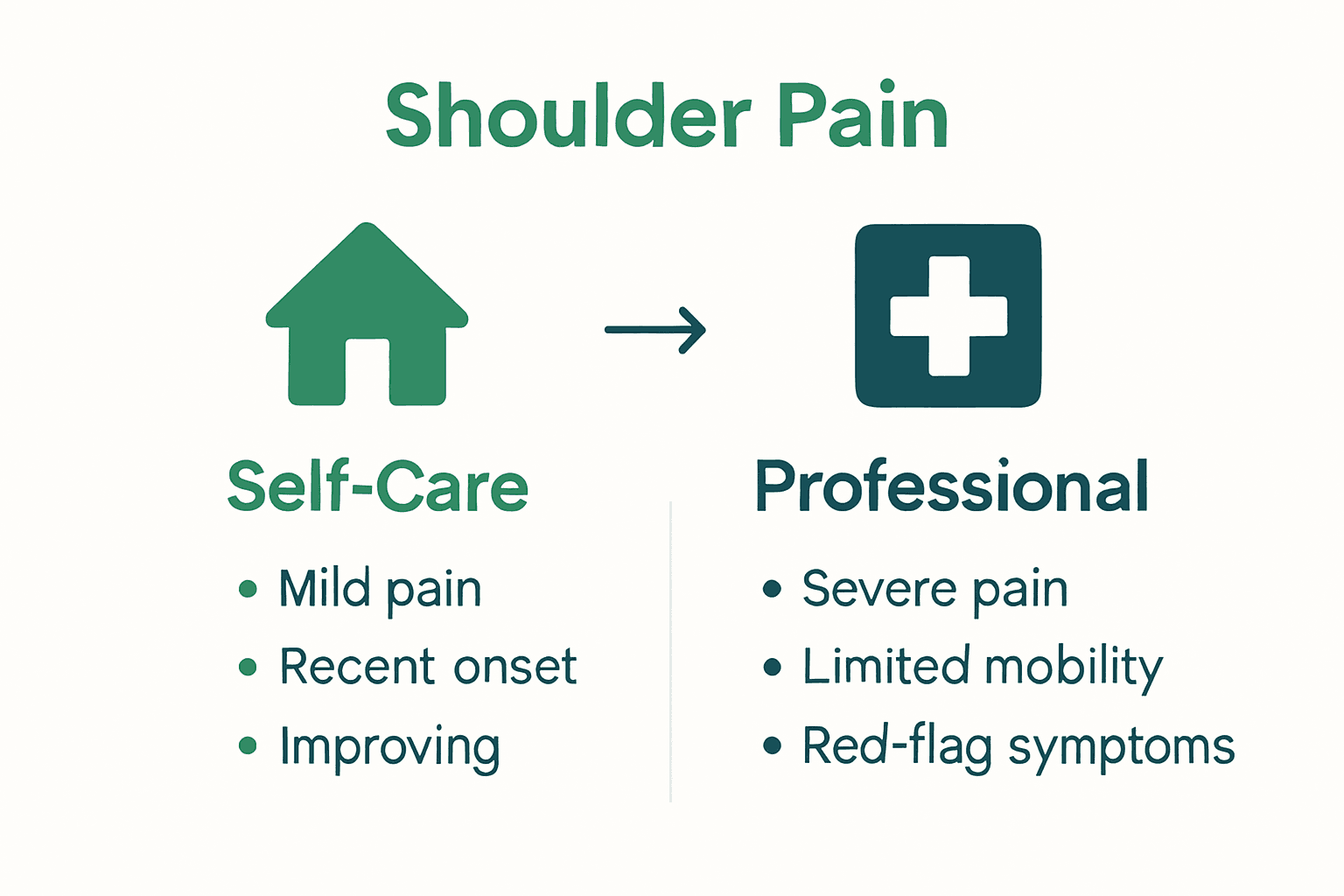
Shoulder pain management requires knowing the critical line between self care and professional intervention. Consumer Reports highlights the importance of understanding when home treatments are no longer sufficient and medical expertise becomes necessary.
Pay attention to warning signs that indicate you need professional medical evaluation. These include persistent pain lasting more than two weeks, significant weakness in your shoulder or arm, inability to perform basic daily activities, signs of infection like fever or redness around the joint, and any pain resulting from a sudden injury or traumatic event. If you experience limited range of motion that does not improve with gentle stretching, or if pain intensifies despite consistent self care techniques, it is time to consult an orthopedic specialist. Certain red flags like shooting pain down your arm, numbness, or tingling sensations suggest potential nerve involvement that requires immediate professional assessment.
Warning: Never ignore persistent shoulder symptoms. While self care strategies are valuable, they cannot replace a comprehensive medical evaluation. Your body communicates through pain signals, and continuing to push through significant discomfort could lead to more serious long term complications that might require more intensive treatments.
Take Control of Your Shoulder Pain with Expert Care
Struggling to manage persistent shoulder pain after trying home remedies can be frustrating and discouraging. This guide highlights how self-care techniques like gentle stretching and targeted pain management can provide relief but also shows when professional intervention is essential. If your pain limits daily activities or worsens despite your efforts it is time to explore specialized treatment options designed for upper limb conditions.

Discover personalized solutions tailored to your unique shoulder issues from a fellowship-trained, board-certified surgeon at our Austin orthopedic practice. Learn more about focused recovery strategies and surgical care in our Shoulder Surgery & Care Articles | Austin Orthopedic Blog. For those active in sports or athletics needing precise assessment and rehabilitation, visit our Sports Medicine & Athlete Care | Austin Orthopedic Blog. Take the next step toward lasting relief by scheduling a consultation at Austin Hand To Shoulder today. Your path to pain-free movement starts with expert guidance and compassionate care.
Frequently Asked Questions
How can I assess the triggers of my shoulder pain?
To assess the triggers of your shoulder pain, document when the pain started, the movements that provoke it, and the intensity of the pain. Keeping a pain journal with these details can help you identify patterns and communicate effectively with healthcare professionals.
What at-home techniques can I use to relieve shoulder pain?
You can start by alternating between cold and heat therapy; apply an ice pack for 15 to 20 minutes to reduce inflammation, then switch to moist heat to relax muscles. Additionally, consider using over-the-counter pain medications as needed, following dosage guidelines carefully.
What gentle stretching exercises should I try for my shoulder pain?
Start with pendulum stretches by leaning slightly forward and swinging your affected arm in small circles to reduce stiffness. You can also try a crossover arm stretch by pulling your arm across your chest, holding for 15 to 30 seconds, repeating this 2 to 3 times.
How do I monitor my shoulder pain and adjust my activities?
Maintain a recovery journal to track your pain levels and any activities that worsen your symptoms. Adjust your daily activities based on this tracking; for example, modify or avoid movements that consistently trigger pain to protect your shoulder.
When should I seek medical care for my shoulder pain?
Seek medical care if your shoulder pain persists for more than two weeks, if you experience significant weakness, or if you have trouble with daily activities. Pay attention to symptoms like fever, redness around the joint, or worsening pain despite self-care efforts, and consult a healthcare professional accordingly.
Recommended
- Shoulder Pain Causes Guide: Complete Breakdown – Austin Hand To Shoulder
- Recovery Workflow After Rotator Cuff Surgery: Step-by-Step Guide – Austin Hand To Shoulder
- 7 Top Shoulder Rehab Exercises for Faster Recovery – Austin Hand To Shoulder
- Early Signs of Shoulder Problems: Complete Guide – Austin Hand To Shoulder


