

More than 250,000 upper limb tendon tears are diagnosed each year in American hospitals, affecting people from all walks of life. These injuries do not just cause pain—they disrupt daily routines, work productivity, and independence. With so many variables from workplace strain to athletic accidents, understanding tendon damage helps you make informed decisions for a safer, faster recovery and highlights what modern treatment options can actually deliver.
Table of Contents
- Tendon Tears In The Upper Limbs Explained
- Types Of Tendon Injuries And Diagnosis
- Available Treatment Options For Recovery
- Rehabilitation Timeline And What To Expect
- Risks, Costs, And Common Recovery Pitfalls
Key Takeaways
| Point | Details |
|---|---|
| Understanding Tendon Tears | Tendon tears, often occurring in the shoulder, hand, wrist, and elbow, can stem from repetitive strain or acute injuries, affecting normal movement and causing pain. |
| Diagnostic Processes | Accurate diagnosis involves physical examinations and imaging techniques such as MRIs to determine the extent of the injury. |
| Treatment Options | Recovery strategies include conservative treatments like physical therapy, PRP therapy, and, if necessary, minimally invasive surgical repair to facilitate healing. |
| Rehabilitation Timeline | Recovery involves multiple phases; realistic expectations and consistent communication with healthcare providers are crucial for successful outcomes. |
Tendon Tears In The Upper Limbs Explained
Tendon tears are complex musculoskeletal injuries that frequently impact the delicate structures of upper limbs, particularly in the shoulder, hand, wrist, and elbow regions. These injuries can dramatically disrupt normal movement and cause significant pain. Understanding the mechanics of tendinopathy reveals that these conditions often emerge from repetitive strain or sudden traumatic events that overwhelm the tendon’s natural resilience.
The most common upper limb tendons susceptible to tears include the rotator cuff tendons in the shoulder, the flexor and extensor tendons in the hand and wrist, and the biceps and triceps tendons near the elbow. Tendon damage can result from multiple factors: acute injuries during sports, workplace repetitive motions, age-related degeneration, or underlying medical conditions that weaken connective tissue. Athletes, manual laborers, and individuals over 40 are particularly vulnerable to these injuries.

Recovery from tendon tears requires a strategic approach that may involve conservative treatments or surgical intervention. Patients often benefit from targeted rehabilitation strategies, including physical therapy, PRP therapy to stimulate healing, and carefully designed exercise protocols. The goal is always to restore function, reduce pain, and prevent future injuries through comprehensive medical management and patient education.
Types Of Tendon Injuries And Diagnosis
Tendon injuries in the upper limbs represent a complex spectrum of conditions that can significantly impact patient mobility and quality of life. Tendinopathy encompasses several distinct injury types, each requiring specialized diagnostic and treatment approaches. The most prevalent forms include acute tears, chronic overuse injuries, and degenerative tendon conditions that affect muscles and joints in the shoulder, hand, wrist, and elbow regions.
The primary categories of tendon injuries diagnosed by orthopedic specialists include:
- Rotator Cuff Tears: Affecting shoulder mobility and causing substantial pain
- Flexor Tendon Injuries: Compromising hand and wrist movement
- Biceps Tendon Ruptures: Impacting elbow and arm strength
- De Quervain’s Tenosynovitis: Causing significant thumb and wrist discomfort
Medical diagnosis typically involves a comprehensive evaluation process that combines physical examination and advanced imaging techniques. Diagnostic procedures often include detailed physical assessments, ultrasound evaluations, magnetic resonance imaging (MRI), and sometimes specialized nerve conduction studies to determine the precise nature and extent of tendon damage. Patients can expect a thorough investigation that helps create a targeted treatment strategy, which might involve conservative management, PRP therapy, or surgical intervention depending on the specific injury characteristics.
Available Treatment Options For Recovery
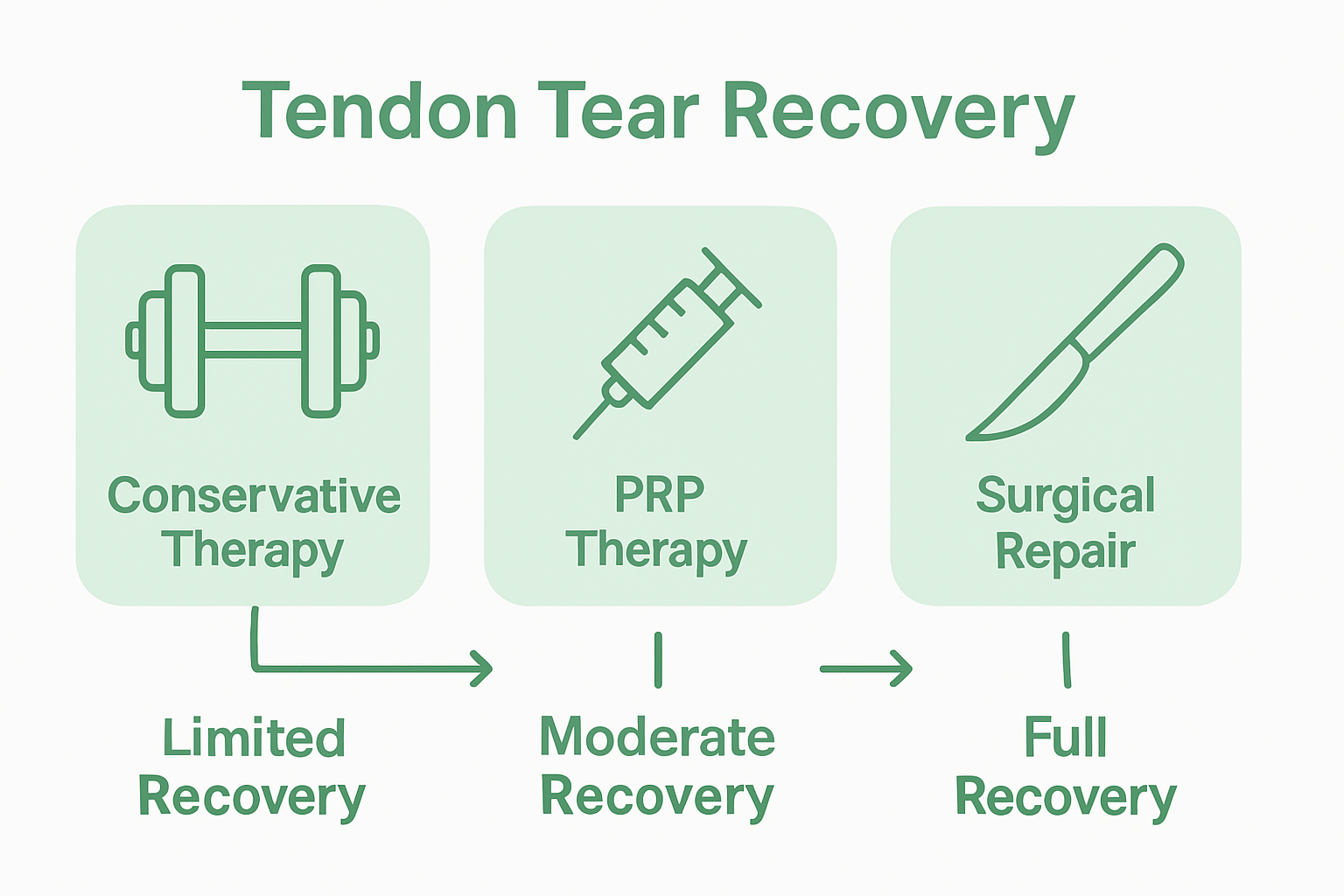
Tendon tear recovery demands a comprehensive, personalized approach that combines multiple treatment strategies tailored to each patient’s unique injury characteristics. Conservative treatments typically serve as the first line of intervention, focusing on reducing inflammation, promoting healing, and restoring functional mobility without surgical intervention. PRP therapy represents a cutting-edge regenerative approach that can significantly accelerate the healing process for many upper limb tendon injuries.
The primary treatment options for tendon tears include:
- Physical Therapy: Structured rehabilitation exercises
- Platelet-Rich Plasma (PRP) Injections: Regenerative healing technique
- Minimally Invasive Surgical Repair: Precise tendon reconstruction
- Immobilization and Rest: Allowing natural healing processes
- Targeted Medication: Pain management and inflammation reduction
Surgical intervention becomes necessary when conservative treatments fail to provide adequate healing or in cases of severe tendon damage. Patients can expect a comprehensive treatment plan that may involve a combination of approaches, with the ultimate goal of restoring full function and minimizing long-term complications. The specific treatment strategy depends on factors such as the patient’s age, overall health, injury severity, and individual healing potential. Orthopedic specialists carefully assess each case to develop the most effective personalized recovery roadmap, ensuring patients receive the most appropriate and advanced care for their specific tendon injury.
Rehabilitation Timeline And What To Expect
Recovering from a tendon tear is a nuanced journey that requires patience, dedication, and a structured approach. Tendon healing involves a complex biological process that progresses through multiple stages of inflammation, proliferation, and remodeling. Patients should understand that the rehabilitation timeline can vary significantly depending on the specific injury, its location, and individual healing capabilities.
A typical rehabilitation journey for upper limb tendon injuries often follows this progressive framework:
- Acute Phase (0-2 weeks): Rest, pain management, and initial inflammation control
- Protection Phase (2-6 weeks): Limited movement, gentle exercises, potential shoulder rehab exercises
- Strengthening Phase (6-12 weeks): Progressive resistance training
- Functional Recovery Phase (3-6 months): Sport or work-specific rehabilitation
- Complete Remodeling (6-12 months): Full strength and mobility restoration
Patients should maintain realistic expectations and work closely with their orthopedic specialist throughout the recovery process. While some individuals may experience faster healing, others might require more extended rehabilitation periods. The key is consistent communication with healthcare providers, adherence to prescribed rehabilitation protocols, and a positive mindset toward gradual, controlled progress. Individual factors such as age, overall health, injury severity, and commitment to rehabilitation exercises will ultimately determine the speed and completeness of recovery.
Risks, Costs, And Common Recovery Pitfalls
Navigating the complex landscape of tendon injury recovery requires a thorough understanding of potential risks and financial considerations. Tendon injury recovery involves multiple challenges that can significantly impact both physical healing and financial investment. Patients must be prepared for potential complications, unexpected expenses, and the nuanced journey of rehabilitation.
Common risks and recovery pitfalls include:
- Re-injury: Premature return to full activity
- Chronic Pain: Persistent discomfort and reduced mobility
- Financial Burden: Multiple treatment and rehabilitation expenses
- Psychological Challenges: Frustration with slow recovery process
- Long-term Functionality Loss: Incomplete healing and reduced performance
Cost management becomes critical in tendon injury recovery. PRP therapy offers an innovative approach that can potentially reduce long-term expenses by accelerating healing and minimizing repeated interventions. Patients should anticipate comprehensive expenses including initial diagnostic tests, potential surgical procedures, rehabilitation sessions, specialized equipment, and ongoing medical consultations. While insurance coverage varies, developing a strategic financial plan and maintaining open communication with healthcare providers can help mitigate unexpected financial strain during the recovery process.
Expert Care for Your Tendon Tear Recovery Journey
Dealing with a tendon tear in your upper limb can feel overwhelming due to pain, limited mobility, and uncertainty about healing. This article highlights how targeted treatments like physical therapy and PRP therapy are key to restoring your function and reducing discomfort. At our specialized Austin orthopedic center, we understand these challenges and provide personalized treatment plans designed to meet your unique recovery needs. Whether you face a rotator cuff tear, flexor tendon injury, or another complex condition, expert support is available to guide you every step of the way.
Discover comprehensive resources including detailed rehabilitation timelines and innovative surgical options by exploring our Surgery Recovery & Rehab Guides | Austin Orthopedic Care.
If you are ready to take control of your tendon tear recovery with proven solutions and compassionate care, visit https://handtoshoulderaustin.com to schedule your consultation today. Learn more about specialized procedures through our Shoulder Surgery & Care Articles | Austin Orthopedic Blog and consider insights from Sports Medicine & Athlete Care | Austin Orthopedic Blog to understand how personalized treatment supports active lifestyles. Start your healing journey with confidence and expert guidance now.
Frequently Asked Questions
What are the symptoms of a tendon tear in the upper limbs?
Common symptoms of a tendon tear can include significant pain, swelling, limited range of motion, and difficulty performing everyday tasks.
How long does tendon tear recovery take?
The recovery timeline can vary but typically follows several phases: acute phase (0-2 weeks), protection phase (2-6 weeks), strengthening phase (6-12 weeks), and functional recovery phase (3-6 months), with complete remodeling taking up to 12 months.
What are the treatment options for tendon tears?
Treatment options range from conservative methods like physical therapy and PRP therapy to surgical interventions for severe cases that do not respond well to conservative treatment.
Can tendon tears heal on their own?
While some minor tendon tears may heal with rest and conservative treatments, more substantial tears often require medical intervention for proper healing and rehabilitation.


